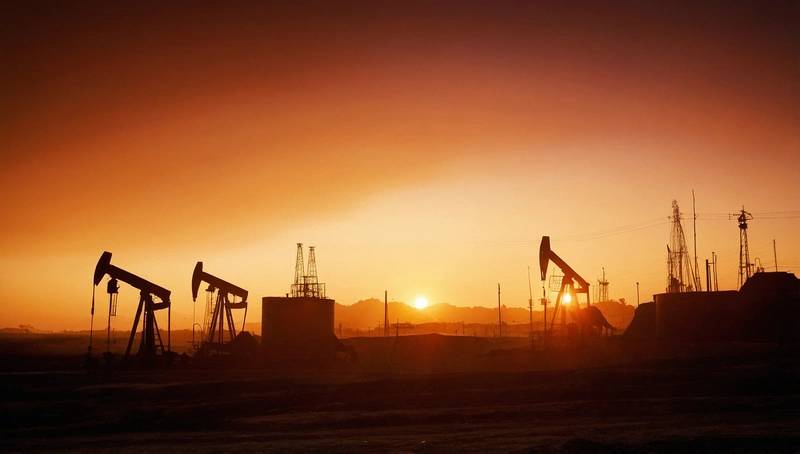
Oil prices surged above $100 a barrel this week as escalating conflict in the Middle East rattled global markets, forcing investors to rethink inflation risks, interest-rate expectations, and corporate cost forecasts.
The spike triggered broad sell-offs in equities and government bonds, underscoring how quickly energy shocks can ripple through financial markets and influence economic policy debates.
The timing is particularly sensitive. Investors had been anticipating a more supportive monetary environment in 2026 as inflation pressures eased across major economies.
Instead, the sudden jump in oil prices has reignited concerns that inflation may prove persistent, complicating central bank policy decisions and raising the risk of renewed cost pressures for companies and households.
Oil Spike Sends Shockwaves Through Markets
Brent crude briefly topped $100 a barrel for the first time in years, while US crude also climbed sharply during volatile trading before slipping slightly below that mark.
The surge followed reports of strikes on energy sites near Tehran, concerns over reduced output in Iraq, and growing uncertainty around shipping flows through the Strait of Hormuz — a chokepoint handling roughly 20% of global oil and LNG shipments.
Markets reacted quickly. Equity indices across Asia and Europe tumbled, while bond yields rose as investors adjusted expectations for future interest-rate policy.
Government borrowing costs climbed in several countries, reflecting the risk that higher energy prices could reignite inflation pressures.
Sector impacts were immediate. Energy producers benefited from stronger crude prices, while airlines and other fuel-intensive industries fell sharply amid expectations of rising operating costs and weaker consumer demand.
Supply Strategy and OPEC+ Market Management
The price spike comes amid ongoing supply management by major oil producers. In early March, eight OPEC+ members — Saudi Arabia, Russia, Iraq, the UAE, Kuwait, Kazakhstan, Algeria, and Oman — met to review market conditions and confirmed plans to gradually unwind some voluntary production cuts introduced in 2023.
The group agreed to boost output by around 206,000 barrels per day starting April 2026, as part of a broader easing of previously announced cuts totaling 1.65 million barrels per day. Officials emphasised that any increases would remain flexible, with the option to pause or reverse if market conditions shift.
The move highlights the delicate balancing act for major producers: higher prices can boost government revenues, but excessively high oil costs risk slowing global growth and reducing demand.
The Inflation Transmission Channel
Inflation is the most immediate concern for policymakers and investors. Economists estimate that every $10 rise in crude prices adds roughly 0.2–0.3 percentage points to annual inflation in advanced economies, depending on energy intensity and fuel pass-through.
Recent modelling suggests the latest surge could lift UK inflation by about half a percentage point over the next three months, potentially delaying expectations of central bank rate cuts.
Because energy costs feed into transportation, manufacturing, and household heating, sustained oil-price increases tend to ripple through supply chains and consumer prices, heightening the risk of renewed cost-of-living pressures.
Corporate and Macro Implications of the Oil Spike
Sustained oil prices above $100 a barrel could quickly reshape operating costs across multiple industries. Fuel remains a core input for airlines, shipping companies, logistics providers, and heavy manufacturing, leaving companies exposed to margin pressure unless they can pass costs on to customers.
Investors often respond with rapid sector rotation: energy producers and oilfield service firms typically benefit from higher crude prices, while airlines, chemical producers, industrial transport groups, and consumer discretionary sectors tend to underperform.
Oil majors such as Shell and BP have historically seen stronger earnings during price spikes, while aviation and travel stocks often fall sharply.
Energy shocks also carry broader economic implications. Major oil price spikes in the 1970s, early 1990s, and mid-2000s were followed by slower global growth as higher energy costs dampened consumer spending and increased corporate expenses.
Despite lower energy intensity today, oil remains deeply embedded in transportation, aviation, and petrochemical supply chains, meaning even small supply disruptions can trigger significant market volatility.
With global demand exceeding 100 million barrels per day, sudden price changes remain one of the fastest channels linking geopolitical instability to inflation and economic cycles.
Central Banks and Strategic Energy Risks
The oil surge complicates monetary policy outlooks. Many investors had expected central banks in Europe and the UK to gradually ease policy as inflation cooled, but rising energy prices may delay that timeline.
As a supply-side shock, higher oil prices are not driven by stronger demand, creating a dilemma: tightening to fight inflation could slow growth, while easing too soon risks entrenched price pressures.
Market pricing in interest-rate derivatives has already shifted as traders reassess the likelihood of future rate cuts.
The episode also underscores the strategic importance of energy security. Despite the push for diversification and renewable energy, global oil markets remain sensitive to geopolitical developments and concentrated supply routes.
The Strait of Hormuz, through which a significant portion of global oil and LNG flows, is particularly vulnerable. Sustained disruptions could sharply affect supply and pricing, while flexible responses from OPEC+ could help stabilise markets if tensions ease.
The Return of Energy Risk
For companies, investors, and policymakers, the surge above $100 a barrel is a stark reminder that energy remains a major driver of macroeconomic volatility.
The spike affects more than energy firms: it reshapes inflation expectations, corporate margins, consumer spending, and interest-rate policy across the global economy.
Whether this move proves temporary or evolves into a broader energy shock will depend on geopolitical developments and OPEC+ supply responses. What is clear, however, is that oil despite the energy transition, continues to be a central force shaping global financial markets.