Los Angeles officials have delayed a planned $30 minimum wage increase for hotel and airport workers after business leaders backed a ballot measure that city officials warned could blow a massive hole in the city budget. The agreement showed how fragile wage gains can become once business pressure and city finances collide.
The Los Angeles City Council voted to postpone the wage increase by 18 months, delaying the move until after the 2028 Olympics while convincing a coalition of airline and hotel businesses to withdraw a campaign targeting the city’s gross receipts tax — the second-largest source of revenue for Los Angeles.
The agreement came after business groups gathered enough signatures to place a measure on the November ballot that would have eliminated the tax entirely. According to city officials, the repeal could have stripped roughly $740 million from the city’s general fund in its first year and created average annual losses of about $860 million over five years.
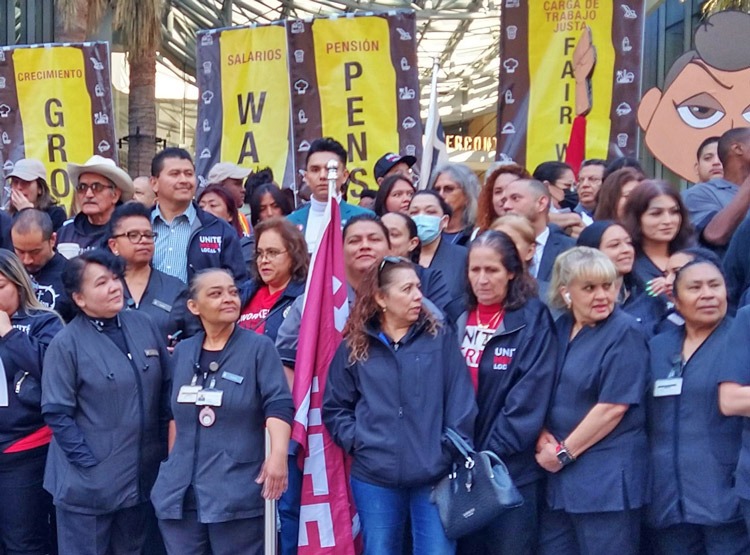
Inside City Hall, the dispute felt less political than personal for many workers. Hotel and airport employees had spent years pushing for higher pay in one of America’s most expensive cities, where rent, transport and food costs have continued climbing faster than wages for much of the last decade. For some workers, the promised increase represented the difference between constantly falling behind financially and finally gaining some breathing room.
The original proposal approved in 2025 would have lifted wages to $30 an hour by July 2028 while also increasing healthcare payments for workers. Under the revised agreement, the minimum wage will still rise to $25 this July before gradually increasing to $30 in January 2030 instead.
Kurt Petersen, president of Unite Here Local 11, accused city officials of giving in to “blackmail,” warning that businesses had now established a political playbook for future labour fights.
For businesses, the Los Angeles battle was never just about wages. Hotel operators and airport businesses are preparing for massive Olympic-driven tourism demand over the next several years while also dealing with rising labour expenses, inflation pressures and uncertainty around travel markets.
Many executives fear aggressive wage increases could squeeze margins, increase room prices and weaken hiring flexibility ahead of one of the city’s biggest global events in decades.
Once the tax measure gained traction, the negotiations changed completely.
Los Angeles officials warned that losing the gross receipts tax would damage public services, including infrastructure repairs, public safety and city operations already under financial strain. Mayor Karen Bass described the proposed repeal as “an existential threat” to the city budget while defending the compromise deal reached between labour and business leaders.
Airport janitor Laura Esquivel accused council members of abandoning earlier promises to employees fighting for better wages, while Councilmember Hugo Soto-Martínez called the delay “sad and enraging” before voting against it.
Very quickly, the battle stopped being just about wages. Across the country, workers who briefly held more bargaining power during post-pandemic labour shortages are now running into a tougher financial environment shaped by slower growth, layoffs and companies trying to rein in labour costs. Similar tensions are also emerging in workplace battles over remote work, where employers have become more aggressive about bringing staff back into offices following recent court rulings strengthening corporate control over workplace policies.
Los Angeles may still eventually reach the $30 target, but the delay has already become a reminder of how quickly financial pressure can reshape political promises when billions of dollars, business taxes and corporate influence collide at the same time.