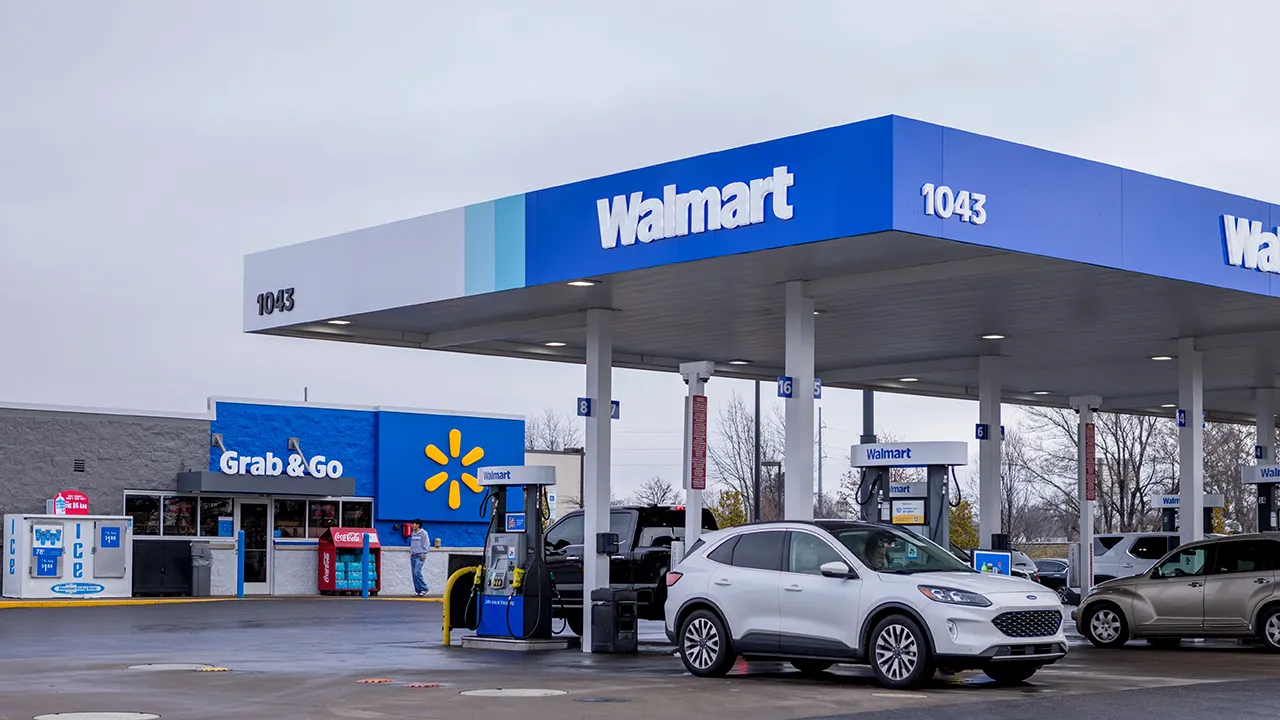
Walmart has warned that surging fuel prices tied to the conflict involving Iran are starting to crush household budgets across the US, forcing shoppers to cut back on everyday spending as fears grow over the strength of the American consumer.
Investors reacted immediately. Walmart shares plunged 7% after the retail giant warned sales growth would slow in the months ahead, a signal many on Wall Street view as an early warning sign for the wider US economy.
Because Walmart serves millions of middle and lower-income Americans every week, its earnings are often treated as a real-time measure of financial stress inside ordinary households. When shoppers begin pulling back at Walmart, investors worry the damage may already be spreading far beyond retail.
Average US petrol prices have surged to $4.56 per gallon, according to AAA, up sharply from around $3 before tensions in the Middle East escalated. For many families, fuel is suddenly swallowing money that would normally go toward groceries, summer travel, eating out or back-to-school shopping.
The timing is especially painful for households already stretched by years of elevated living costs. Americans heading into the summer months are now facing higher costs almost everywhere at once — at petrol stations, supermarkets and across household essentials.
Speaking to CNBC, Walmart finance chief John David Rainey said earlier tax refunds linked to President Donald Trump’s One Big Beautiful Bill Act had temporarily helped soften the blow from fuel inflation. But he warned that support is now fading just as energy costs continue climbing.
“I think households are about to feel the squeeze much more directly from higher fuel prices,” Rainey said.
Walmart still posted strong first-quarter results, with profits rising nearly 19% year-on-year to $5.3bn while sales climbed 7.3% to $177.8bn between February and April. But investors focused far more heavily on the company’s warning that growth could slow sharply in the current quarter.
Much of the US economy depends on Americans continuing to spend freely. That is why Walmart’s warning rattled markets so quickly.
And the company believes the squeeze could get worse. Walmart warned that continued disruption around the Strait of Hormuz could eventually push food prices even higher across the US. The route carries a large share of the world’s oil exports, meaning any prolonged instability can rapidly drive up transportation, manufacturing and supermarket costs worldwide.
Executives are also closely monitoring fertiliser, nitrogen and phosphate supplies amid fears shortages could feed into another wave of food inflation later this year.
Higher fuel costs are now spilling into almost every part of daily life. Families paying more to drive, commute and travel are starting to cut back elsewhere too, creating fresh anxiety for retailers, restaurant chains and consumer brands heading into the second half of the year.
Danni Hewson, head of financial analysis at AJ Bell, said shoppers facing higher fuel bills are likely to keep prioritising essentials and lower prices wherever possible, a trend that could benefit discount retailers while hurting more expensive chains.
As petrol prices keep climbing into the summer, Walmart’s warning suggests millions of Americans may soon be forced to rethink not just luxury purchases or holidays, but the everyday routines that had finally started to feel manageable again.