In 2024, a book appeared with an argument that runs against fifty years of supply chain orthodoxy.
The Manufacturing-to-Market Framework (M2M): Connecting Production, Distribution, and Commercial Growth contends that distribution networks, long treated as the plumbing of global commerce, are in fact its most underused intelligence system. Distributors see demand shifts before headquarters does. Retailers spot changing purchasing patterns before quarterly reports are generated. Yet in most manufacturing organizations, that knowledge arrives at the production planning table months too late, if it arrives at all.
The book's prescription is direct: regional sell-through data should flow back into production planning on compressed timelines, weekly or even daily, instead of surfacing in the next quarterly review. Its analysis of the 2021 to 2023 semiconductor shortage makes the stakes concrete. When automotive chip demand collapsed early in the pandemic while consumer electronics demand surged, manufacturers with advanced production capabilities could not reallocate capacity because procurement, planning, and commercial forecasting operated on disconnected timelines. The book frames the episode as a case study in what its author terms structural latency, the delay between market signal recognition and operational response, and locates the failure in organizational design rather than technical capacity. That treatment of distribution as an intelligence function distinguishes the framework from conventional supply chain literature, which has typically emphasized cost reduction and delivery speed over market responsiveness.
The author is Kamran Pitafi, a regional business leader with more than 23 years in consumer electronics across the Middle East and Africa. And the framework is not a theory he arrived at in a library. It is the distillation of a career spent accountable for exactly the failures the book describes.
The Companion Methodology: D2C X
The M2M Framework describes how information should move between markets and factories. His second body of work, a structured methodology known as D2C X, or Direct to Consumer Excellence, addresses what organizations should do with it.
Rather than focusing only on direct sales channels, D2C X emphasizes using customer demand as an operational input for manufacturing, inventory management, and supply chain planning. It encourages companies to base production decisions on current purchasing behavior rather than historical averages alone, to position inventory where demand is emerging, and to reduce the organizational distance between the people who understand customers and the people responsible for production decisions. He built the approach specifically for complex emerging markets, where fragmented distribution networks and rapidly changing consumer preferences defeat traditional forecasting models, and its emphasis falls on organizational alignment and faster decision cycles rather than technology investment alone.
Independent research points in a similar direction. A 2022 Boston Consulting Group study found that manufacturers adopting integrated planning processes improved forecast accuracy and reduced excess inventory. Together, the M2M Framework and D2C X present a structured methodology for integrating manufacturing, distribution, and commercial decision-making. Rather than emerging from academic research alone, both frameworks are grounded in more than two decades of executive leadership across international consumer electronics markets.
The Career Behind the Ideas
That accountability began in December 2005, when Pitafi joined LG Electronics as a Planning and Management Executive. It was in the field where he found his stride. Within two years he advanced through Area Sales Executive and Senior Sales Executive roles, building distribution networks across Kenya, Tanzania, Uganda, Congo, and Ethiopia, markets where infrastructure gaps, regulatory complexity, and currency volatility gave textbook forecasting models little to work with. In 2008, he relocated to Dubai as Assistant Manager for consumer electronics across Iraq, Pakistan, and the UAE wholesale division, earning promotion to Manager of Sales and Marketing by 2010 and, in 2012, to Senior Manager and Team Leader covering strategic markets including Iraq, Jordan, Syria, Yemen, and Pakistan, several of them environments where commercial planning met geopolitical reality daily.
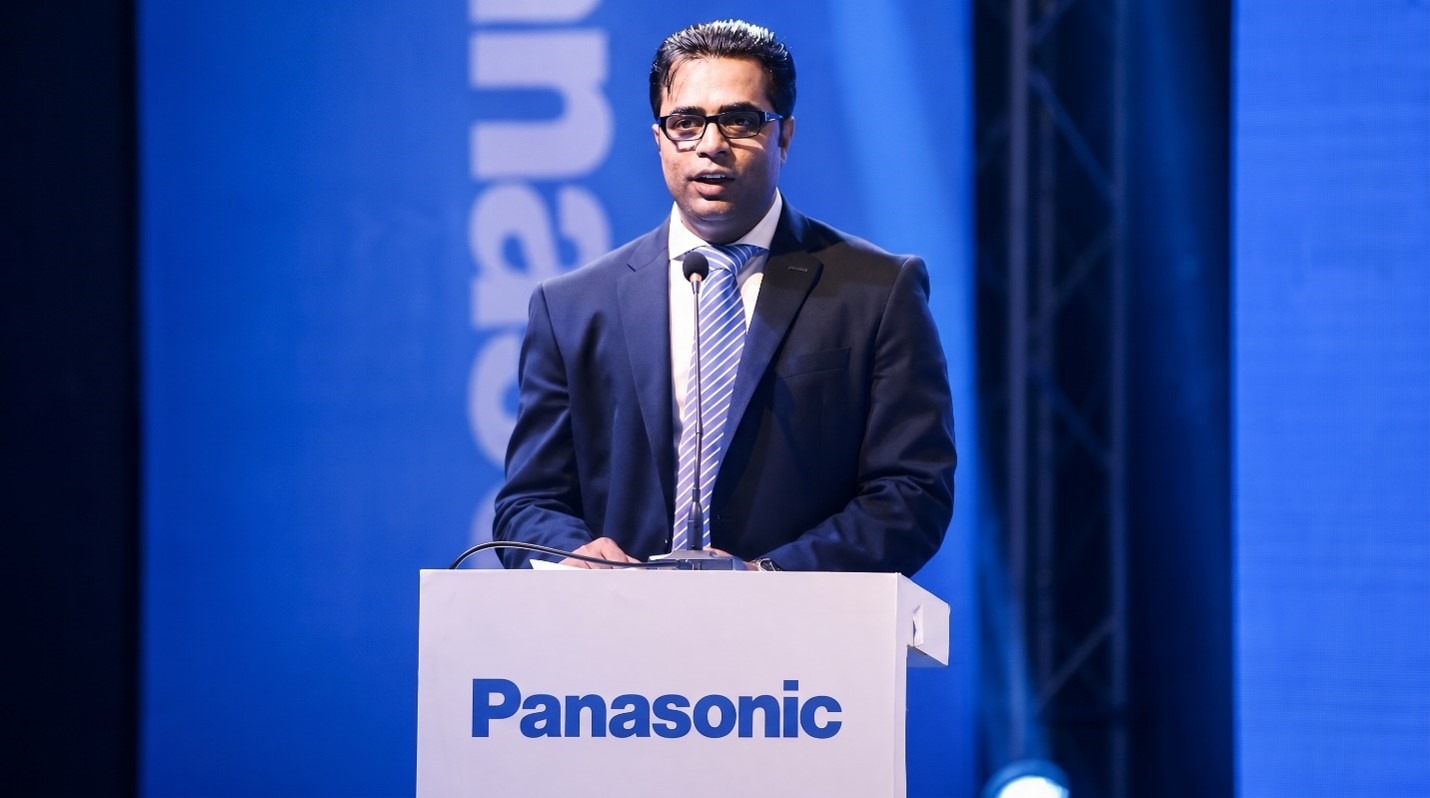
In April 2016, he joined Panasonic as Deputy General Manager of Consumer Sales and Marketing for the Middle East Division. Within approximately eighteen months, he was promoted to General Manager and Head of Department for the Middle East and Africa Division, a position he held from September 2017 through March 2026. Based in Dubai and reporting directly to regional headquarters, he held full profit and loss responsibility for multi-country operations with annual revenue portfolios exceeding $45 million. In that role, he led multicultural teams across sales, marketing, logistics, and customer service, managed distributor networks across markets with varying levels of infrastructure maturity, advanced manufacturing localization initiatives, and balanced global brand standards with localized execution across diverse regulatory and commercial environments.
By his departure in March 2026, Pitafi had accumulated more than nineteen years of commercial leadership experience across LG Electronics and Panasonic, overseeing operations in some of the world's most commercially complex consumer electronics markets. The practical lessons developed throughout that period later became the foundation of both the M2M Framework and the D2C X methodology.
Carrying the Playbook to the Next Generation
Beyond the corporate boardroom, Pitafi has increasingly focused on transferring the operational principles behind his M2M Framework and D2C X methodology to the next generation of entrepreneurs and business leaders. His practical approaches to commercialization, distribution strategy, manufacturing partnerships, and demand-responsive planning are now influencing startups and growing enterprises across Pakistan and the Middle East through his advisory work with leading innovation ecosystems. As part of his commitment to giving back to the entrepreneurial community, he advises founders through organizations including Plan9, BNU Innovatrium, and the National Incubation Center Lahore. Working with early-stage companies, he helps founders build scalable commercial strategies, strengthen supply chain capabilities, establish manufacturing partnerships, and develop distribution models capable of supporting long-term growth. By translating lessons learned from more than two decades of executive leadership into practical guidance, he is helping emerging businesses navigate many of the same operational challenges faced by established manufacturers.
Why the Ideas Travel
For half a century, the ideas that shaped global manufacturing flowed in one direction: from business schools and consulting firms in the West outward to the markets of the Middle East, Africa, and South Asia. Those markets were destinations for theory, rarely sources of it.
That is changing, because the conditions those markets never had the luxury of ignoring, volatile demand, fragmented distribution, and forecasts that break on contact with reality, are now the conditions everywhere. The operators who spent careers managing them are finding their hard-won playbooks globally relevant, and Pitafi's two frameworks represent that shift in documented form. The most consequential export of his career may not be the products he moved across three continents, but the operating knowledge of how he moved them.