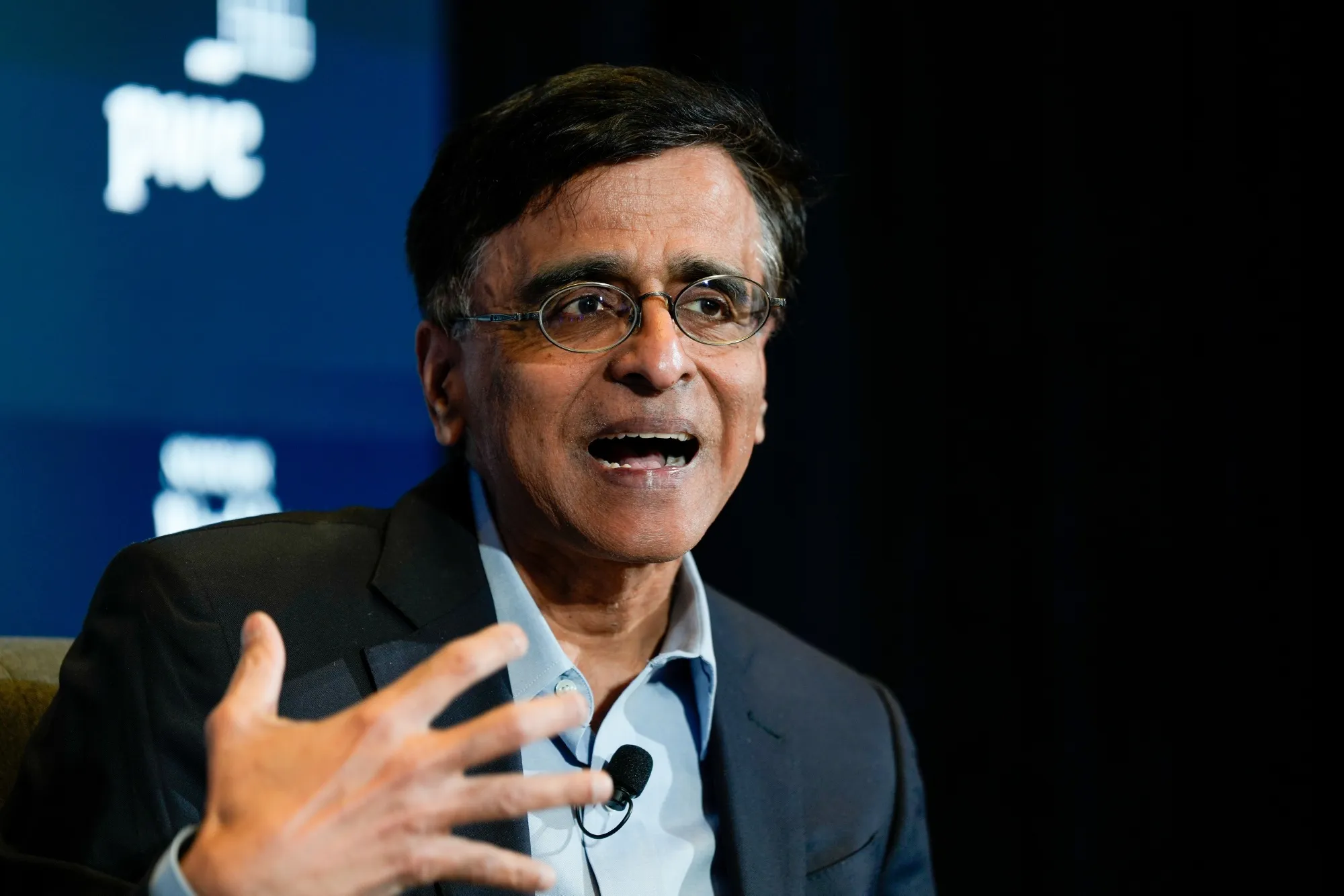
When Sridhar Ramaswamy, chief executive officer of Snowflake, spoke on the “Sourcery” podcast, he was explicit about what no longer works in hiring. “So all practiced answers, I don't like them,” Ramaswamy said, explaining why he avoids standard interview prompts that invite polished rehearsals. Instead, he asks candidates something more revealing: “I'll ask them questions like, ‘Tell me how you changed yourself.’”
The remark has travelled far beyond a single podcast episode because it captures a hiring shift that is still unfolding. As companies rebuild teams around AI-driven workflows and faster product cycles, leaders are rethinking how they identify people who can adapt under pressure. Ramaswamy’s question matters now because it reflects a broader recalibration of hiring standards — one that affects how candidates prepare, how managers assess talent, and how organisations manage risk in an era of constant change.
The Real Impact
At first glance, asking candidates how they have changed themselves sounds like a cultural preference. In reality, it signals a hard business requirement. Snowflake, like many enterprise software companies, is operating in an environment where tools, teams, and priorities can shift within months. In that context, past achievements alone offer limited predictive value.
Ramaswamy’s frustration with traditional interviews is rooted in what they reward. Candidates are encouraged to present tidy narratives: projects completed, efficiencies gained, systems optimised. These answers often demonstrate competence, but they reveal little about how someone responds when familiar playbooks stop working.
“To me, the combination of drive and malleability, those are the prized qualities that set the truly amazing people apart from everyone else, especially at a moment like this,” Ramaswamy said on the podcast. That “moment” is defined by rapid AI adoption across core business functions, from engineering to sales to customer support.
The practical impact is that hiring is being reframed around behaviour under change. Executives are looking for evidence that candidates can absorb feedback, abandon old habits, and retool themselves when circumstances demand it. This shift quietly favours people with non-linear careers, failed experiments, or personal reinventions — experiences that were once considered risky to discuss in interviews.
Where the Pressure Is Building
The pressure driving this change is coming directly from the top. CEOs are being held accountable for how quickly their organisations can adapt to new technologies, particularly AI. Hiring the wrong people does not just slow teams down; it can delay product launches, stall internal adoption of new tools, and increase attrition when employees struggle to keep up.
In large technology companies, a single mis-hire at a senior or highly specialised level can cost hundreds of thousands of dollars once recruitment, onboarding, and opportunity costs are factored in. That risk has become harder to justify when business models are in flux.
Ramaswamy is not alone in adjusting how he screens for resilience. Shopify CEO Tobi Lütke has described his own shortcut for identifying people who perform well in uncertainty. He asks candidates a single question: “Have you started a company before?” For Lütke, the answer helps surface entrepreneurial experience — people who have made decisions with incomplete information and lived with the consequences.
The pressure is also felt inside human resources functions. Dayforce chief people officer Amy Cappellanti-Wolf has said she looks closely at how candidates respond to recent constructive feedback they are actively working on. Candidates who claim they have nothing to improve raise concerns, not confidence. Across these examples, the message is consistent: static excellence is no longer enough.
What Happens Next
This move away from rehearsed answers is unlikely to reverse. As AI tools standardise technical output, the differentiator increasingly becomes how quickly individuals can learn, unlearn, and adapt when tools or strategies change. Interview questions that surface those traits are becoming strategic assets rather than cultural experiments.
For companies, the next challenge is execution. Asking deeper questions requires interviewers who are trained to evaluate subjective answers consistently, without bias or ambiguity. Organisations will need clearer criteria for assessing adaptability, or risk replacing one flawed system with another.
For candidates, the shift changes how preparation works. Perfecting scripted examples of past success may matter less than being able to articulate moments of change — how feedback altered behaviour, how failure prompted growth, or how personal habits evolved in response to new demands. These stories, once treated as liabilities, are becoming signals of readiness.
Importantly, this does not eliminate the need for skills or experience. Instead, it reframes them. Technical competence is increasingly treated as the baseline. The deciding factor is whether someone can evolve as fast as the role itself.
The Bottom Line
Ramaswamy’s interview question resonates because it exposes a broader truth about modern hiring: the qualities that delivered success in stable environments are no longer sufficient on their own. Companies like Snowflake are betting that adaptability, not polish, will determine who thrives as technology and markets continue to shift.
The pressure on leaders to build flexible, resilient organisations is intensifying, and hiring remains one of the few levers they can pull immediately. As a result, job interviews are becoming less about what candidates have done and more about how they respond when change is unavoidable. That shift is already reshaping who gets hired — and who gets left behind.