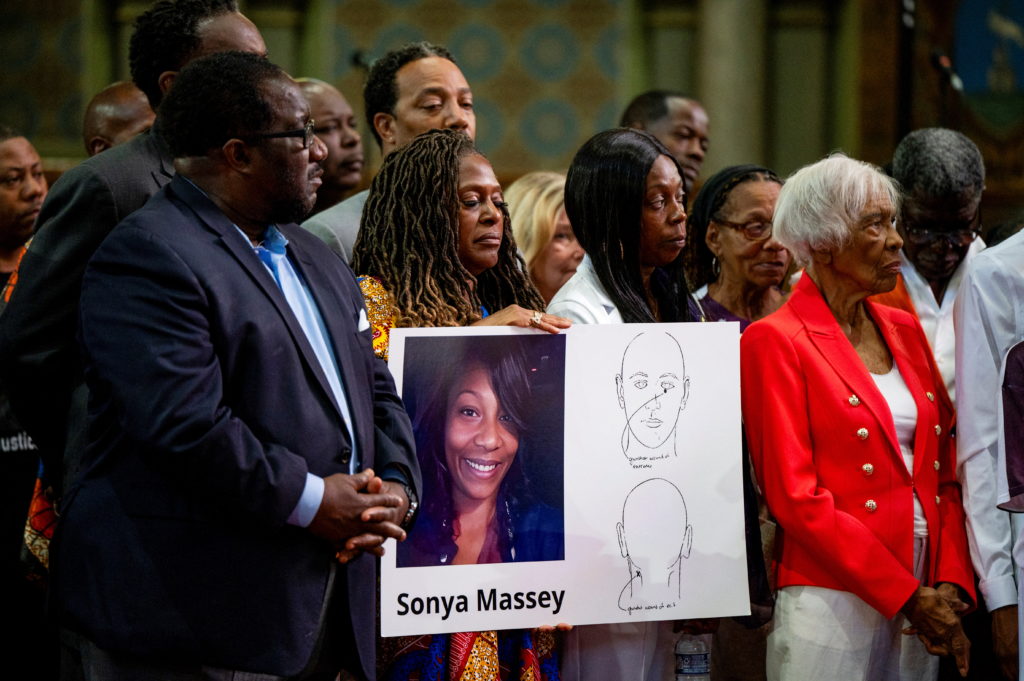
Deputy Sentenced to 20 Years for Killing Sonya Massey — Family Says Calling 911 Changed Everything
The sentence was final, but the impact isn’t. A former Illinois sheriff’s deputy has been sentenced to 20 years in prison for killing Sonya Massey, a 36-year-old woman who called 911 from her Springfield home asking for help. For her family, the ruling closed one chapter of the case while leaving another unresolved: how a request for protection ended in a fatal police shooting.
The man who fired the shot, Sean Grayson, received the maximum sentence allowed under the conviction returned by a jury last fall. He had been incarcerated since he was charged.
In court, he apologized, saying he wished he could undo the harm he caused. Massey’s family, who pushed for the longest possible prison term, said the punishment could never restore what was taken.
What Happened Inside the House
The shooting occurred in the early hours of July 6, 2024, after Massey reported a possible prowler outside her home. Body camera footage later showed deputies searching her yard before entering the house. Massey appeared distressed and confused, repeatedly calling out in prayer.
The encounter escalated rapidly in the kitchen. Massey picked up a pot of hot water during a tense exchange, then set it down and ducked behind a counter. Moments later, Grayson fired, striking her in the face. He later said he feared she would scald him. Massey died at the scene.
The Human Cost the Sentence Can’t Touch
During sentencing, Massey’s parents and her two children described how their lives have changed since the shooting. Her children said they were forced to grow up without their mother. Her mother told the court she now lives with fear and hesitation, even when it comes to calling police for help.
That fear echoed beyond the courtroom. Massey’s killing became a symbol for many families who worry about what happens when law enforcement responds to mental health crises or distress calls. The question raised isn’t only about one officer’s actions, but about what safety means when help arrives armed.
Why 20 Years Still Feels Like Too Little
Illinois law allows a second-degree murder conviction when a defendant claims an honest, even if unreasonable, belief that they were in danger. That distinction spared Grayson a possible life sentence. For Massey’s relatives, the jury’s verdict already felt like a compromise before sentencing ever began.
When the judge read the 20-year sentence, family members reacted with emotion, cheering before being admonished in court. Afterward, Massey’s daughter said plainly that the punishment was not enough. For them, the law’s limits became another reminder that accountability has boundaries victims don’t choose.
The Pressure Point: Trust in Calling for Help
The most immediate consequence of the case isn’t legal precedent—it’s hesitation. Massey’s mother told the court she is now afraid to call police, fearing the outcome could mirror her daughter’s. That sentiment resonates in communities where interactions with law enforcement already carry risk.
Calls for service are meant to bring safety. When they end in death, the damage extends beyond one family. It changes behavior, trust, and the calculation people make in moments of crisis.
Why This Case Keeps Spreading
Massey’s death sparked protests, national attention, and a U.S. Department of Justice inquiry. Sangamon County later agreed to a $10 million civil settlement with her family, expanded de-escalation training, and new requirements for transparency in hiring officers. The sheriff who hired Grayson was forced to retire.
None of those steps undo the shooting, but they reflect how one incident can ripple outward—into policy changes, payouts, and public debate about policing inside homes.
The Debate That Remains Open
Supporters of the sentence argue it shows that officers can be held criminally responsible when they misuse force. Critics say the downgraded conviction exposes how rarely police shootings result in penalties that feel proportional to the harm done.
The court resolved the case before it. It did not resolve the broader question families are left with: what protection exists when the people summoned for help become the source of danger?
For Massey’s relatives, justice arrived measured in years. The absence they live with has no such limit.