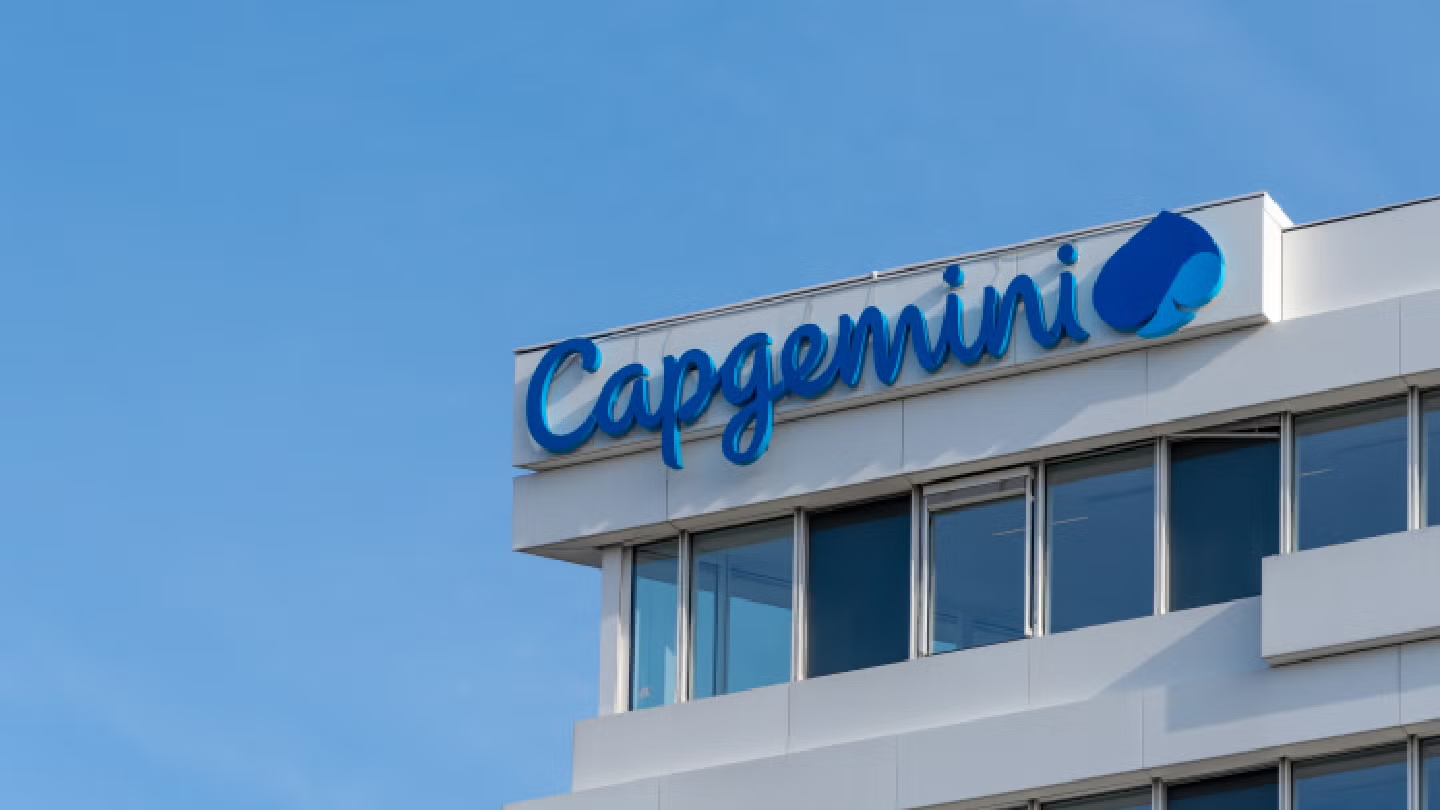
French technology powerhouse Capgemini has announced it will sell its U.S. subsidiary after scrutiny over its work with the U.S. Immigration and Customs Enforcement (ICE) agency sparked intense public backlash. The decision follows international and domestic criticism of the methods ICE agents used in Minnesota, including fatal shootings that have amplified outrage over the agency’s enforcement practices.

Capgemini Government Solutions, the subsidiary under pressure, had been contracted since December 18, 2025, to provide “skip tracing services for enforcement and removal operations,” a process used to locate individuals whose whereabouts are unknown. The work, slated to continue through March 15, 2026, is valued at more than $4.8 million, according to public U.S. government records.

The announcement to divest comes amid questions about how oversight failed and whether corporate leaders were fully aware of the subsidiary’s ICE work. Capgemini said in a statement that it had been unable “to exercise appropriate control over certain aspects of this subsidiary's operations to ensure alignment with the Group’s objectives.” “The divestiture process of this business will be initiated immediately,” the company confirmed, signaling a rare public acknowledgment of internal lapses.

How Capgemini Became Entangled

Founded in 1967, Capgemini is a global IT services and consulting firm with over 340,000 employees and a market valuation of €22 billion. Its U.S. arm secured multiple contracts with ICE, one of 13 ongoing agreements. While Capgemini’s main operations focus on consulting and technology, the subsidiary’s contract placed the company in a position of direct involvement in controversial federal enforcement actions.

The backlash intensified after two U.S. citizens, Renee Nicole Good and Alex Pretti, were fatally shot by Border Patrol and ICE agents in Minneapolis, heightening scrutiny of the agency’s methods and contracts. French lawmakers, including Finance Minister Roland Lescure, demanded transparency, while opposition MP Hadrien Clouet called for sanctions against firms collaborating with ICE, warning that private companies were “complicit in practices we cannot accept.”

Capgemini’s CEO, Aiman Ezzat, addressed the controversy in a LinkedIn statement, noting that the contract raised “questions compared to what we typically do as a business and technology firm” and admitting that senior management only recently became aware of the full scope of the U.S. subsidiary’s engagement.

Why Oversight Failed

The Capgemini case underscores the challenges of maintaining control over sprawling multinational operations. While the parent company exercises broad corporate governance, subsidiary-level decisions can slip through gaps, particularly when contracts are fast-moving or politically sensitive. Internal compliance mechanisms may have been insufficient to flag the ethical and reputational risks associated with working directly with ICE.

This exposure demonstrates that even established global firms can misjudge the public consequences of subcontracted operations, creating vulnerabilities in trust and reputation that cannot easily be reversed. Capgemini’s decision to sell the U.S. arm is a direct response to this gap, but it raises questions about how similar oversights may exist elsewhere in large multinational corporations.

Federal immigration enforcement officers walk along a residential street during an operation in Minnesota.

Federal immigration officers conduct an operation in Minnesota amid changes to enforcement guidance following recent protests and public safety concerns.

The Public Risk and Backlash

For employees, investors, and the general public, Capgemini’s entanglement with ICE highlights a dangerous precedent. Multinational firms may become financially and reputationally exposed without direct involvement in day-to-day operations. Clients and shareholders alike now face the reality that public perception can rapidly influence corporate decisions, and that government contracts may carry unanticipated human and ethical risks.

Public confidence in Capgemini has been shaken, with French lawmakers openly questioning the company’s judgment. The story reflects broader concerns over corporate accountability and the difficulty of ensuring ethical compliance in subsidiaries operating across borders, industries, and politically sensitive sectors.

Accountability Gap

Responsibility remains murky. Capgemini’s CEO acknowledges partial awareness, yet the full chain of decision-making that led to the ICE contract remains unclear. U.S. regulators and ICE itself did not flag the engagement as unusual, while French oversight bodies are only beginning to probe the firm’s role.

This leaves a classic accountability gap: corporate leaders are publicly answerable, yet the mechanisms that allowed the contract to proceed without scrutiny remain opaque. The situation invites debate about whether this is systemic in global corporate governance or a rare failure of one subsidiary.

Strategic Debate Zone

The controversy also raises tensions between corporate freedom and public responsibility. Should multinational firms operate in high-stakes environments like government enforcement without fully disclosing operations to stakeholders? Was Capgemini’s sale of its U.S. subsidiary an inevitable corrective step, or a reaction forced by public outrage? These questions linger as other companies watch closely.

What Happens Next

The divestiture is already underway, signaling heightened scrutiny for similar contracts across the tech and consulting sector. Media and regulatory attention will likely persist as details of the subsidiary’s contracts and internal decisions continue to emerge. The sale may protect Capgemini from further immediate reputational damage but cannot fully erase the exposure created by its subsidiary’s ICE engagement.

Trust Under Pressure

Capgemini’s rapid response demonstrates that even the largest corporations face acute vulnerability when public trust erodes. Once credibility is questioned, restoring confidence is difficult, and divestiture may not resolve underlying systemic risks. This episode leaves stakeholders — from employees to policymakers — contemplating the delicate balance between corporate growth, ethical responsibility, and human consequences in high-pressure global markets.

Lawyer Monthly Ad
generic banners explore the internet 1500x300
Follow Finance Monthly
Just for you
Adam Arnold
Last Updated 2nd February 2026

Share this article