There was no safety net. No delay. No way to stop.
When Alex Honnold stepped onto the wall for Netflix’s live “Skyscraper Live” broadcast, a single slip would have played out in real time in front of a global audience — and the payment for taking that risk came in under $1 million.
The figure is not speculative or inflated. It is the confirmed number attached to a night where failure, interruption, or hesitation would have played out in real time.
For Honnold, the pressure wasn’t financial insecurity or the need to maximize a payday. It was the format. Live television removes buffers. There is no edit, no reset, no way to reclaim control once the cameras roll.
Accepting meant submitting a body and a reputation to a schedule and an audience that could not be slowed down, even if he needed it to be.
The money, by industry standards, landed below the level usually associated with a one-off global event carrying physical risk and reputational exposure.
Less than seven figures is not a headline premium in streaming terms. At this level, the number doesn’t function as reward. It functions as a boundary. It marks how much disruption is acceptable without turning a single appearance into a lifestyle obligation.
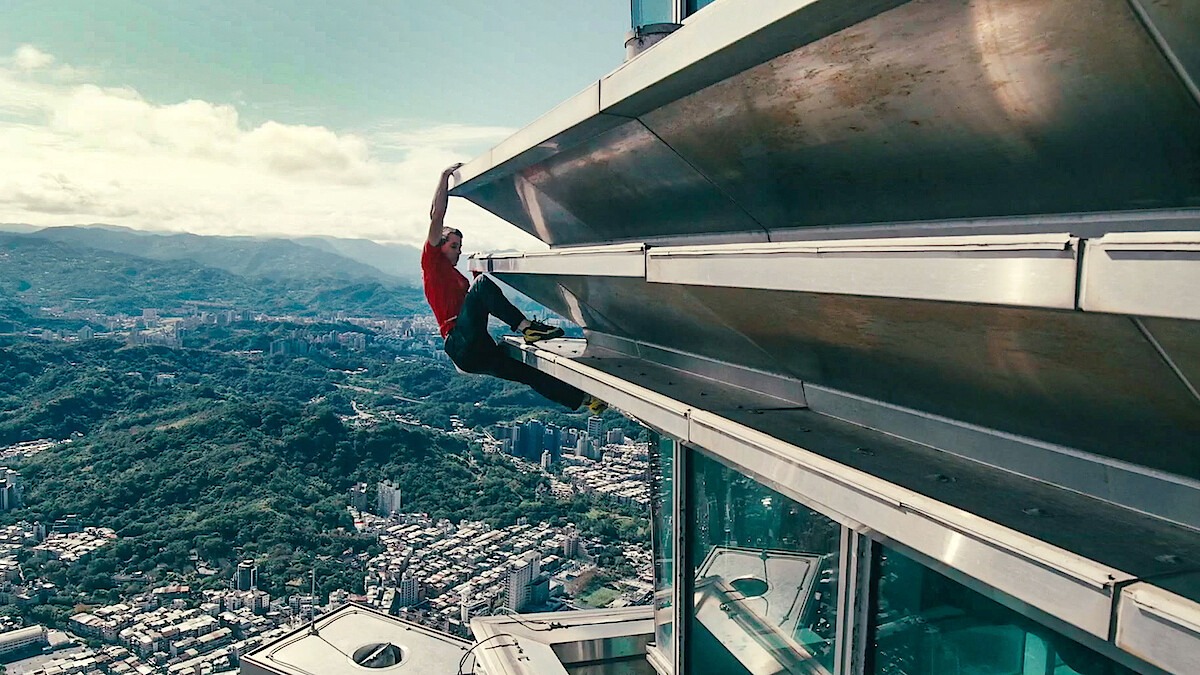
Alex Honnold climbs the exterior of Taipei 101, suspended above the city during a high-rise ascent linked to Netflix’s live event.
On the day of the broadcast, the real cost showed up in quieter ways. Hands chalked and re-chalked longer than expected. Weight shifted deliberately against steel and glass, not for drama but for regulation.
The pauses that looked cinematic on screen served a more basic purpose: keeping the nervous system steady while millions watched. There was polish, but it was containment, not spectacle.
That’s where the money framing shifts. The payment wasn’t there to compensate for fear. It covered interruption. Travel, rehearsal windows, media obligations, and the cognitive load of being live without an exit.
At this tier of visibility, money isn’t about accumulation. It’s about keeping life from being permanently restructured by a single yes.
This pattern is increasingly visible among high-control public figures operating near the edge of their fields. Accept the appearance, but cap the reach. Take the project, but limit the aftershocks.
The lower figure becomes a filter, not a concession. It keeps future expectations from compounding.
To an ordinary viewer, less than $1 million still sounds enormous. To a platform, it’s efficient. To the person absorbing the risk, it’s insurance.
Saying yes at that number avoids turning one night into a permanent escalation loop of bigger stunts, louder formats, and shrinking margins of autonomy.
There’s an unresolved tension sitting underneath it all. Should an event like this command more, given its scale and exposure? Or is the ability to accept less precisely what separates leverage from dependence at the top?
Money usually tracks danger and difficulty. Here, it tracked restraint.
After the cameras shut off, there was no visible pivot. No victory circuit. No signal that the event had altered the shape of Honnold’s life or ambitions. The cheque didn’t expand anything. It contained it.
That leaves the uncomfortable question hanging in the air. When money stops being the motivator, and starts acting as a guardrail, is walking away from escalation the real luxury and how much does that kind of quiet actually cost?