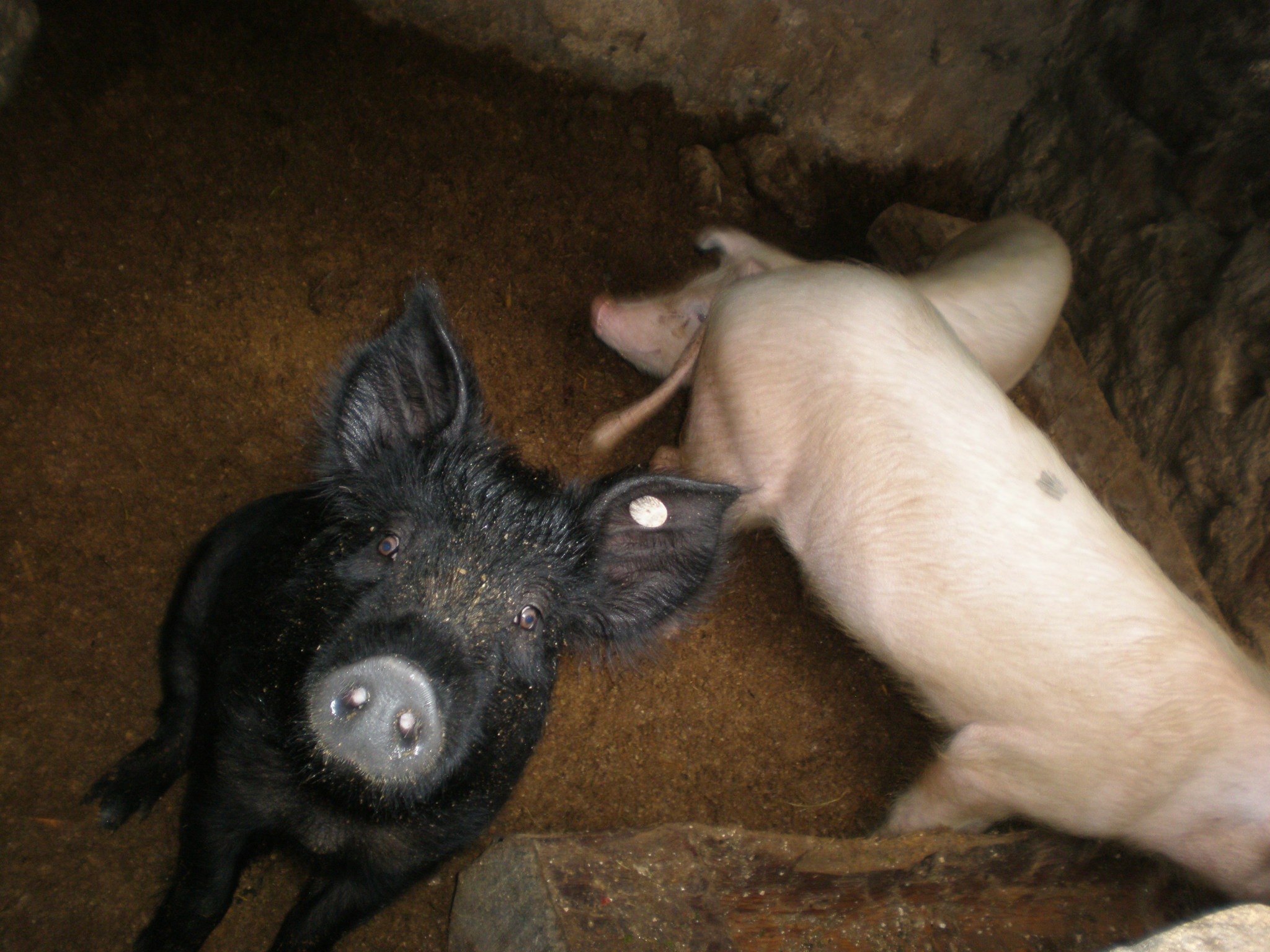
China’s consumers are abandoning Western “white pig” pork, leaving farmers and producers scrambling to keep up with a booming black pork market. Across Jiangsu province, middle-class families are demanding the pork of their childhoods, prized for its fattier, more flavorful meat, while traditional mass-produced pork falls out of favor.
The sudden surge is exposing cracks in supply chains, industry standards, and long-standing production methods, and no one yet knows whether the market can sustain the frenzy.
Gao Xianghua, a mother in Taizhou, is among those leading the shift. For this Lunar New Year, she spent 1,000 yuan ($144) at a local butcher to secure black pork ribs, feet, and sausages, planning to season and hang them on her balcony. “I want my kids to eat the good pork I used to have when I was little,” she said. “Not the cheap, low-quality, fast-produced pork that has penetrated my kids’ lives.”
The middle class’s nostalgia has collided with a market in crisis. After decades of relying on imported Western breeds — chosen for faster growth and higher yields — China’s pork industry is facing declining prices and overcapacity.
In December, pork prices dropped 14.6% from the previous year, while major producers Wen Foodstuff and Muyuan Foods reported 2025 profits down 40.7% and 12.2%, respectively. For many small and medium farmers, black pork is no longer just a specialty — it is a lifeline.
Yang Xinchun, a 49-year-old pig farmer in Taizhou, turned his fortunes around by raising black hogs starting in late 2024. His 1,000 black pigs offset losses from 6,000 white pigs, earning him over 1 million yuan in 2025 alone. “People come to my butcher store every day to learn from my experience,” Yang said, as he prepares to expand his herd to 15,000 and open 40 black pork franchise stores this year.
But the shift exposes a fragile system. Unlike Spain’s Iberico pork, China lacks a standard for black pork. Producers are crossbreeding black pigs with Western Berkshire or Duroc lines to accelerate growth while maintaining the dark coats and quality meat, yet there is no uniform regulation, leaving room for confusion and potential oversupply.
Analysts warn that if too many farmers chase black pork profits, margins could collapse, undermining the very market that now promises relief.
Large corporations are also racing to adjust. Wen Foodstuff aims to make black pork 5% of its herd by 2027, while New Hope has already expanded its 150,000-strong black hog production. Across the country, analysts predict the number of black pigs will grow 50% to 30–32 million between 2024 and 2026. Demand currently exceeds supply by 15% to 20%, but uncertainty over distribution, consumer loyalty, and price tolerance means the market is treading on thin ice.
The accountability question looms: who is responsible for preventing chaos in a market with no standardized grading, a flood of new producers, and soaring consumer expectations? Local governments have promoted black pork to revive rural economies, but oversight remains fragmented. For farmers like Yang, corporate giants like Wen, and consumers like Gao, the pressure is real, yet guidance and regulation lag behind the frenzy.
The broader implications are striking. As black pork gains cachet among middle-class families seeking quality and nostalgia, the industry faces structural stress, untested supply chains, and a volatile pricing environment. Producers are navigating a market where rapid adaptation is essential, but a single misstep — oversupply, price collapse, or consumer rejection — could ripple across regions and chains.
For now, China’s black pork boom continues, leaving producers, consumers, and regulators in a precarious balancing act. Trust in the market is being built and tested simultaneously, and the question hangs: can a nostalgic specialty save an industry long dominated by efficiency and scale, or will the lack of standardization and unchecked expansion undermine the very recovery it promises?