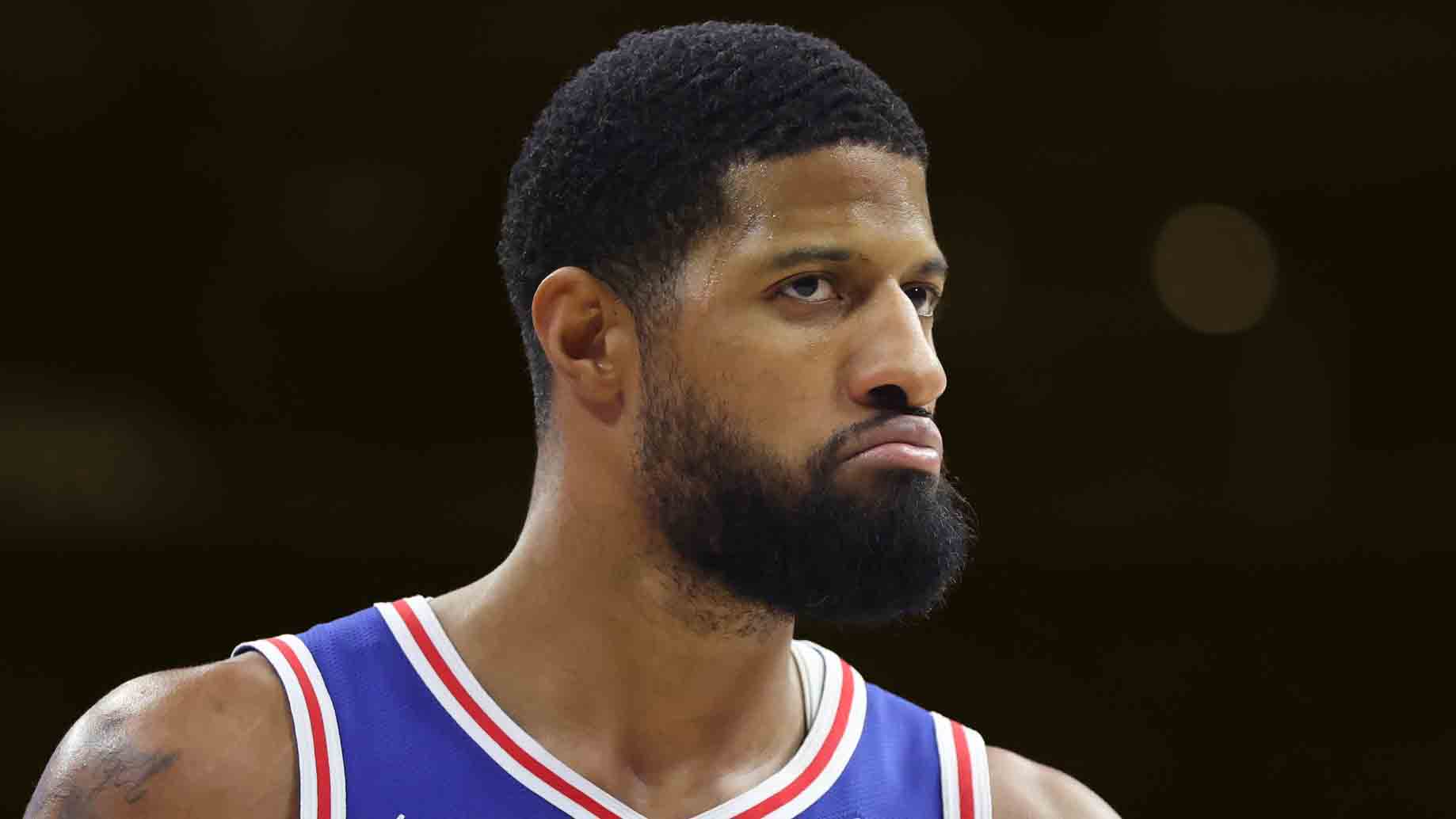
The NBA announced on Saturday that Paul George has been suspended for 25 games for violating the league’s anti-drug program.
The suspension takes effect immediately and removes him from Philadelphia’s lineup through late March, with salary forfeitures beginning now.
What changed in practice is not the rule itself but the calendar, as games, pay, and roster decisions are now being absorbed without him.
The league did not disclose the substance involved, only that the violation falls under the jointly administered anti-drug program.
That silence matters because it fixes the length of the ban without closing off questions about context, timing, or mitigation.
For the player and the team, the enforcement is already complete even as the explanation remains partial.
The immediate pressure lands on the court first.
Philadelphia loses a starter for nearly a third of the remaining regular season, with the suspension covering games that directly affect playoff positioning.
Every game played without him now counts the same as one played with a full roster, even though the conditions have changed.
There is also a direct financial effect that begins game by game. George’s contract pays on appearances, and the 25 missed games translate into roughly $11.7 million in lost salary. That money does not pause or defer; it is gone as the schedule advances.
Secondary pressure moves to the organization around him.
The Philadelphia 76ers must play through the suspension while staying within roster and salary-cap constraints that do not relax when a star is sidelined.
The team remains accountable for wins, losses, and standings even though one of its highest-paid players is unavailable.
The timing compresses decisions that were already close to the edge.
With the trade deadline approaching, front offices normally weigh performance trends over weeks, not days.
That window narrows when a suspension removes a key variable and forces choices with less information.
The ban also affects how other players are used right now. Minutes, matchups, and late-game roles shift immediately, increasing workload and exposure for teammates asked to fill gaps on short notice. Those adjustments accumulate quietly across games, even if they are not framed as emergencies.
What makes delay costly here is that nothing waits for clarification.
The league’s decision is final for the season’s calendar, and appeals or explanations do not pause the standings.Each game played during the suspension increases the distance between what the team planned for and what it can actually deploy.
The enforcement reflects a broader pattern inside professional sports governance. Rules are triggered procedurally, with penalties attached to categories rather than narratives. Once that trigger is pulled, the system moves forward regardless of how much detail is publicly released.
For fans and ticket holders, the effect is less abstract than the policy language suggests. People buying seats, planning travel, or tuning in are doing so without one of the players they expected to see. The product changes even though the price and schedule do not.
The league’s handling keeps responsibility clearly assigned but explanation limited.
The National Basketball Association confirms the violation category and length while withholding specifics that might otherwise close the story.
That structure resolves enforcement while leaving context open.
Inside the locker room, the suspension becomes part of the daily rhythm rather than a single event.
Practices, rotations, and game plans are rebuilt knowing that the absence is fixed for weeks, not days. That reality settles in long before any public clarity does.
The calendar is unforgiving in how it absorbs disruption. Games stack, standings shift, and margins tighten whether or not a star is eligible to play.
By the time reinstatement arrives, the consequences of the gap will already be embedded in the season.
George has acknowledged taking an improper medication while seeking treatment for a personal issue.
That statement accepts responsibility without changing the mechanics of the suspension. The league’s process does not adjust once enforcement begins.
As February turns into March, the focus remains on what cannot be accelerated. Eligibility to return is fixed to a date, not to recovery of points lost or games missed.
The system continues to move, even as one of its central figures waits to re-enter it.