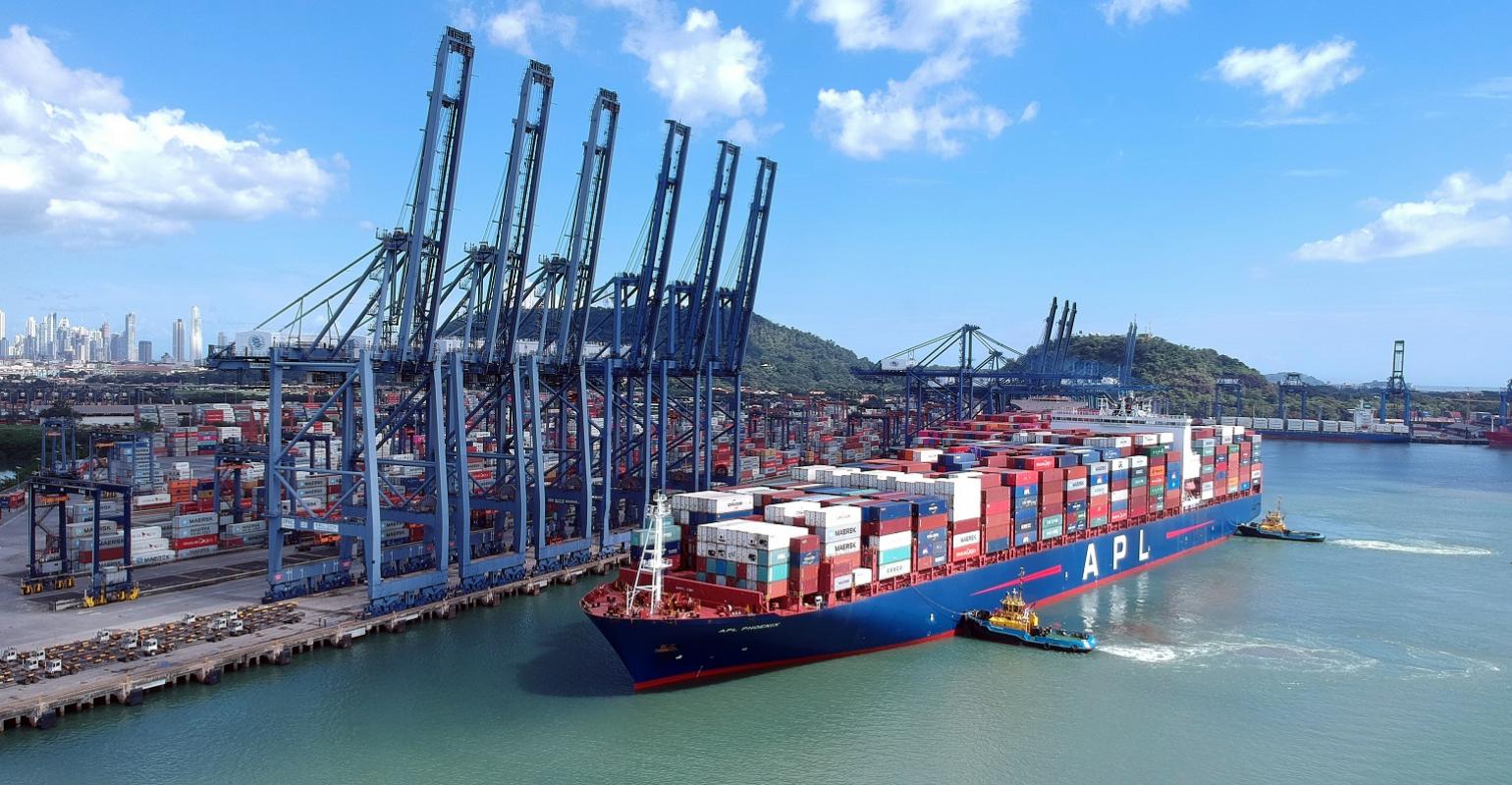
China warned Panama on Tuesday of “heavy prices” after a Panamanian court annulled long-standing port operation contracts linked to the Panama Canal, injecting fresh uncertainty into the governance and control of one of the world’s most critical trade corridors.
The warning followed a ruling that voided contracts held by CK Hutchison, clouding ongoing operations at ports that sit at both entrances of the canal and introducing fresh uncertainty into how access, authority, and continuity will be managed in the near term.
Only after the disruption became visible did the political trigger emerge. Panama’s judiciary ruled that the contracts were invalid under domestic law, a decision that Chinese officials said undermined legitimate commercial rights and crossed into politically motivated interference with global infrastructure.
The immediate effect has not been a shutdown, but a shift in operational confidence.
Port management structures tied to the contracts are now under legal challenge, while counterparties involved in shipping, logistics, and canal-adjacent services face uncertainty over who ultimately controls decisions affecting throughput, scheduling, and long-term investment.
The contracts in question relate to ports at the Atlantic and Pacific ends of the Panama Canal, facilities that function as gateways for container traffic, energy shipments, and bulk goods moving between Asia, the Americas, and Europe.
Even without immediate interruption, questions over governance and authority introduce friction into systems built around predictability.
China’s response elevated the issue beyond a domestic legal dispute. Officials framed the ruling as a hostile act with consequences, signalling that Panama’s decision would not be treated in isolation but as part of a broader challenge to Chinese commercial presence abroad.
The pressure does not resolve quickly because port operations sit inside layered dependencies. Court rulings, concession agreements, sovereign oversight, and international arbitration mechanisms all intersect, meaning authority can be contested without a clear handover or endpoint.
During that period, institutions tend to proceed cautiously rather than decisively.
That caution is already visible. Legal filings show that arbitration has been launched to contest the ruling, a process that can run in parallel with local enforcement but rarely produces fast clarity.
Until that process advances, uncertainty persists over how contracts are honoured, replaced, or unwound.
Regional and international actors are responding by recalibrating exposure rather than exiting. Shipping operators continue to move cargo through the canal, but legal and compliance teams are closely tracking developments, aware that shifts in port governance can affect tariffs, access rights, and operational terms without warning.
Panamanian authorities, meanwhile, face the task of enforcing a court decision while managing diplomatic fallout.
The ruling asserts judicial sovereignty, yet the reaction underscores how legal actions involving strategic infrastructure can reverberate beyond national borders almost immediately.
The situation also places multinational operators in a narrow corridor. Companies operating infrastructure assets in geopolitically sensitive locations depend on long-term legal certainty, but that certainty weakens when domestic courts, foreign governments, and arbitration panels assert overlapping authority.
What happens next remains procedurally open. If pressure continues, arbitration and diplomatic exchanges will shape how control and compensation are addressed, potentially prolonging uncertainty around governance.
If pressure eases, interim arrangements may stabilise operations without resolving the underlying dispute.
For now, the outcome is unresolved. A court ruling has altered the legal footing of key canal-adjacent ports, China has warned of consequences, and the systems that rely on those facilities are operating inside a newly contested framework rather than settled ground.