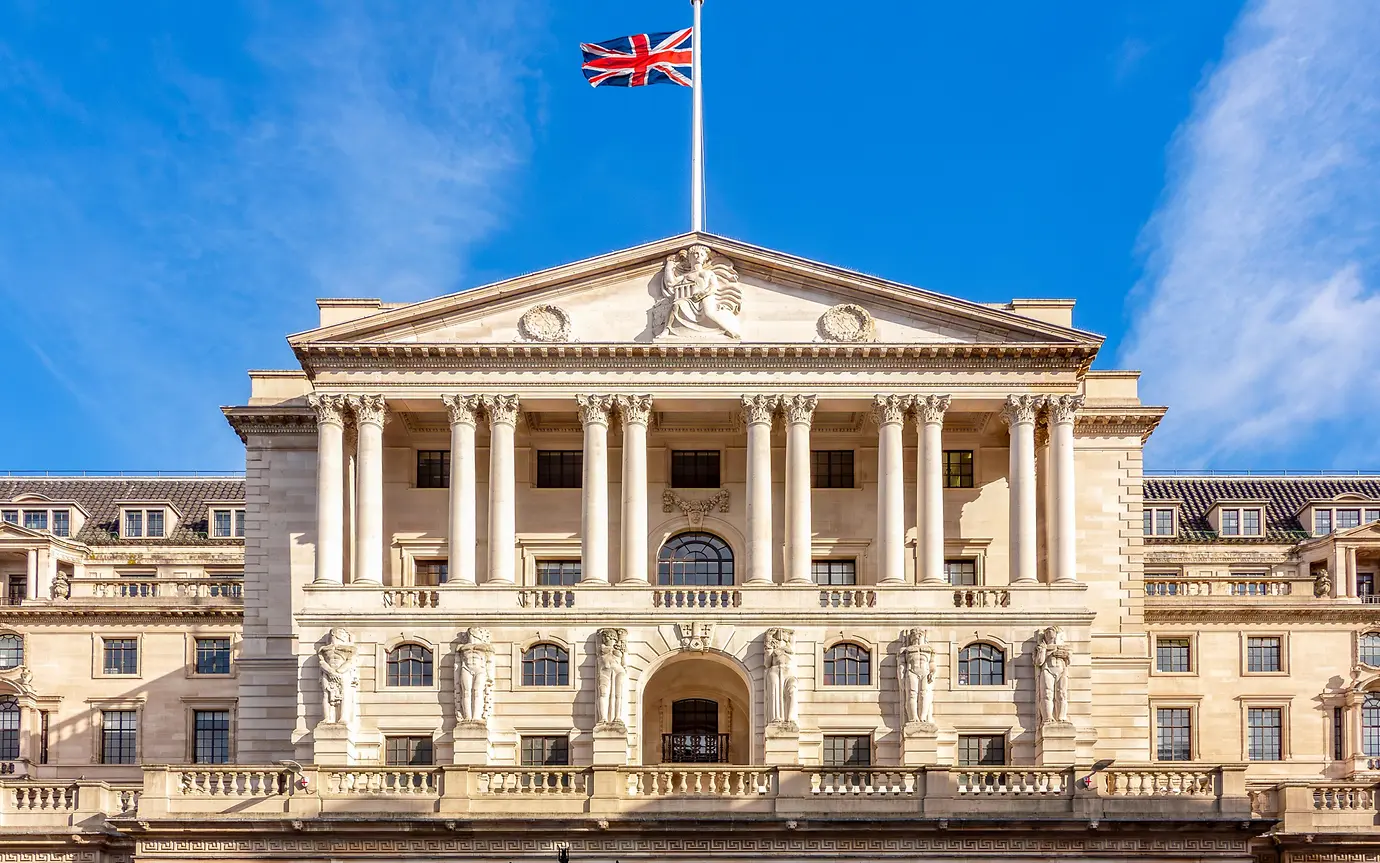
The Bank of England will announce its latest interest rate decision on 19 March, with policymakers facing a finely balanced choice between holding borrowing costs steady or beginning another round of rate cuts as inflation gradually eases.
The central bank’s Monetary Policy Committee (MPC) will decide whether to keep the Bank Rate at 3.75%, where it has stood since February, or reduce it by 25 basis points to 3.50%.
Recent comments from Bank of England governor Andrew Bailey suggest the decision remains uncertain. Bailey described the prospect of a March rate cut as a “genuinely open question” as policymakers weigh evidence that inflation is moving closer to the central bank’s 2% target.
The outcome will be closely watched by financial markets, mortgage borrowers and businesses across the UK because changes to the Bank Rate influence mortgage costs, savings returns, business borrowing and broader economic activity.
Why the March Decision Matters
Interest rates are the Bank of England’s primary tool for controlling inflation. Higher rates tend to slow economic activity and reduce price pressures, while lower rates can stimulate borrowing and investment.
The UK base rate currently stands at 3.75%, down from a peak of 5.25% in 2024, following a series of cuts over the past 18 months as inflation gradually cooled.
However, policymakers remain cautious. Inflation has fallen but is still above target, while wage growth and services inflation remain areas of concern.
As a result, the March meeting represents an important moment in determining whether the Bank is ready to accelerate its easing cycle or maintain a cautious approach to rate cuts.
The Last Decision Was a Close Call
At the Bank’s previous meeting in February, the MPC voted 5–4 to keep rates unchanged at 3.75%, highlighting divisions within the committee.
Four members supported an immediate rate cut to 3.5%, arguing that inflation pressures were easing and the labour market was beginning to soften.
The majority, including Governor Andrew Bailey, voted to hold rates steady while assessing further economic data.
That narrow split suggests the March meeting could once again be closely contested, particularly if new data shows inflation continuing to decline.
Inflation Is Moving Closer to Target
The latest UK inflation figures showed the Consumer Prices Index (CPI) at around 3% in January, down from higher levels earlier in the year.
The Bank of England expects inflation to return to its 2% target during the spring, helped by falling energy costs and moderating wage growth.
However, policymakers have emphasised that the “disinflation process” is not yet complete, meaning further evidence will likely be required before they commit to sustained rate cuts.
Geopolitical Risks and Energy Prices
The interest rate outlook has also been complicated by the ongoing conflict between the United States and Iran, which has pushed energy prices higher and introduced new uncertainty into inflation forecasts.
Oil prices have risen in recent weeks as markets assess the risk of supply disruptions in the Middle East, a region that remains critical to global energy markets.
Higher energy prices can feed directly into inflation through fuel costs, transport prices and household energy bills. If the increase proves sustained, it could slow the pace at which inflation returns to the Bank of England’s 2% target.
For policymakers, this creates an additional challenge. While inflation has been falling in recent months, a prolonged energy shock could force central banks to maintain higher interest rates for longer in order to prevent a renewed surge in price pressures.
Energy price shocks have historically played a major role in shaping inflation cycles and central bank policy decisions.
Three Possible Outcomes
1. Rates Held at 3.75%
The most cautious option would be for the Bank to keep rates unchanged while monitoring inflation and labour market data.
This would signal that policymakers remain concerned about persistent price pressures even as inflation declines.
2. A 25 Basis Point Rate Cut
The MPC could choose to reduce the Bank Rate to 3.50%, marking another step in the gradual easing cycle that began last year.
A cut would likely be justified by improving inflation data and signs that economic growth remains weak.
3. A Hawkish Hold
The Bank could keep rates unchanged but signal that it intends to cut later in 2026, maintaining flexibility while avoiding an immediate move.
This would allow policymakers to wait for additional data on wages and services inflation before committing to further easing.
What the Decision Means for Borrowers and Savers
The outcome of the meeting will have immediate implications for households and businesses.
Mortgage borrowers typically benefit when rates fall, as lenders may reduce variable-rate mortgage costs and adjust pricing on new fixed-rate deals.
Savings rates, which are also linked to the Bank Rate, tend to decline when the central bank begins cutting borrowing costs.
For businesses, lower rates can reduce the cost of financing investment and expansion.
What Markets Will Watch Closely
Beyond the headline decision, investors will focus on several key signals from the Bank of England:
-
The vote split among MPC members
-
Comments from Governor Andrew Bailey
-
Updated guidance on future rate cuts
-
The Bank’s outlook for inflation and economic growth
These signals will help determine whether financial markets expect the next rate move to come as early as the spring or later in the year.
A Key Moment for UK Monetary Policy
The March meeting is likely to provide important clues about the future direction of UK monetary policy.
With inflation falling but economic growth remaining weak, the Bank of England faces a delicate balancing act between supporting the economy and ensuring inflation returns sustainably to target.
For borrowers, investors and businesses alike, the outcome of the 19 March meeting will help shape expectations for the path of UK interest rates through the rest of 2026.