Households and traders monitoring their crypto portfolios felt the sting overnight as Bitcoin prices plunged and market liquidity tightened. Early Thursday, investors saw Bitcoin dip below $71,000, with Ether slipping under $2,100 amid heightened volatility. The sell-off unfolded during premarket hours, complicating efforts to execute trades, monitor positions, or transfer assets.
The catalyst: President Donald Trump's nomination of Kevin Warsh as the next Federal Reserve Chair. Announced in late January 2026, the pick has fueled speculation about a shift toward tighter monetary policy and reduced liquidity—factors that often weigh on risk assets like cryptocurrencies.
Bitcoin and Ether Prices Under Pressure
In early U.S. trading on February 5, 2026, Bitcoin traded around $70,551, down approximately 6-7% from recent levels, with intraday fluctuations ranging from roughly $69,900 to $76,000. Some reports noted Bitcoin briefly crashing to as low as $69,000-$69,400 amid heavy selling pressure and elevated trading volume exceeding $90 billion.
Ether followed suit, falling to around $2,087-$2,135, reflecting a similar 6-7% decline.
This marks a notable pullback from late-2025 highs, with Bitcoin down significantly from its October peak in some analyses.
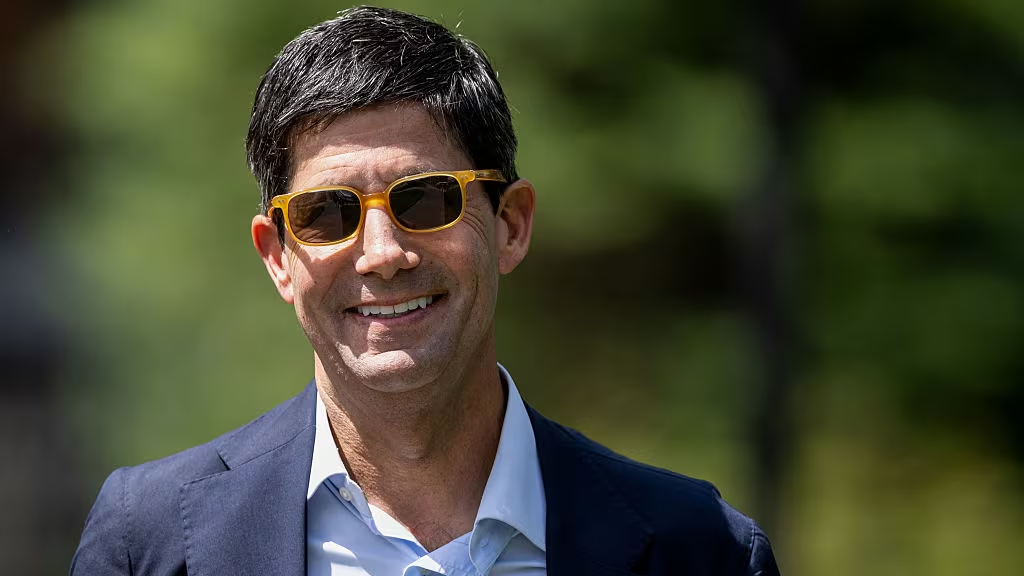
Kevin Warsh, nominated by President Trump to lead the Federal Reserve, pictured here in a rare relaxed moment, highlighting the contrast between public scrutiny and personal composure as financial markets watch his every move.
Who Is Kevin Warsh? A Hawkish Voice Returns to the Fed
Kevin Warsh, a former Federal Reserve Governor (2006-2011), served as a key advisor during the 2008 financial crisis and has since been affiliated with the Hoover Institution. Known as an inflation hawk, Warsh has advocated for monetary discipline, higher real interest rates, and a reduced Fed balance sheet—positions that could signal less accommodative policy if he assumes the chairmanship.
Interestingly, Warsh has spoken positively about Bitcoin in the past, describing it as a "good policeman for policy" and a "sustainable store of value" comparable to gold. He has also invested in crypto startups and supported easing certain banking restrictions on digital assets. Despite these views, markets have interpreted his nomination as potentially bearish for risk-on assets due to the emphasis on tighter liquidity.
Heavy ETF Outflows Amplify the Strain
U.S. spot Bitcoin ETFs saw substantial outflows in January 2026, totaling around $2.9 billion amid falling prices and rising volatility. Daily outflows reached peaks like $817 million on January 29, contributing to broader friction in crypto liquidity.
Some platforms and custodians have responded by tightening limits or extending processing times for transfers and withdrawals, turning routine transactions into multi-hour (or longer) waits. This has left retail and institutional investors struggling to rebalance, sell, or access funds promptly.

A Bitcoin coin — a reminder that in the world of digital assets, anything can happen.
How Traders and Households Are Responding
In response, many traders are pausing new buys, delaying sales, or moving funds more cautiously. Some are reducing overall activity or awaiting clearer signals from the Federal Reserve. ETF managers and brokers are reassessing liquidity thresholds, adding layers of caution across the ecosystem.
The ripple effects touch personal investment accounts, crypto retirement holdings, and larger institutional positions—highlighting how high-level policy shifts can create real-world friction for everyday users.
What Comes Next for Crypto Markets
The outlook hinges on upcoming signals. If Warsh indicates a measured approach to asset reduction or if ETF outflows stabilize, liquidity could improve and trading restrictions ease. Conversely, persistent inflation pressures or signs of Fed tightening could prolong volatility, constrain withdrawals, and drive sharper price swings.
Traders and households now face a week of uncertainty: Will transaction delays persist, or will markets stabilize? The situation underscores the interconnectedness of central bank decisions and digital asset performance in 2026. Investors should monitor Fed statements and ETF flow data closely in the days ahead.