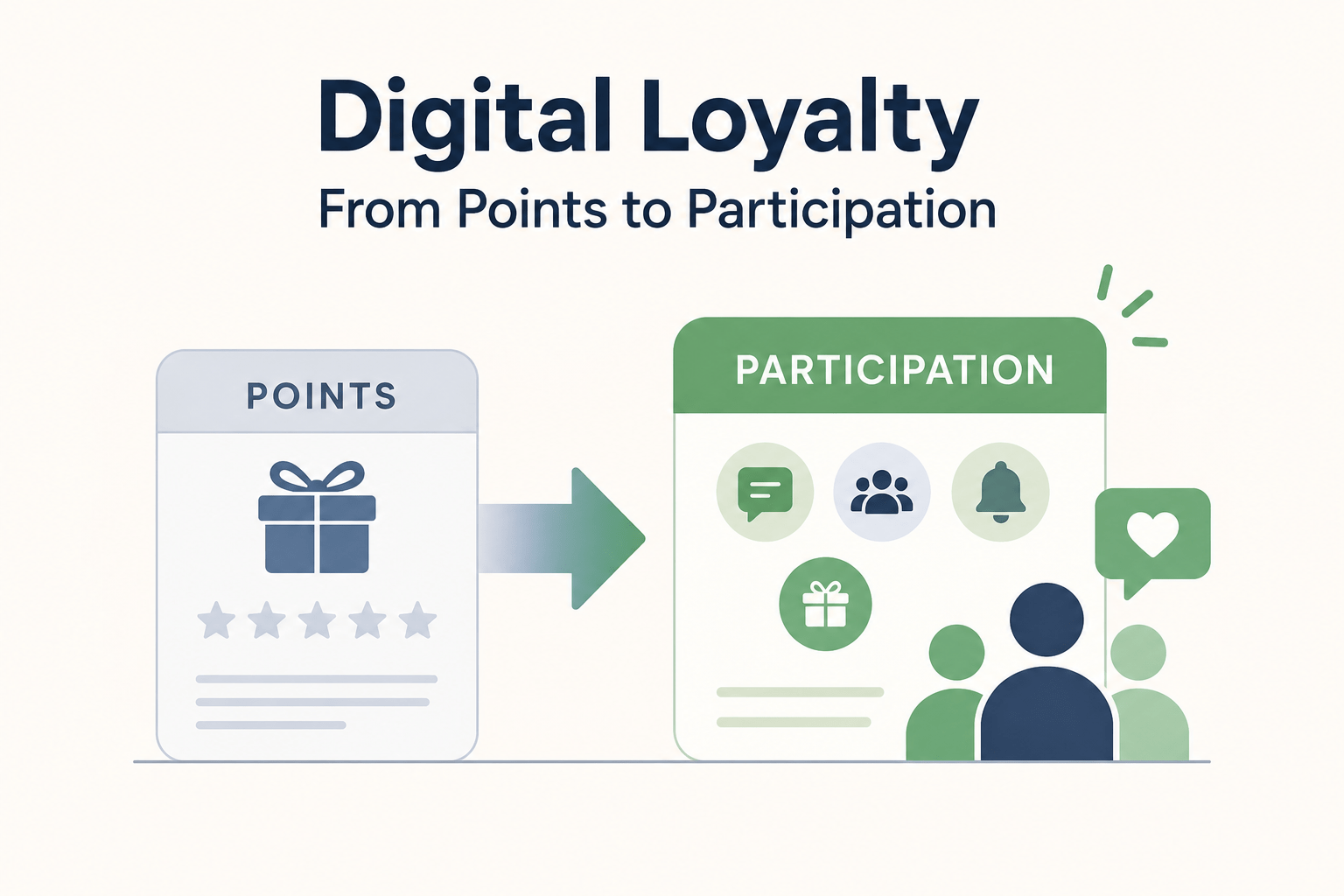
Digital loyalty systems used to be easy to understand. You collected points, checked your balance, and then redeemed it for rewards after getting enough points. That model still exists, but it no longer explains the most interesting part of loyalty. The most important part takes place between transactions, where brands turn attention, community, timing, and repeated participation into a more durable customer relationship.
That shift matters because loyalty is becoming an operating system for digital businesses. A 2025 open-access study on customer loyalty and retention in digital environments highlights personalization, trust, customer experience, and digital innovation as important retention factors. For finance readers, loyalty programs now belong in conversations about customer data, platform economics, app behavior, and staying relevant after a first purchase.
Participation Is Becoming the New Loyalty Layer
Older loyalty systems were built around delayed recognition. A customer bought something, collected points, then decided later whether those points were worth using. Participation-led loyalty works differently because it gives the customer more reasons to re-engage between transactions. That can include app prompts, community updates, limited-time events, content drops, reward reminders, and social channels that make the program feel active.
Digital entertainment makes this shift especially visible because access, rewards, content, and repeat visits often sit close together. As an example, Ignition Australia is an Australian online casino and poker platform, with casino games, poker, promotions, and rewards forming part of the user journey. The useful point is the pattern: loyalty is no longer only a stored balance. A platform such as Ignition Australia shows how rewards can sit beside the activity itself, while community prompts give users a more immediate way to notice updates, content, and reward moments, without waiting for a monthly message or account notice.
That same participation layer is easier to understand through a short social example. Ignition Australia’s Instagram post, “Join our Telegram for Exclusive Rewards”, turns rewards communication into a direct community cue. The post matters because it shows a brand moving the reward message into a space where users can opt in to updates, content, and giveaways. The reward is no longer just something recorded in an account. It becomes a reason to join a communication loop.
View this post on Instagram
Why Points Alone Feel Incomplete
Points are still useful because they give customers a simple measure of recognition. The limitation is that they are often passive. A balance can show progress, but it does not always create momentum. Participation creates momentum by giving the customer something to notice, anticipate, or respond to before the next purchase decision arrives.
This is why modern digital loyalty programs increasingly resemble engagement systems. They use timing, channel choice, and relevance to keep the relationship visible. A travel platform can highlight availability. A subscription service can offer early access. A retail app can use seasonal prompts. In each case, loyalty is not confined to a reward ledger. It becomes part of how the customer experiences the brand.
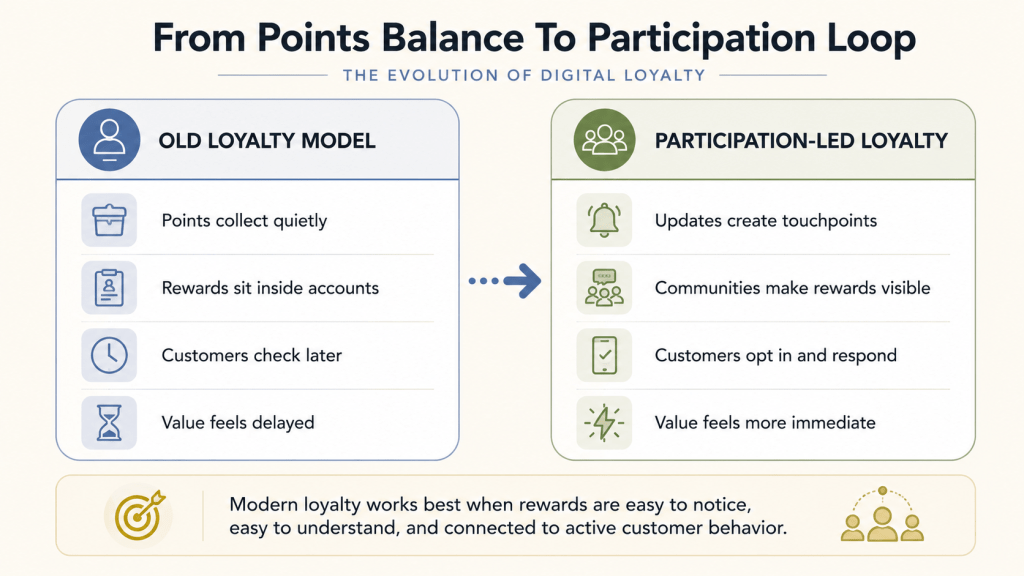
Loyalty is becoming less about asking customers to remember a program and more about designing moments that make the program visible at the right time. That visibility turns a stored benefit into an active relationship.
Communities Make Loyalty More Visible
Community-led loyalty has grown because attention is fragmented. Customers receive emails, app alerts, ads, receipts, and social updates every day. A brand community gives loyalty communication a clearer home, especially when the message is specific and easy to understand.
Telegram-style channels, private groups, and social communities can also change the tone of rewards. Instead of presenting loyalty as a distant account feature, they make it part of a live conversation. That does not mean every message needs to be delivered with a sense of urgency. It means understanding that a clear reward prompt or useful content update can carry more value than constant noise.
For businesses, this changes what loyalty teams should measure. Open rates and point balances still have a role, but participation creates additional signals: who joins, who responds, and which channels feel natural. For customers, the best version feels lighter. They do not need to inspect a dashboard to understand that a relationship is active.
The Real Measure Is Attention with Context
The next phase of digital loyalty will not be judged only by how many rewards a program lists. It will be judged by how well those rewards connect to real behavior. Points can still mark progress, but participation shows whether the relationship has energy.
That is why digital loyalty now belongs in a broader finance conversation. It touches retention, data quality, platform habits, and brand trust. A reward balance tells someone what they have collected. Participation tells a business whether the customer still wants to be part of the relationship, which is why research on loyalty beyond transactions in e-commerce is a useful lens for understanding where digital loyalty is heading.