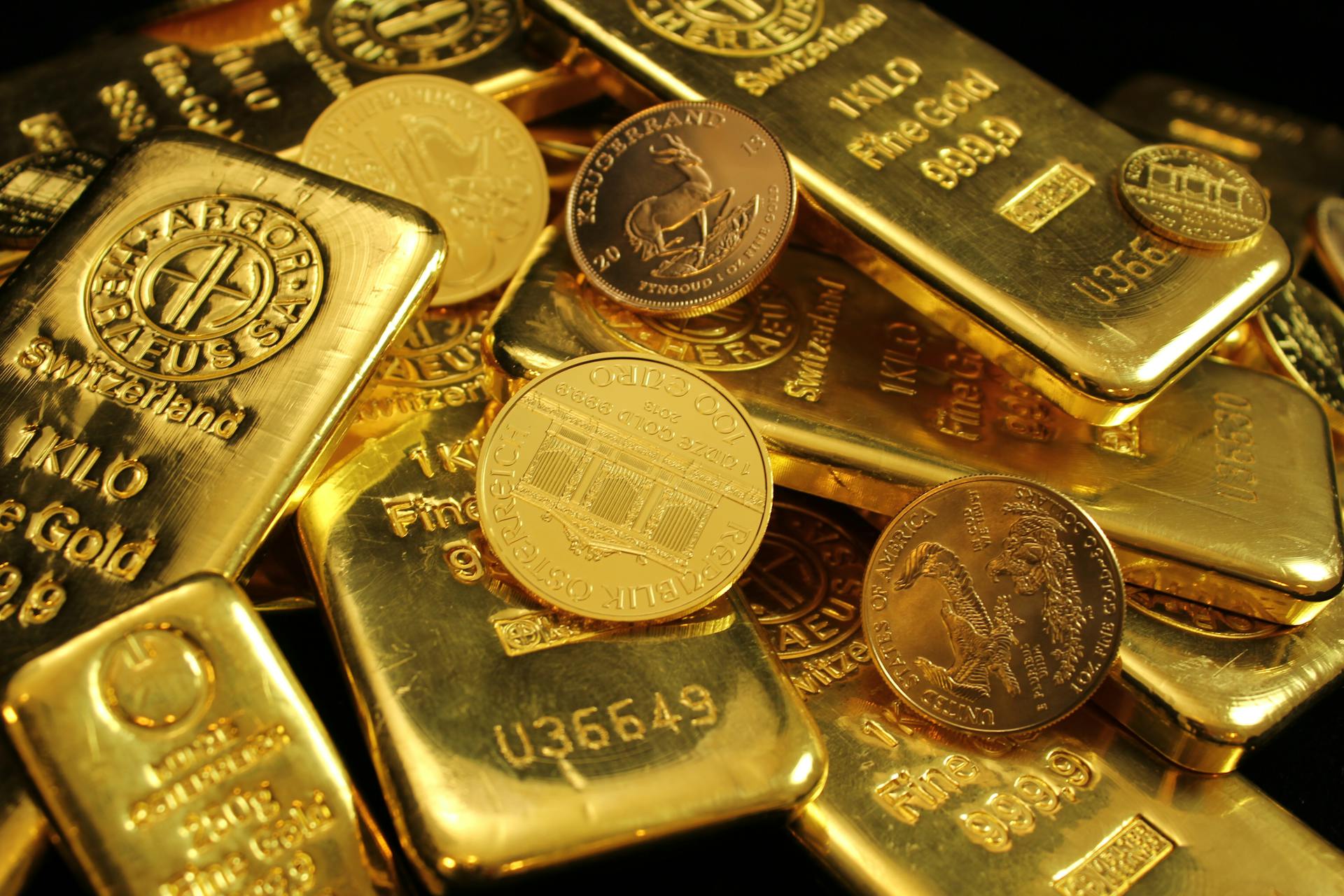
Global gold and silver markets plunged sharply this week, wiping out billions in value and rattling investors worldwide. Spot gold fell more than 9% in Asian trading to around $4,403 an ounce, marking one of the fastest drops in decades. Silver and mining stocks fell even harder, while the U.S. dollar strengthened, amplifying the sell-off.
The catalyst wasn’t economic data—it was political. Markets reacted instantly to the nomination of Kevin Warsh as the next chair of the U.S. Federal Reserve, sparking fears that the central bank’s independence and future monetary policy could shift. Even without any policy change, investor perception alone triggered a cascade of selling, showing just how sensitive global markets have become to political signals.
The fallout highlights a crucial lesson: in today’s interconnected financial system, billions can vanish in hours, not because of market fundamentals, but because of expectation-driven volatility.

Gold, silver and bronze prices came under pressure after political signals around the Federal Reserve triggered a rapid reassessment of risk across global markets.
How Political Signalling Reached Global Markets
For much of the past year, gold and silver had benefited from a convergence of fears, including geopolitical tensions, trade uncertainty, and concerns over whether the Federal Reserve would remain insulated from political pressure. Investors piled into precious metals as a hedge, driving prices to historic levels by late January. Gold briefly surged above $5,500 an ounce, while silver topped $120.
That rally reversed abruptly once Warsh’s nomination became public. Financial markets broadly welcomed the choice, interpreting it as a signal of continuity and restraint rather than disruption. The US dollar rose by around 1 percent, reducing the appeal of dollar-denominated commodities. At the same time, investors rapidly unwound defensive positions that had been built on expectations of prolonged instability.
The result was gold’s steepest one-day fall since 1983 and a collapse in silver prices that erased weeks of gains in a single session. What stood out was how little formal policy had changed, and how much hinged instead on perception and anticipation.
Where Oversight and Safeguards Fell Short
No rules were broken in the process leading to the nomination. The president acted within established authority, and the Federal Reserve made no immediate changes to interest rates or guidance. Yet the episode revealed how dependent market stability has become on informal norms rather than enforceable safeguards.
Central bank independence is underpinned as much by trust as by statute. While legal protections exist, they are limited in their ability to prevent markets from reacting to political signals alone. In this case, the expectation of future policy direction proved enough to trigger a broad reassessment of risk, exposing how vulnerable crowded trades had become.
Oversight mechanisms are not designed to manage this type of expectation-driven volatility. Regulators monitor leverage, disclosure, and misconduct, but they do not intervene when markets react to leadership changes that are lawful yet destabilising. This leaves a gap between what is permitted and what is prudent, one that became visible only once prices began to fall.
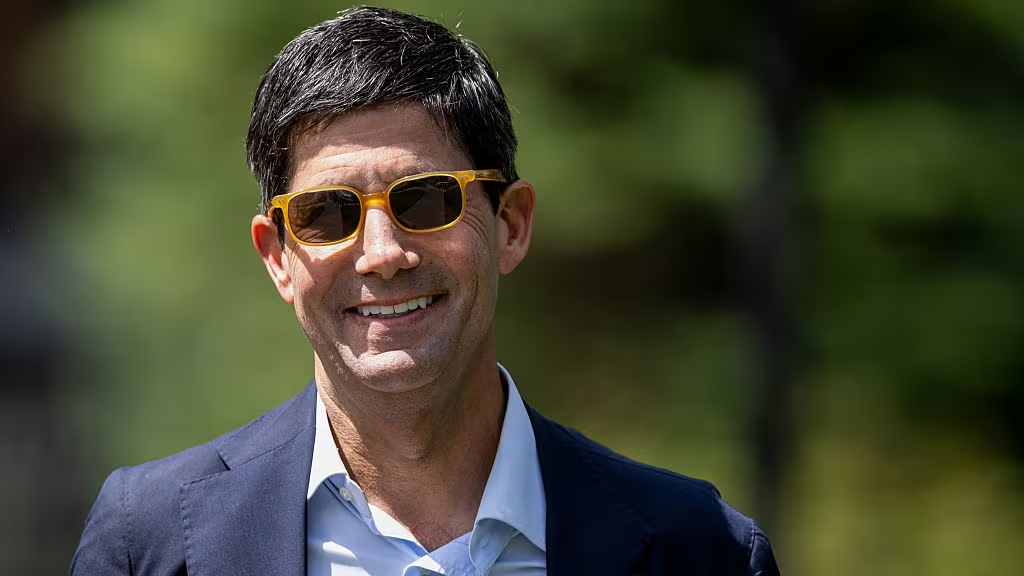
Kevin Warsh, nominated by President Trump to lead the Federal Reserve, pictured here in a rare relaxed moment, highlighting the contrast between public scrutiny and personal composure as financial markets watch his every move.
Why the Fallout Extends Beyond Traders
The sharp decline in precious metals prices has implications far beyond speculative investors. Gold plays a central role in pension portfolios, central bank reserves, and long-term institutional hedging strategies. Sudden swings can affect funding assumptions, currency stability, and confidence in financial planning at a national level.
Mining companies felt the impact immediately, with major producers seeing shares drop sharply as the sell-off accelerated. Asian stock markets followed, led by steep losses in South Korea, while European indices opened lower amid weakness in resource stocks. Even energy markets were affected, with oil prices sliding as the stronger dollar and easing geopolitical tensions weighed on demand.
For the public, the concern is not the daily price of gold, but what such volatility suggests about the resilience of the financial system. Assets long viewed as safe havens proved highly sensitive to political developments, blurring the line between protection and speculation.
The Accountability Gap Comes Into Focus
Responsibility for the turmoil remains difficult to assign. The White House exercised its nomination powers. The Federal Reserve did not signal a policy shift. Regulators did not overlook a clear violation. Investors acted on expectations rather than directives, responding to perceived changes in the balance of power.
This diffusion of accountability is central to the scrutiny now facing institutions. When market stability depends on informal conventions, there is no clear mechanism for intervention when those conventions are tested. Congressional oversight exists, but it is slow and reactive. Market regulators focus on conduct, not confidence. Central banks rely on credibility that cannot be legislated.
As a result, no single authority appears responsible for anticipating or mitigating the cascade that followed. The question is not who caused the sell-off, but why no system exists to buffer markets from such abrupt shifts in perception.
A Broader Debate Over Stability and Independence
The episode has reignited debate over the balance between democratic control and monetary independence. Supporters of the current framework argue that markets must be free to reprice risk, even violently, and that political leaders cannot be expected to manage investor psychology. Others contend that when a single nomination can wipe out billions in value, it exposes a fragility that has gone unaddressed.
This tension sits at the heart of modern financial governance. Speed and transparency can clash with stability. Innovation and responsiveness can undermine predictability. As markets become more interconnected and reactive, the costs of misaligned expectations grow larger.
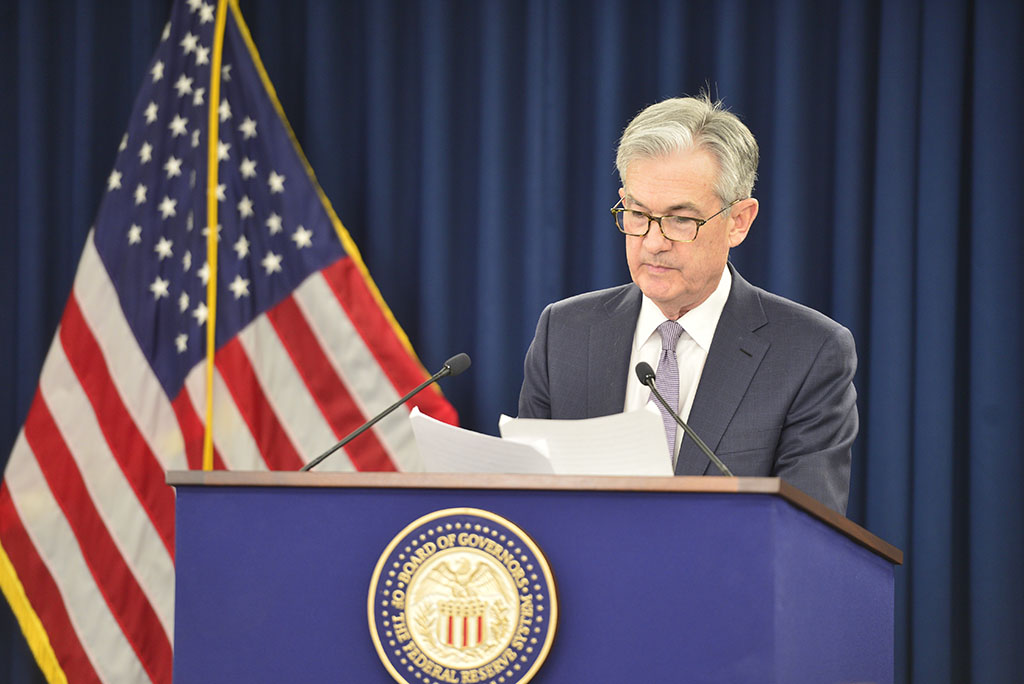
Federal Reserve Chair Jerome Powell delivers remarks at a public event as markets react to growing questions over central bank independence.
What Scrutiny Looks Like From Here
In the wake of the sell-off, attention is turning to how expectations are communicated and managed. Analysts and policymakers are reassessing whether existing norms around central bank independence remain sufficient in an environment where markets respond instantly to political signals.
There is also renewed focus on whether similar vulnerabilities exist in other asset classes that have surged amid uncertainty. The concern is not confined to gold or silver, but to any market where confidence rests on assumptions rather than enforceable boundaries.
Investigations are unlikely to produce clear findings, because no formal failure occurred. Instead, scrutiny will centre on behaviour, communication, and the limits of existing oversight structures.
Trust Under Pressure in a Reactive System
The deeper issue raised by the gold price collapse is one of trust. Once markets begin to doubt the buffers separating political power from monetary stability, restoring confidence becomes more difficult. This episode did not expose a breach of law or policy, but it did reveal how thin the line has become.
As volatility ripples through global markets, the unanswered question lingers. Was this reversal an inevitable correction after prices ran too far, or a preventable shock amplified by fragile institutional trust? Until that gap is addressed, similar exposures may remain hidden, waiting for the next trigger.
What Readers Are Asking Next About the Gold Market Turmoil
Why did silver fall much harder than gold during the sell-off?
Silver typically behaves differently from gold because it sits at the crossroads of investment demand and industrial use. Unlike gold, which is held primarily as a store of value, silver is heavily tied to manufacturing sectors such as electronics, solar panels, and automotive components.
When markets reassess economic risk, silver often suffers deeper losses as investors price in slower industrial activity alongside reduced demand for safe havens. This dual exposure makes silver more volatile during sharp market reversals, even when the initial trigger is financial rather than industrial.
Could central banks start reducing their gold holdings after this collapse?
While a short-term price drop does not usually prompt immediate selling, central banks may reassess the pace of future purchases. Many institutions have accumulated gold as a hedge against currency risk and geopolitical uncertainty, but extreme volatility complicates reserve management.
Rather than selling outright, central banks are more likely to pause or diversify future reserve accumulation into other assets. Any sustained slowdown in official sector buying could quietly reshape demand over time without making headlines.
Does this kind of market shock increase the risk of tighter controls on commodity trading?
Large, sudden swings often revive regulatory debates around transparency and leverage in commodity markets. Regulators tend to scrutinize whether excessive speculation, derivative exposure, or margin practices amplified the move.
While sweeping reforms are rare, episodes like this can lead to tighter reporting requirements or higher margin thresholds for certain trades. These changes typically emerge gradually, but they can alter market behavior long after prices stabilize.