
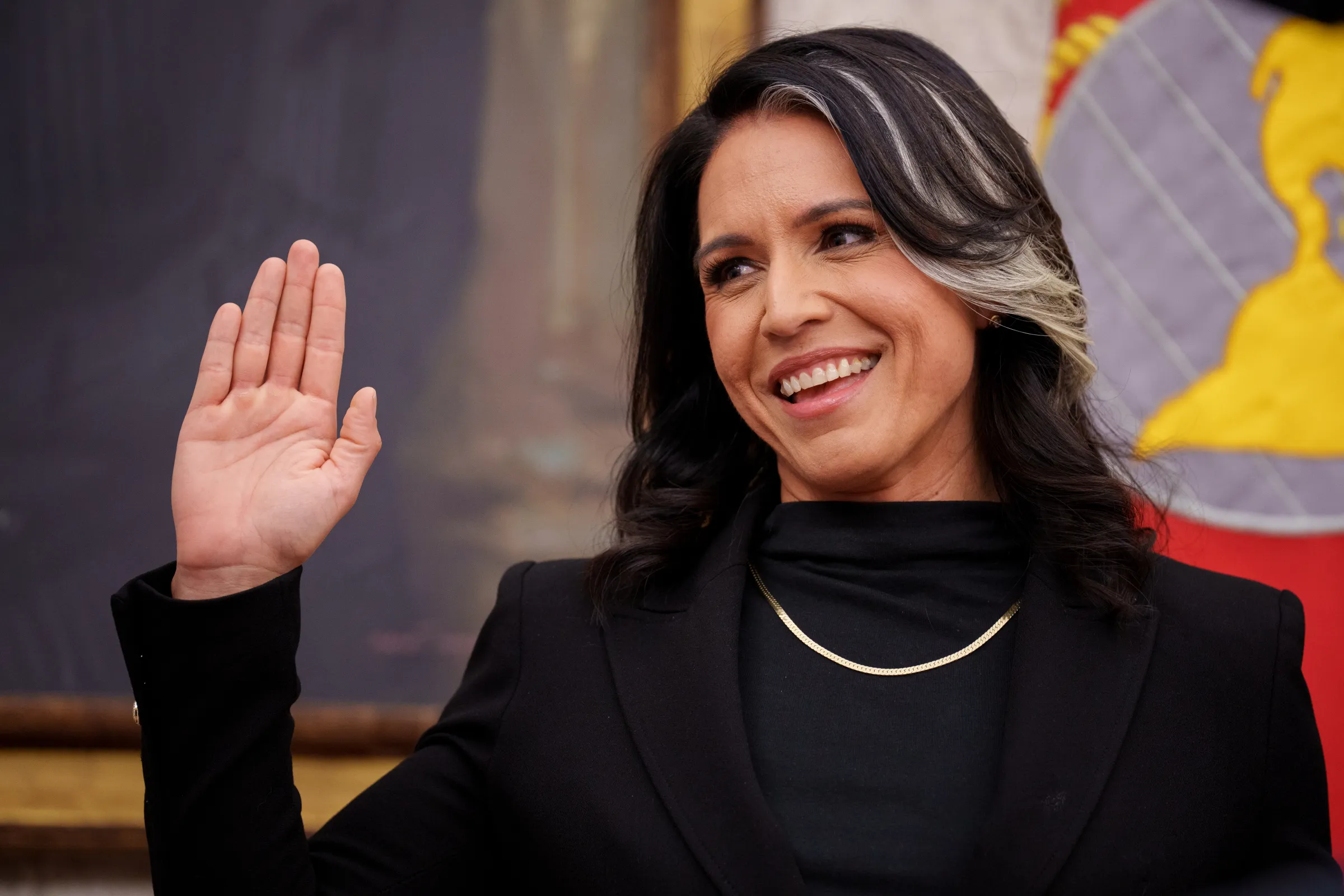
Why Intelligence Leaders Are Alarmed by Gabbard’s Role in a Georgia Election Raid
The search happened quietly, but the reaction didn’t.
When federal agents searched an election office in Georgia this week, the action immediately landed in the middle of a long-running national argument over power, surveillance, and who gets pulled into it. What turned a routine-sounding law enforcement move into something sharper was the presence of Tulsi Gabbard, the nation’s top intelligence official.
Now, senior Democrats overseeing U.S. intelligence are demanding answers — not about the raid itself, but about what it signals for ordinary Americans watching federal authority move closer to home.
Why This Search Set Off Alarms
The search took place at a county election office in Georgia tied to records from the 2020 presidential election. While officials have not detailed the full scope of what was sought, the location is sensitive. It has been central to conspiracy theories surrounding President Donald Trump’s false claims that the election was stolen.
For election workers and local officials, the signal lands quickly. Routine civic roles already carry harassment, threats, and public suspicion, and the appearance of national intelligence leadership at a local search tied to election records sharpens that pressure. What was once administrative now feels exposed to forces far beyond the office door.
What changed the temperature was who showed up.
Mark Warner and Jim Himes, the top Democrats on congressional intelligence committees, wrote to Gabbard questioning why the Director of National Intelligence would be present at a domestic law-enforcement action at all.
For people outside Washington, that question lands less as a technical dispute and more as a warning flare.
The Human Cost: When Intelligence Turns Inward
For most Americans, intelligence agencies are supposed to look outward — at foreign threats, cyberattacks, and hostile governments. That boundary matters because intelligence powers are broad, secretive, and difficult to challenge once used.
When those tools appear to intersect with domestic political disputes, the cost isn’t abstract. It shows up as anxiety about privacy, fear of surveillance, and uncertainty about whether political beliefs or civic roles could draw federal scrutiny.
You don’t need to be an election worker to feel it. The message spreads quickly: if intelligence leadership is visible at a local search tied to a contested election, where does the line actually sit?
The Pressure Point: Trust in Everyday Institutions
Election offices are not intelligence targets. They are workplaces staffed by clerks, administrators, and volunteers who expect routine audits — not national-level scrutiny tied to unresolved political narratives.
That’s why Warner and Himes emphasized civil liberties in their letter. They warned that when intelligence authorities turn inward, the consequences for privacy can be “devastating.”
For voters and local officials alike, the pressure point is trust. Trust that civic participation doesn’t place you on a federal radar. Trust that intelligence powers won’t blur into domestic enforcement tied to partisan claims.
Once that trust erodes, it’s difficult to rebuild.
Why This Is Spreading Beyond Georgia
This episode isn’t isolated. Across the country, election administration has become a flashpoint — with workers facing threats, resignations rising, and routine procedures pulled into national disputes.
Against that backdrop, even symbolic involvement by intelligence leadership carries weight. It suggests escalation, even if none is formally intended.
As news of the raid and Gabbard’s presence circulated, it tapped into a broader fear: that unresolved claims about past elections are still shaping federal action now, years later.
The Debate No One Has Settled
Supporters of aggressive federal oversight argue that investigations should go wherever records lead, regardless of optics. They warn that avoiding sensitive locations could itself undermine accountability.
Critics counter that intelligence officials must maintain strict distance from domestic political processes. They argue that visibility alone — not misuse — can chill civic engagement and normalize surveillance-adjacent behavior in everyday life.
Congress hasn’t resolved that tension. It has only flagged it.
What This Means for People Watching Closely
For most Americans, the immediate consequence isn’t legal exposure. It’s uncertainty.
Uncertainty about where intelligence authority stops. Uncertainty about whether local civic roles carry new risks. Uncertainty about whether past political battles are truly over — or still shaping who gets searched, questioned, or watched.
Warner and Himes are asking for a briefing. The public is left with a different question: when intelligence power shows up at the local level, how far does it reach — and who feels it next?
That question doesn’t end with this search. It lingers, unresolved, long after the agents leave.