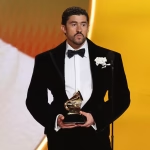

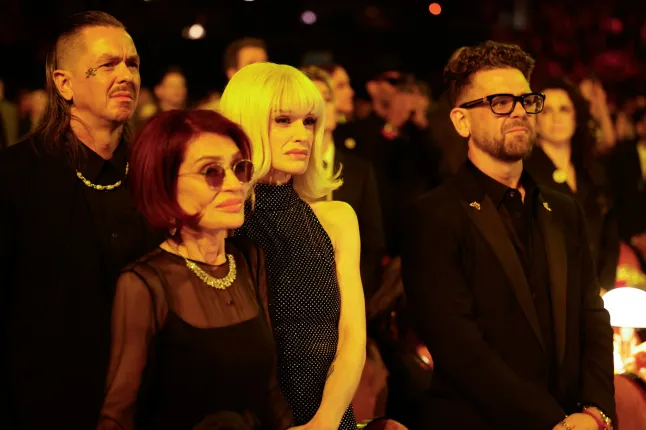
Days after the Grammys transformed celebration into memorial, Kelly Osbourne stood on the red carpet trying to hold herself together. This wasn’t a career night or a fashion moment.
It was the first time she had to publicly move through an industry celebration without her father, Ozzy Osbourne, alive in the world.
She didn’t pretend she was okay. She didn’t package grief into something inspirational. She said the quiet part out loud: this was the hardest thing she has ever been through.
Ozzy died in July at his Buckinghamshire home, and since then, Kelly has rebuilt daily life around small acts designed to keep him present. Not symbolic gestures for cameras. Real ones.
She lights a candle every day. She leaves a chair empty at the table. She wears a locket with his photo hidden beneath her dress, close enough to touch but not meant to be seen.
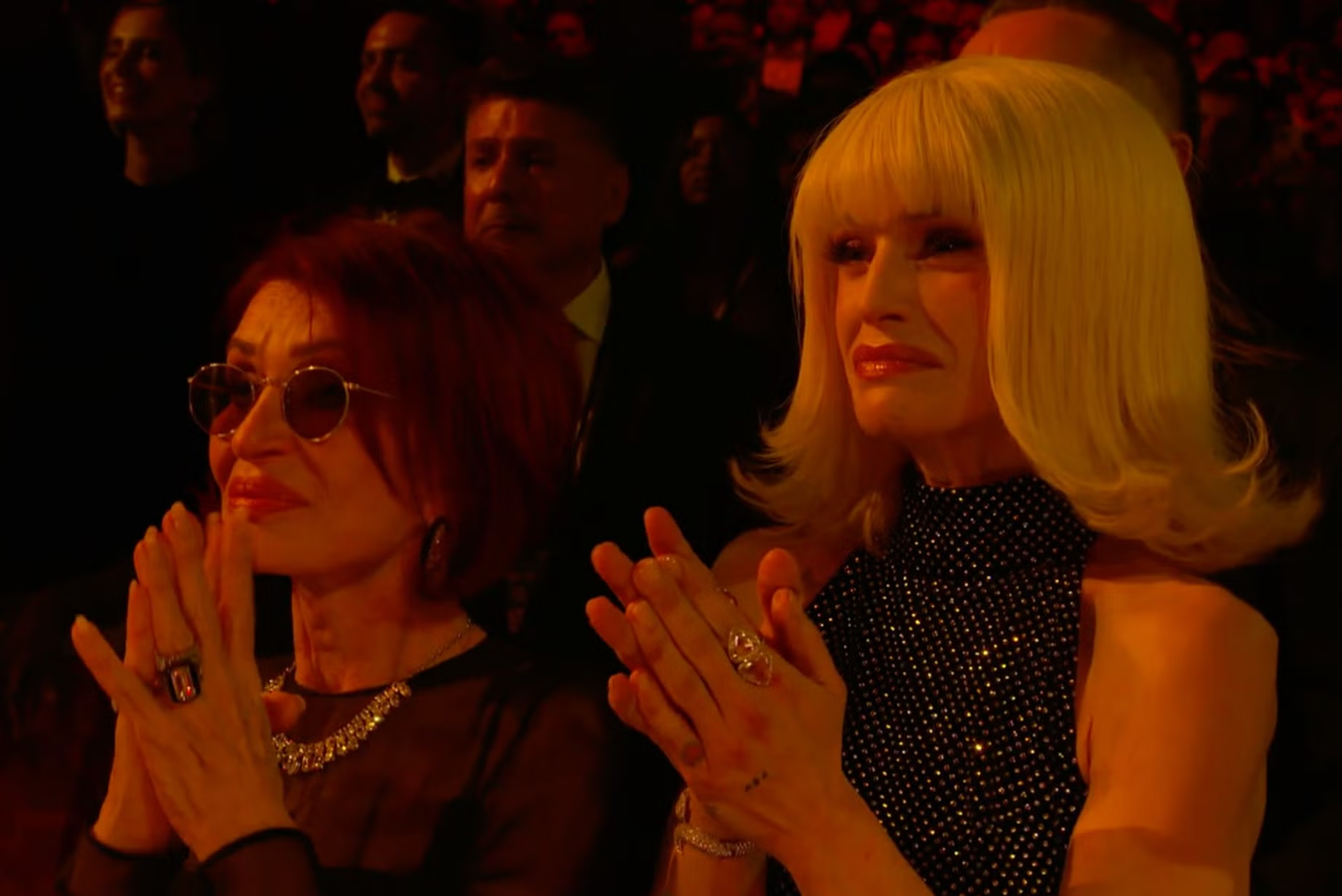
Kelly Osbourne looks on as the Grammy Awards pay tribute to her father, Ozzy Osbourne, during the ceremony.
This week, at the Grammy Awards 2026, those rituals followed her into the most public space imaginable.
Grief didn’t arrive dramatically. It showed up in the pauses between answers, in how she spoke about time slowing down, in the way she described watching the clock hit 11:11 and believing that meant her father was nearby.
These aren’t statements meant to convince anyone. They’re coping mechanisms. Private systems built to survive loss without letting it collapse everything else.
There’s money here, but not in the way award-night coverage usually frames it. The cost isn’t the gown or the hotel suite. It’s the quiet expense of control — the ability to create buffers around pain.
It’s the freedom to step away when things get too heavy, and the resources to slow life down instead of being dragged through it.
For most people, grief collides with deadlines and bills; for celebrities, it collides with cameras.
Inside the arena, the tribute unfolded anyway. Ozzy’s legacy filled the room during the In Memoriam segment, culminating in a performance of War Pigs by Post Malone, Slash, Duff McKagan, Chad Smith, and Andrew Watt.
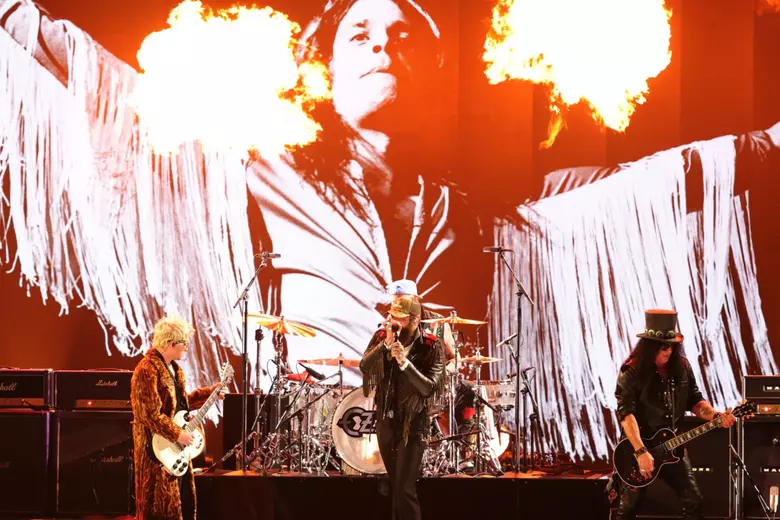
A performance of “War Pigs” takes place during the In Memoriam segment honouring Ozzy Osbourne at the Grammy Awards.
It was loud, reverent, and impossible to escape.
Kelly stood with her mother Sharon and brother Jack as the music swelled. No sunglasses. No exit. Just endurance.
This is the version of celebrity grief that rarely gets discussed: the moment where opting out isn’t possible, even if the pain is still raw. Where attendance becomes obligation.
Where legacy turns into something you have to sit through before you’re ready.
Kelly later admitted she had been bracing herself all night. That she knew the tribute was coming and couldn’t stop it.
That seeing her father honoured by his peers meant more than she could put into words and also cost more emotionally than she could easily afford.
Her rituals matter because they’re not performative. They’re practical. They’re about maintenance, not healing. About keeping grief contained enough to function.
This pattern shows up again and again with public figures after loss: a visible moment followed by a quieter recalibration.
Routines form that don’t fix anything, but make the days survivable, alongside spending on privacy, structure, and distance, not indulgence, but insurance. None of it resolves the grief; it simply gives it somewhere to live.
Kelly didn’t close her comments with hope, strength, or gratitude. She said she’s not doing great, that she won’t lie about it, and that for now it’s her partner, her child, and a family drawn even closer that’s keeping her upright.
At the Grammys, surrounded by applause and history and noise, grief didn’t disappear. It sat beside her, just like the empty chair she keeps at home.
And that unresolved space, between legacy and loss, between public tribute and private survival is where she’s still standing.