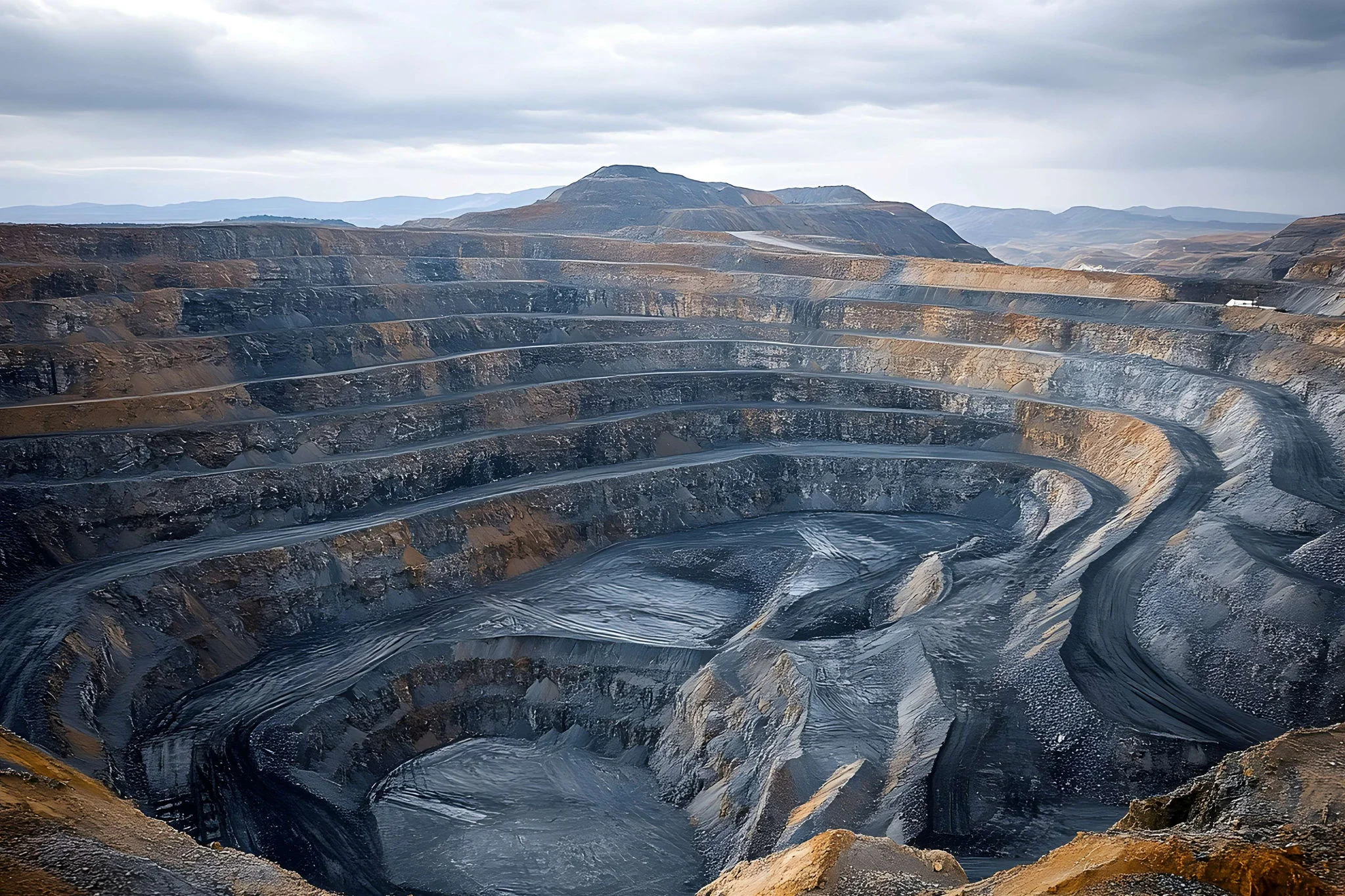
Mining ETF assets have surged to $87.4 billion in a year, more than doubling as firms like BlackRock rotate out of tech and into metals tied to companies such as Rio Tinto and BHP.
The trade looks like the start of a supercycle, but the real risk lies in how quickly money is crowding into a relatively small market, creating conditions where price moves can become amplified rather than stable.
Investors are not simply buying mining stocks in isolation; they are repositioning around a broader shift in how the global economy generates value. For much of the past decade, markets rewarded businesses that could scale digitally with minimal physical constraints. That dynamic is now changing as the next phase of growth, driven by artificial intelligence, energy transition, and defence investment, depends heavily on physical infrastructure and raw materials.
The mainstream explanation focuses on capital rotating out of expensive technology stocks and into mining due to rising demand from AI infrastructure, electrification, and geopolitical supply concerns. While this is directionally correct, it understates the underlying financial mechanism at work. This is less about sector rotation and more about a re-pricing of scarcity, where control over limited physical resources begins to command a premium over scalable digital models.
This shift becomes more complex when viewed through the structure of the mining market itself. Mining remains a relatively small component of global equity markets, which means that when large pools of capital move into the sector, prices do not adjust gradually. Instead, they respond sharply because there are fewer assets to absorb the inflows, creating a situation where liquidity rather than fundamentals can drive short-term valuation changes.
As capital accelerates into the sector, a feedback loop begins to form. Rising prices attract additional inflows, reinforcing momentum and pushing valuations higher. While this can resemble the early stages of a long-term supercycle, in the short term it behaves more like a crowded trade where positioning becomes increasingly one-sided. The result is a market that can move quickly in both directions, depending on how sentiment shifts.
This dynamic is already visible in the divergence between traditional safe-haven assets and industrial commodities. Gold, which typically benefits from geopolitical uncertainty, has seen outflows, while metals such as copper and aluminium are attracting fresh investment. Rather than seeking protection, investors appear to be positioning for the economic response to instability, anticipating increased infrastructure spending, energy investment, and supply chain realignment.
The financial implications extend beyond simple upside potential. Mining companies are still trading below the valuation multiples seen in previous commodity booms, which supports the argument for further gains if demand continues to rise. However, the speed and scale of recent inflows highlight how quickly sentiment can change, particularly in a market where liquidity is limited. In such conditions, price movements can become disconnected from underlying fundamentals as flows take on a more dominant role.
If inflows continue, the supercycle narrative becomes self-reinforcing, supporting higher valuations and sustained capital allocation to the sector. If inflows slow or reverse, the same structural tightness that drove prices upward can accelerate declines, exposing how dependent the rally is on continued capital movement rather than purely on demand fundamentals.
What emerges is a more nuanced picture of the mining trade. This is not simply a directional bet on commodities, but a broader reallocation of capital toward sectors that sit at the centre of physical economic constraints. The transition from digital scalability to resource dependency creates new opportunities, but it also introduces a different kind of risk, one that is tied to liquidity, timing, and market concentration.
Investors entering this space are therefore not just participating in a new cycle, but in a more reactive and compressed market environment where price discovery is influenced as much by capital flows as by long-term supply and demand. That distinction is critical, because it suggests that the success of the trade may depend less on whether the supercycle exists and more on how and when capital moves through a structurally constrained market.