London-based AI infrastructure company Nscale has raised $2bn (£1.6bn) in a Series C funding round, valuing the business at $14.6bn as demand for the computing power needed to support artificial intelligence continues to surge.
The funding round was led by Aker ASA and 8090 Industries and backed by investors including Nvidia, Dell Technologies, Lenovo, Citadel and Point72, underscoring the growing strategic importance of data centres and high-performance computing infrastructure in the global AI race.
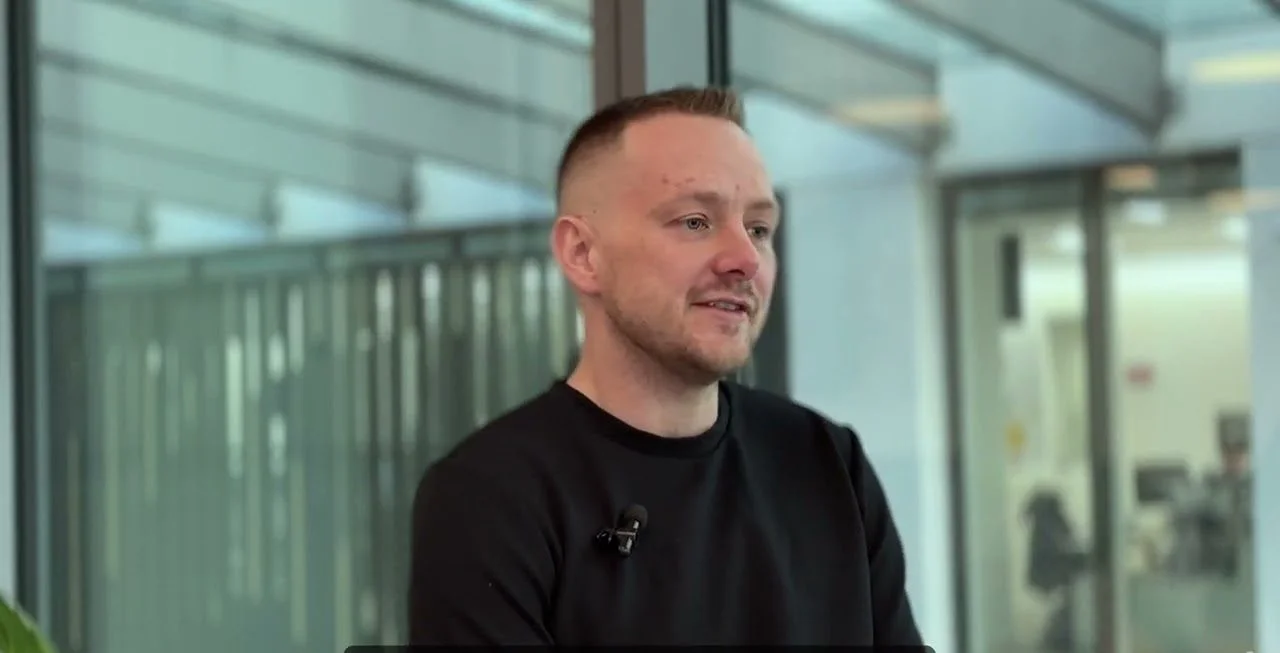
Founded in 2023 by entrepreneur Josh Payne, Nscale has quickly emerged as a player in Britain’s growing AI infrastructure sector, building computing platforms designed to train and run advanced artificial intelligence models.
The new funding will support the company’s expansion of vertically integrated AI infrastructure, including GPU compute platforms, networking systems, data centres and orchestration software across Europe, North America and Asia.
Britain’s Push to Build AI Infrastructure
The investment comes as the UK government seeks to position the country as an “AI maker rather than an AI taker”, encouraging domestic companies to build the computing infrastructure needed to support next-generation artificial intelligence systems.
Developing advanced AI requires specialised computing hardware, particularly high-performance GPUs capable of training large language models and other machine-learning systems.
Nscale has already committed £2.5bn in investment into UK infrastructure projects, including plans for what is expected to become one of the country’s largest AI computing facilities.
The proposed data centre in Loughton, Essex, is expected to host tens of thousands of Nvidia GPUs and deliver up to 90 megawatts of AI computing capacity once fully operational.
The company is also working with technology partners including Microsoft, OpenAI and Nvidia on a series of global AI infrastructure projects.
High-Profile Board Appointments
Alongside the funding announcement, Nscale also confirmed three new appointments to its board of directors.
Former Meta chief operating officer Sheryl Sandberg, former Yahoo president Susan Decker, and Nick Clegg, the former UK deputy prime minister and Meta’s former president of global affairs, will join the board.
The appointments add experience in global technology operations, corporate governance and digital policy as artificial intelligence becomes increasingly central to economic strategy and regulation.
Sandberg previously played a key role in scaling Meta’s global advertising business, while Decker has held board positions at companies including Costco and Berkshire Hathaway. Clegg has been closely involved in global policy discussions around the governance and regulation of emerging technologies.
Consolidating Growth with Aker
Nscale also announced that it will fully integrate its joint venture with Norwegian industrial group Aker, bringing governance and project delivery under a single organisation while maintaining Aker as a major shareholder.
Aker’s chief executive Øyvind Eriksen will continue to serve on the Nscale board.
The partnership has supported several infrastructure projects aimed at delivering large-scale AI computing capacity while incorporating renewable energy and waste-heat reuse initiatives.
The Global Race for AI Computing Power
The scale of investment flowing into AI infrastructure reflects a broader shift across the technology sector: computing capacity and energy supply are emerging as key constraints shaping the future of artificial intelligence.
Training advanced AI models requires enormous processing power, placing growing pressure on electricity grids, semiconductor supply chains and hyperscale data-centre networks.
Investors are increasingly directing capital towards companies building the physical backbone of the AI economy, from GPU clusters and high-speed networking systems to power-intensive data-centre campuses.
Rayyan Islam, co-founder of investment firm 8090 Industries, said the ability to deploy computing infrastructure at scale would determine which countries and companies lead the next phase of technological development.
With billions flowing into data centres, specialised chips and AI cloud platforms, the race to build the computing backbone of artificial intelligence is rapidly becoming one of the defining industrial competitions of the decade.