


Global Markets Jolt as Nvidia-Linked AI Shakes Software Stocks
Nvidia, the AI chip powerhouse, is under intense market scrutiny this week after a sharp selloff in global software stocks exposed the vulnerability of the broader technology ecosystem to AI disruption.
Shares in Indian, Chinese, and Japanese software companies plunged, forcing executives to reassess immediate investment strategies, while investors demanded clarity on how AI advances might destabilize existing software tools. The fallout has already triggered portfolio reallocations and heightened volatility across international markets, putting Nvidia and the global software industry under unprecedented pressure.
Oversight Gaps Expose Software Dependencies to AI Shock
The exposure stems from how Anthropic’s recent AI plug-in release interacted with existing software ecosystems, revealing structural fragilities in how companies deploy and depend on digital tools. Oversight mechanisms within the software industry failed to anticipate the cascading impact of generative AI advancements, leaving critical dependency chains unguarded.
While Nvidia’s chips and AI infrastructure underpin many of these tools, the company’s role in ensuring stability was limited, exposing both technological reliance and regulatory blind spots. Risk assessment frameworks designed for incremental innovation were bypassed as AI adoption accelerated, showing that safeguards intended to prevent market disruption were neither enforced nor sufficiently robust.
Nvidia’s branding illuminated on a mobile device, reflecting the company’s growing influence across global AI and semiconductor markets.
Real-World Consequences Hit IT Firms and Investors Alike
The sudden selloff and subsequent market uncertainty highlight the tangible consequences of unchecked AI deployment. Software firms reliant on human-driven processes now face operational constraints, delayed projects, and declining investor confidence.
For IT service-heavy markets like India and Japan, this translates to real financial strain, workforce insecurity, and reputational damage. Global investors are grappling with a loss of predictability, raising questions about how far AI integration can be pushed before further disruption occurs.
The issue is no longer theoretical; markets are reacting in real time, and firms are tightening budgets, revisiting client commitments, and reassessing product roadmaps to mitigate exposure.
No Clear Owner for AI’s Cascading Market Risks
Responsibility remains diffuse. Nvidia, as the leading AI hardware provider, is implicated indirectly due to its foundational role in powering advanced AI models, yet it cannot fully control downstream software adoption.
Regulators and stock exchanges are reacting after the fact, leaving unclear which bodies should have anticipated the market-wide ripple effect. Software firms themselves did not predict how quickly AI could cannibalize traditional tools, while AI developers like Anthropic are navigating uncharted territory without established oversight.
The resulting ambiguity leaves investors, governments, and corporate boards questioning who should have acted sooner to prevent this exposure.
Innovation Speed vs Systemic Stability
This incident ignites a larger debate over the pace of AI innovation versus systemic stability. Should companies push technological boundaries at the risk of destabilizing global markets, or should regulators step in to enforce limits that could stifle progress? Global competition pressures firms to adopt AI aggressively, but the fallout raises questions about whether innovation is being prioritized at the expense of security, trust, and operational continuity.
Was this selloff an inevitable consequence of AI’s speed, or could coordinated oversight have mitigated the disruption before it spread across continents?
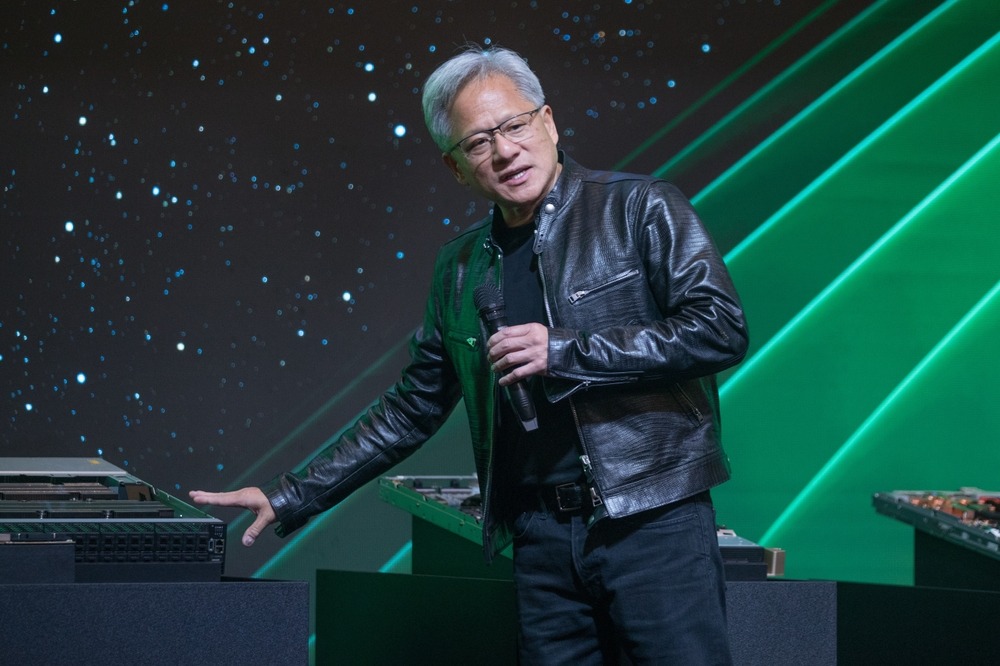
Nvidia CEO Jensen Huang discusses next-gen AI hardware during a live presentation, highlighting the company’s breakthroughs in GPU technology.
Market Adjustments and Tightened Oversight Already Underway
Market analysts and corporate auditors are now reviewing software adoption strategies, AI integration protocols, and Nvidia’s role in supporting tool ecosystems. Some firms are delaying AI-driven rollouts or adding redundancy to critical systems, while investors demand real-time disclosure of risk exposure.
Regulatory inquiries may follow in multiple jurisdictions, with attention on whether risk frameworks for AI deployment are adequate. Companies are already adjusting behavior under scrutiny, but experts warn similar exposures could exist elsewhere in industries reliant on emerging AI technologies, suggesting the current fallout is just one visible symptom of broader systemic vulnerabilities.
Investor and Public Confidence Tested as Accountability Lags
As the global software industry confronts the consequences of AI-driven disruption, trust in institutional oversight and corporate risk management is strained. Investors, clients, and regulators now face a reality where confidence is difficult to restore once systemic vulnerabilities are exposed.
The Nvidia-linked selloff demonstrates how power, innovation, and accountability intersect in unpredictable ways, leaving a lasting question: when technology advances faster than the mechanisms designed to govern it, who ultimately bears responsibility for the fallout?