
Nvidia Faces U.S. Scrutiny After AI Help Is Linked to China’s Military
The world’s most valuable chipmaker is facing renewed scrutiny after a U.S. lawmaker revealed that Nvidia provided technical assistance to a Chinese artificial intelligence firm whose models were later used by China’s military.
The disclosure has reignited fears in Washington that U.S. technology controls are failing to keep pace with how fast AI capabilities can migrate from commercial use to national security applications.
At the centre of the controversy is DeepSeek, a Chinese AI developer that stunned markets last year by producing models rivaling leading U.S. systems using far less computing power. According to documents cited by a congressional committee, Nvidia engineers helped DeepSeek dramatically improve its training efficiency—support that came before any public indication that the company’s technology had military ties.
The revelation has sharpened a question regulators have struggled to answer for years: when cutting-edge technology crosses borders legally, who is responsible for how it is ultimately used?
Technical Help, Strategic Consequences
In a letter to the U.S. Commerce Department, Representative John Moolenaar, who chairs the House Select Committee on China, said Nvidia records showed its staff worked closely with DeepSeek on optimizing algorithms, software frameworks, and hardware. Internal reporting cited in the letter described major reductions in the computing time required to train DeepSeek’s flagship models.
At the time, Moolenaar acknowledged, DeepSeek appeared to be a legitimate commercial partner. Nvidia treated it as such, providing what it described as standard technical support. The problem, lawmakers argue, is not intent—but outcome. U.S. officials now believe DeepSeek’s models are assisting China’s military, transforming routine commercial cooperation into a national security concern.
This shift from benign to strategic use is exactly where export controls tend to break down. Once expertise and efficiency gains are transferred, they cannot be clawed back.
Why This Has Washington on Edge
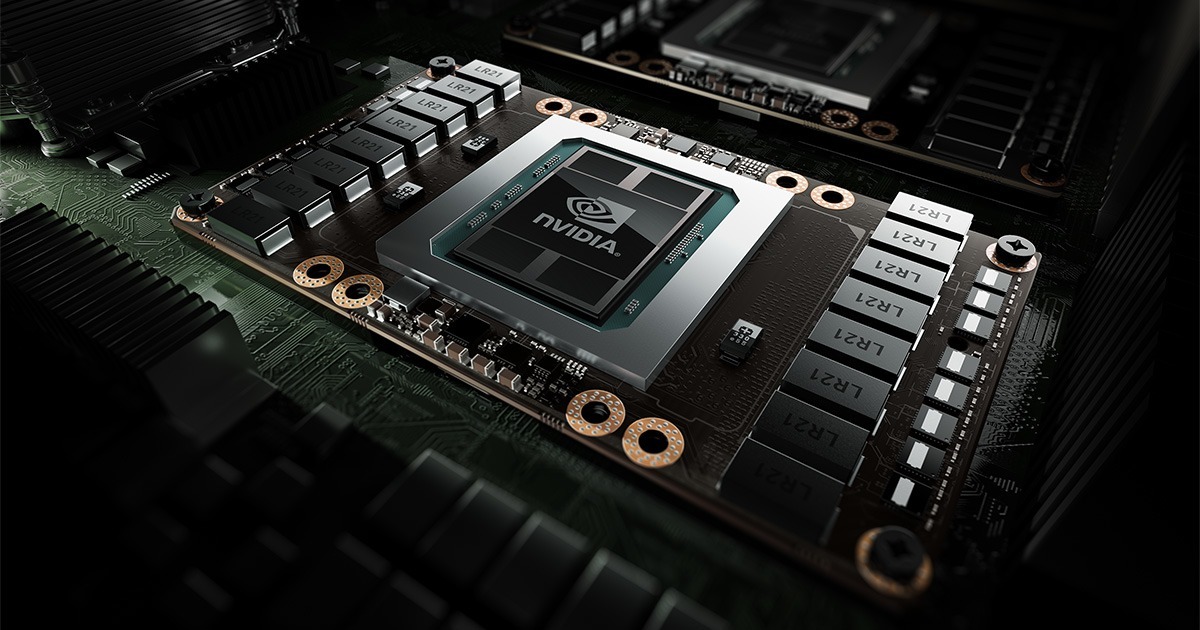
The concern is not simply that Chinese military systems benefited from American technology. It is that they did so without violating existing rules at the time. Nvidia’s H800 chip, used by DeepSeek, was specifically designed to comply with U.S. export restrictions and sold legally in China before being placed under tighter controls.
That reality exposes a structural vulnerability. Export regimes are built around hardware specifications and end-user declarations. AI progress, however, increasingly depends on software optimization, system design, and training efficiency—areas that are harder to regulate and easier to repurpose.
For lawmakers, the Nvidia–DeepSeek episode underscores how military capability can advance even when chip access is constrained. For markets, it raises the risk that future controls may become broader, blunter, and more disruptive.
The Accountability Gap
Nvidia has pushed back forcefully, saying China’s military does not rely on U.S. technology and has access to ample domestic chips. The company argues that it cannot be held responsible for downstream uses that emerge long after a commercial relationship begins.
That defence highlights the core dilemma: should companies be accountable only for what they know at the time of sale, or for how their technology might realistically be repurposed later?
Regulators face a parallel problem. Commerce Department licensing regimes are designed to block known military end users, not to predict how civilian partners might evolve. When those partners later cross into defence applications, responsibility becomes diffuse—spread across companies, agencies, and time.
This diffusion is precisely what critics warn allows strategic leakage to occur without clear violations.
A Broader Policy Collision
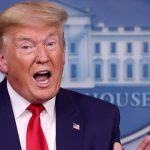
The controversy arrives just weeks after the Trump administration approved restricted sales of Nvidia’s more powerful H200 chips to China—drawing bipartisan criticism from lawmakers who fear the approvals could accelerate Beijing’s military AI ambitions. President Donald Trump has argued that tightly controlled sales protect U.S. competitiveness while maintaining leverage over China’s tech sector.
China, for its part, has accused Washington of politicising trade and overstretching national security arguments. A spokesperson for China’s embassy said such moves risk destabilising global supply chains and undermining cooperation.
Caught between those positions, multinational technology firms face a narrowing path: comply with today’s rules while anticipating tomorrow’s backlash.
What Happens Next
Congressional scrutiny of Nvidia is unlikely to fade quickly. Lawmakers are already pressing for tougher enforcement, broader definitions of military end use, and closer monitoring of technical assistance—not just chip shipments. Any regulatory tightening could ripple across the semiconductor industry, complicating sales strategies and slowing revenue growth in one of the sector’s largest markets.
More broadly, the episode may accelerate a shift in how governments think about AI exports. Control of physical hardware may no longer be sufficient if performance gains increasingly come from design expertise rather than raw computing power.
For now, no laws appear to have been broken. Yet the unease surrounding Nvidia’s role shows how quickly trust can erode when advanced technology intersects with geopolitical rivalry.
When Power Moves Faster Than Rules
The Nvidia–DeepSeek case is less about one company than about a system straining under its own assumptions. Global tech markets are built on speed, collaboration, and incremental improvement. National security frameworks move slower, relying on categories that AI innovation is rapidly outgrowing.
That gap leaves everyone exposed: companies to reputational risk, regulators to political backlash, and governments to strategic surprises. As AI capabilities diffuse across borders, the hardest question may not be who is at fault—but whether current rules can realistically keep up at all.
What People Are Asking About Nvidia breaking U.S. law by helping DeepSeek
Did Nvidia break U.S. law by helping DeepSeek?
There is no public finding that Nvidia violated U.S. export laws. The issue under scrutiny is whether commercial technical support created unintended military use.
Why is the U.S. government concerned about AI models like DeepSeek’s?
Because advanced AI can be used for military planning, surveillance, and weapons development, even when initially built for civilian purposes.
Were Nvidia’s chips legally sold to China at the time?
Yes. The H800 chips were designed to comply with U.S. export rules and were sold before tighter restrictions were imposed.
Can companies control how AI technology is used after sale?
Control becomes difficult once technology leaves the supplier, especially in countries where military and civilian research overlap.
What could change after this disclosure?
The U.S. could tighten licensing rules, increase oversight of technical support, or restrict future AI chip sales to China.