
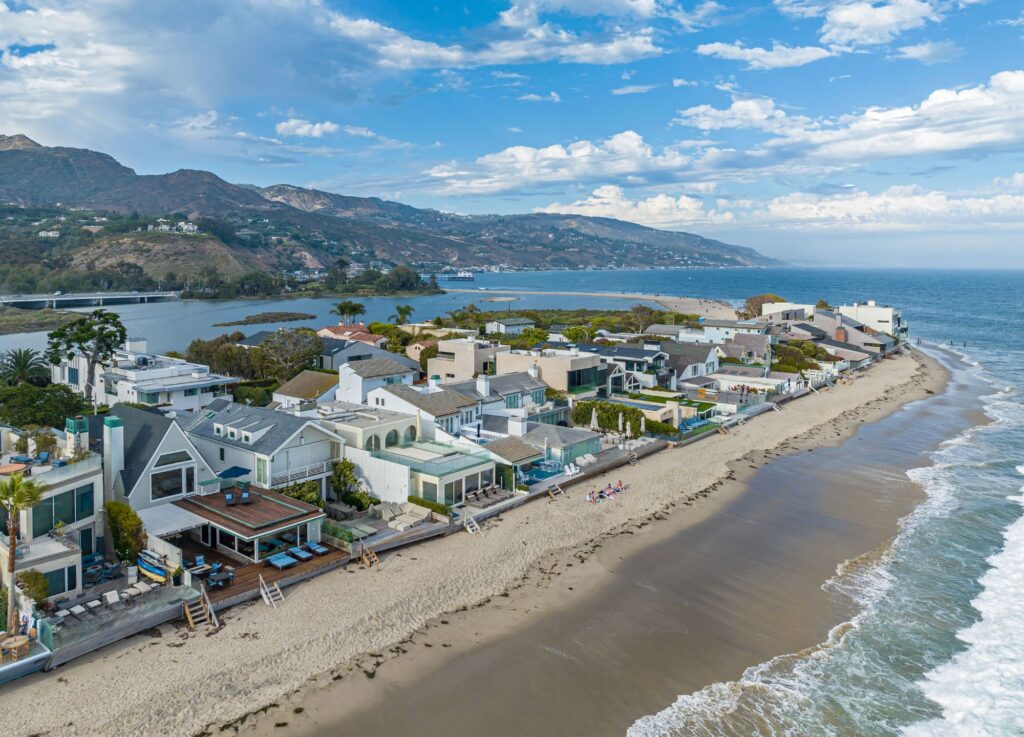
This week, without fanfare or public explanation, billionaire investor Ron Burkle put his Malibu Colony beach house on the market for just under $20 million.
The timing is notable not because anything appears wrong but because everything appears finished. The restoration is complete. The house is secured. And the decision to sell comes not amid upheaval, but after calm has already been purchased.
Burkle acquired the 1920s Tudor-style oceanfront cottage in early 2022 for $13.5 million, buying it from the estate of Carol Moss, the longtime Malibu figure affectionately known as “The Mayor of Malibu.”
At the time, the purchase read as a quiet long-term move: a historically intact retreat inside one of Southern California’s most tightly guarded coastal enclaves. Four years later, the shift is subtle but decisive, sanctuary converted back into liquidity.
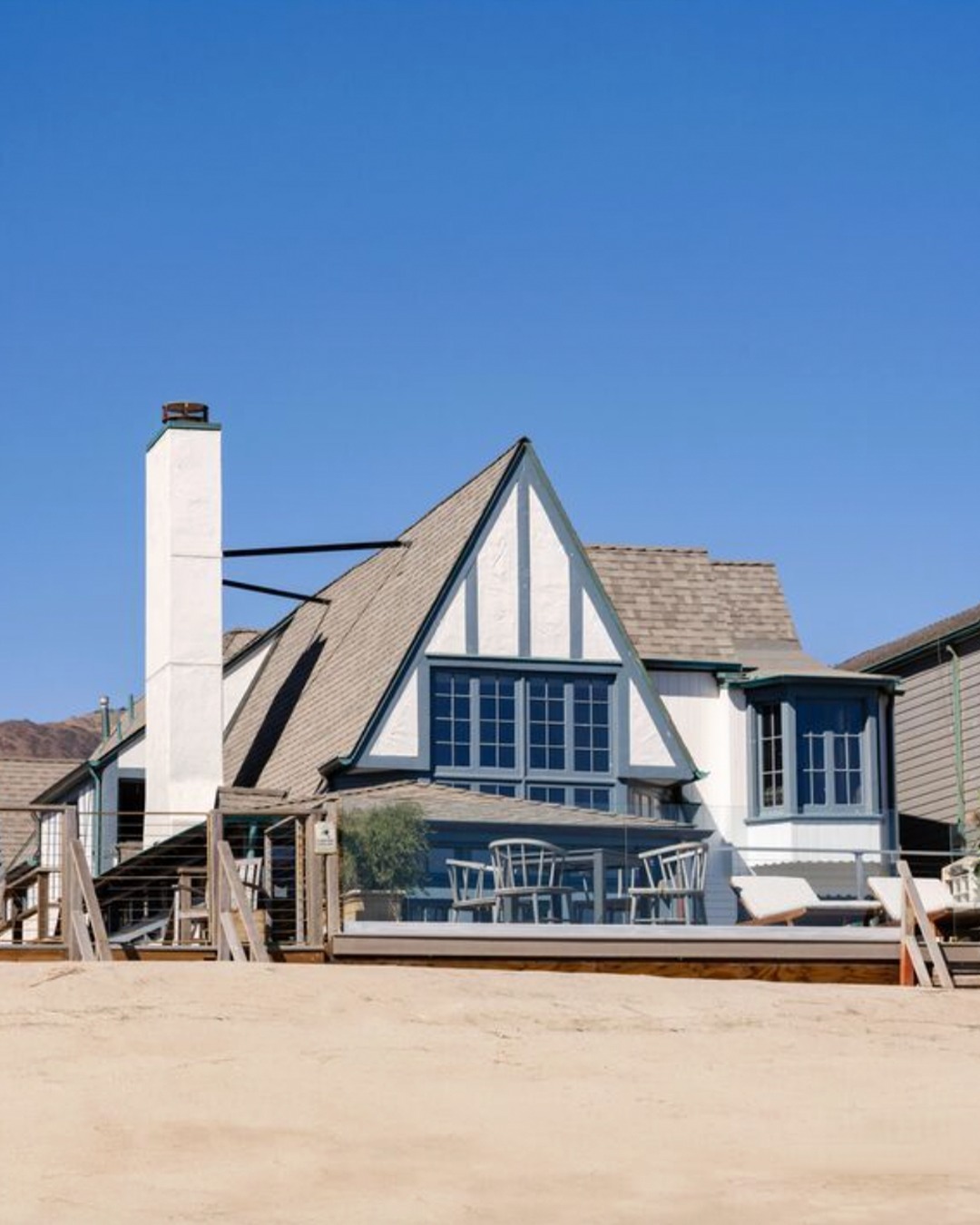
The restored 1920s Tudor-style home sits directly on the sand inside Malibu Colony, one of California’s most exclusive gated beachfront enclaves.
The ask itself tells part of the story. At nearly $20 million, the price isn’t anchored to size or extravagance. The house spans roughly 2,500 square feet, with five bedrooms, four bathrooms, and a compact footprint by modern luxury standards.
What it offers instead is something far rarer: direct access to nearly 40 feet of private beach frontage, behind gates designed to keep almost everyone else out.
Inside, the restoration avoided reinvention. Original clinker brick fireplace. Tudor A-frame bones preserved. White and blue trim left intentionally restrained.
French doors open to wood decks facing the Pacific, with a raised platform and stairs leading straight down to the sand. Even the guest and staff quarters feel discreet rather than expansive. This is not a home built to impress crowds. It’s built to narrow life down.
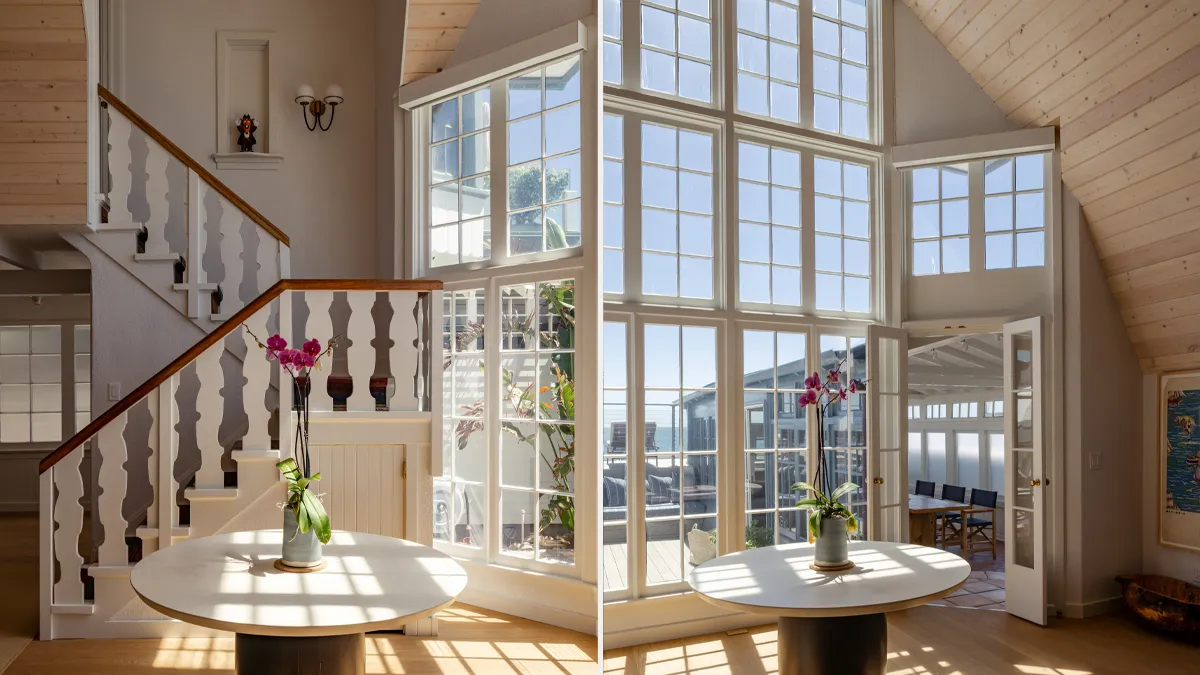
A light-filled interior space opens onto the ocean-facing deck, reinforcing the home’s emphasis on calm and privacy.
At this level, money doesn’t function as reward. It functions as relief. An $800 monthly HOA fee barely registers against what Malibu Colony actually provides: insulation from exposure, unpredictability, and intrusion.
The spending isn’t indulgent. It’s defensive — the cost of keeping the outside world at arm’s length.
Burkle’s estimated net worth hovers around $3.4 billion. His primary residence is a 22,000-square-foot private island estate in Montana’s Flathead Lake.
He owns Bob Hope’s former Palm Springs home, Pasadena’s El Arco estate, and Greenacres in Beverly Hills, one of the most storied private compounds in California. Against that backdrop, selling a Malibu beach house might look incidental.
But wealthy owners rarely rotate properties like this casually. Homes like these aren’t bought because they’re needed — they’re bought because they work. And when they stop working, even quietly, they’re released.
What’s striking here is the absence of distress. No legal pressure. No visible financial need. No public controversy. The house has already been restored, secured, and stabilized.
Which suggests the choice to sell isn’t reactive. It’s evaluative — a decision made after the retreat has already served its purpose.
Across the high-end coastal market, similar patterns are emerging. Oceanfront listings from owners who can afford to hold indefinitely, but choose not to. Properties released not because of loss, but because peace turned out to be temporary.
At this altitude, calm is rarely permanent. It’s rented for a while, then exchanged for distance somewhere else.
That’s the uncomfortable reality behind numbers like $20 million. They don’t signify excess so much as optionality, the ability to change one’s surroundings without explanation. To convert privacy into cash, and cash back into privacy, elsewhere.
Nothing is wrong with the house, which is exactly why the sale stands out. When someone who can afford to keep almost anything chooses not to, the question isn’t what they’re giving up, it’s what stopped being worth keeping.