
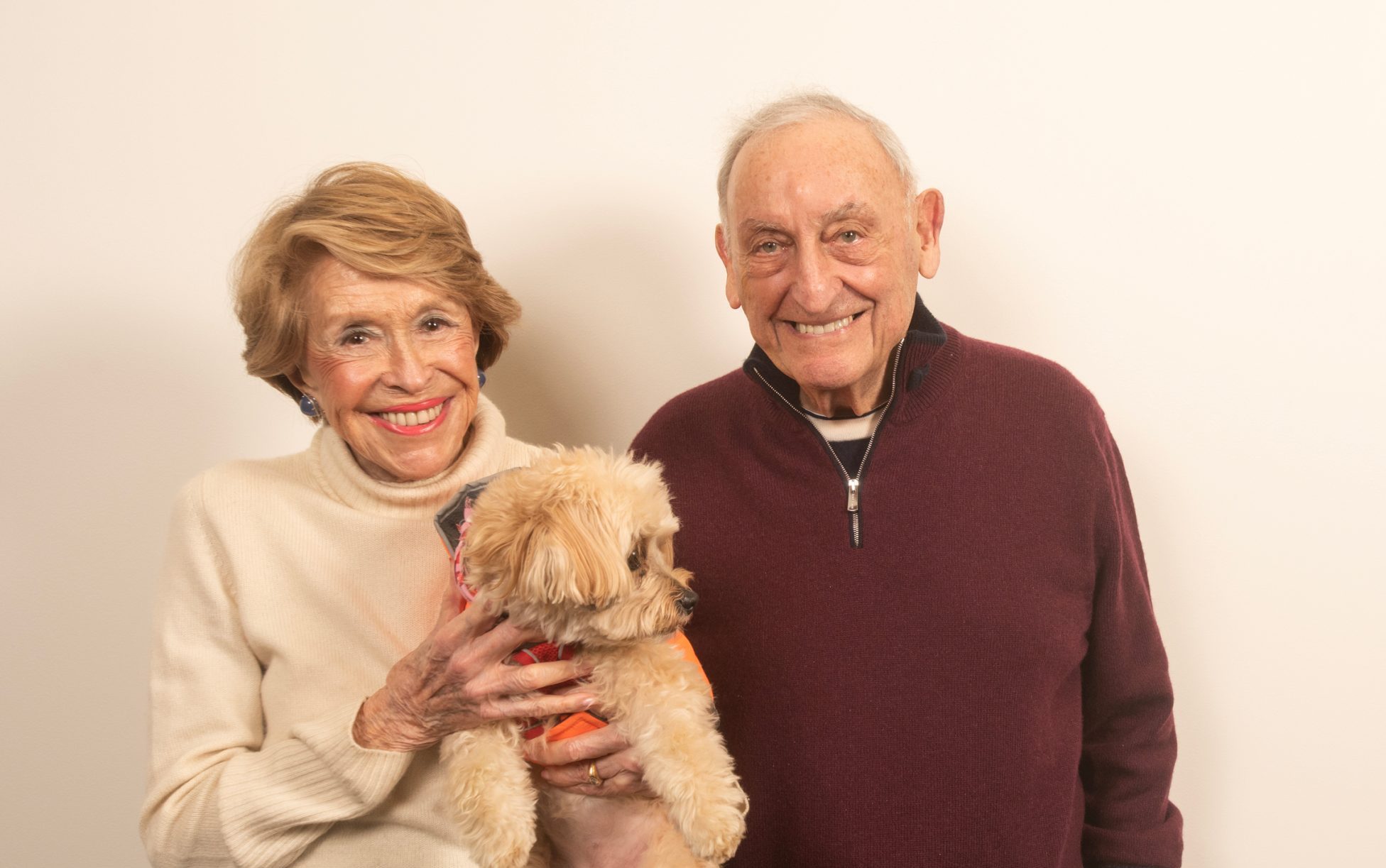
The worry came on gradually, then all at once. Sandy Weill and his wife Joan found themselves in an emergency veterinary clinic, waiting for answers about their dog Angel, a bichon frisé who had been part of their daily life for years.
In 2018, Angel was diagnosed with lymphoma. Treatment was possible, but there were no guarantees.
They approved aggressive care and trusted specialists who deal in probabilities rather than promises. Angel spent time under observation, tethered to IV lines and monitored by teams accustomed to translating pain animals cannot describe.
The Weills waited, like everyone else does in those rooms, surrounded by professionalism and quiet urgency. Angel eventually died, but the experience didn’t close when the treatment ended.
Years later, that unresolved exposure surfaced again in the form of a $120 million commitment. This week, the Weills announced the largest gift ever made to veterinary medicine, directed to the University of California, Davis.
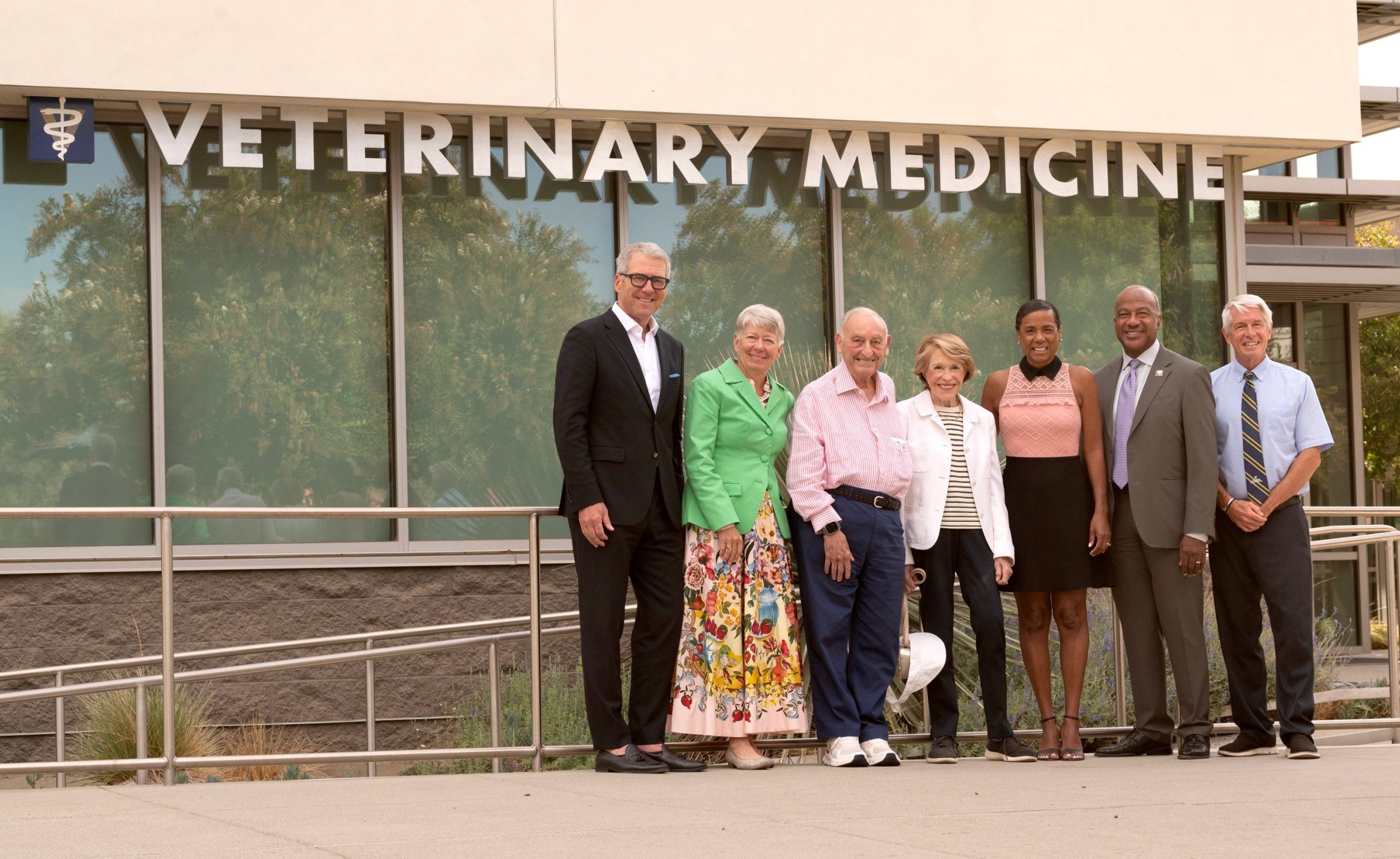
UC President James B. Milliken and his wife Nana Smith stand with Sandy Weill, Joan Weill, LeShelle May, UC Davis Chancellor Gary S. May, and UC Davis Weill School of Veterinary Medicine Dean Mark Stetter outside the veterinary medicine facility.
The timing matters because this was not an emotional reaction or a public pledge made in the wake of loss. It was a decision that arrived after distance, when the feeling had settled into something permanent.
At this level of wealth, money is rarely about generosity alone. It functions as maintenance. The $120 million does not read as indulgence so much as insurance against ever being that powerless again. Relief, once deferred long enough, gets converted into infrastructure.
Eighty million dollars of the gift will go toward building a new small animal teaching hospital, part of a larger $750 million expansion of the veterinary medical complex at UC Davis.
The existing hospital already treats roughly 50,000 animals a year, making it one of the busiest veterinary facilities in the world. The new facility is designed to absorb demand, reduce bottlenecks, and expand what can be handled in moments when time is the constraint.
The remaining funds will support research across cancer, neurological disease, and cardiovascular conditions that affect both animals and humans. This is the quieter part of the decision, but not the smaller one.
Comparative medicine exists precisely because illnesses don’t respect species boundaries, and the Weills’ money is being positioned to accelerate work that moves between animal treatment and human outcomes.
The physical memory behind this choice is easy to reconstruct even without access to the Weills’ private moments. Stainless steel exam tables. Clipboards passed back and forth.
The hum of machines in rooms meant to feel neutral. The strange intimacy of loving an animal who cannot explain what hurts, only that something does.
Sandy Weill built his career by scaling systems and consolidating institutions, rising from a back-office role to the helm of Citigroup through a series of acquisitions that reshaped global finance.
He understands leverage and permanence better than most. In a veterinary emergency, none of that knowledge applies. Expertise replaces strategy, and money becomes the only tool that still functions.
This response fits a broader pattern among people operating at this altitude. A personal rupture that cannot be managed away eventually gets answered with scale.
Hospitals, research centers, renamed institutions. Structures that promise order where there was none, and continuity where loss interrupted it.
The tension is unavoidable. For some readers, the gift will look like generosity refined to its highest form. For others, it will feel like a reminder that money allows certain kinds of fear to be addressed in ways most people never access. Both interpretations sit uncomfortably close together.
What’s harder to dispute is the emotional logic underneath it. When accumulation stops being the goal, wealth becomes a way to limit exposure.
The hospital will train more veterinarians, expand research capacity, and treat thousands of animals the Weills will never meet. It will also hold a moment they could not otherwise resolve.
Most people leave emergency vets promising they’ll send something later, once life settles back into place. Sandy Weill waited, then made a decision large enough that it would never need revisiting.
Whether that brings peace, or simply contains it, is a question the money itself leaves open.