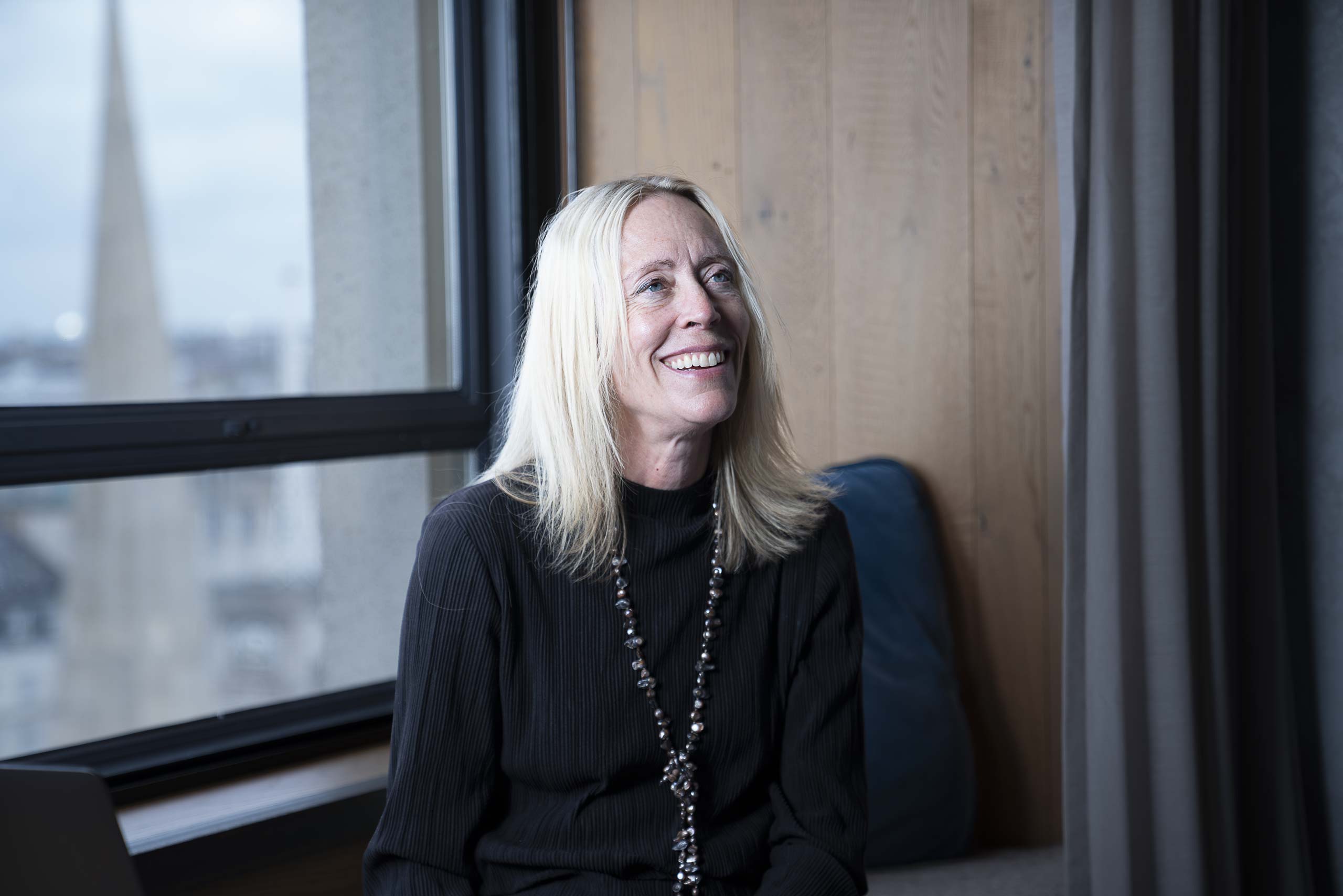
Tina Woods, chief executive officer and founder of Collider Health, says she doesn’t live by the kind of rigid routines typically associated with senior corporate leadership. Speaking to Business Insider, Woods described a work life that includes intermittent fasting, late-night “longevity raves,” ruthless calendar discipline, and a deliberate rejection of traditional executive wellness dogma. “Biohacker Bryan Johnson would probably not approve of my all-night raves, but they bring me such joy and are a big part of my own personal longevity protocol,” she said.
The reason the story still matters is not because it offers lifestyle inspiration, but because it reflects a quiet shift in how senior leaders are approaching health, productivity, and long-term performance. As companies face burnout, talent retention challenges, and rising interest in the longevity economy, Woods’s approach illustrates how executive health is moving from a private concern to a strategic business input.
For founders, CEOs, and board-level leaders, the question is no longer whether wellbeing matters—but how it is operationalised without undermining performance or credibility.
The Real Impact on Executive Health and the Longevity Economy
Collider Health operates at the intersection of health, technology, and cross-sector collaboration, advising organisations on how emerging tools—from AI to preventative health strategies—can reshape outcomes at scale. Woods’s personal routines are closely aligned with that mission, reinforcing a broader industry view that healthspan, not just lifespan, is becoming economically material.
In her interview with Business Insider, Woods detailed how she structures her days to protect creative energy rather than maximise hours worked. She starts mornings with tea, coffee, and BBC Radio 4 to stay connected to global context, then spends time cleaning her home herself—an activity she sees as both physical movement and mental decompression. “Even though a lot of what we hear every day is bad news, I think it’s important to feel connected to what is reverberating around the world,” she said.
For business audiences, the relevance lies in how this reframes productivity. Rather than outsourcing every domestic or administrative task, Woods intentionally keeps some physical and cognitive “white space” in her day. That approach mirrors a growing body of executive behaviour that prioritises decision quality, creativity, and long-term stamina over constant optimisation.
Her use of technology reinforces the same point. Woods relies heavily on AI tools, databases, and automation instead of large support teams. This reduces coordination overhead and creates space for research, experimentation, and learning—an increasingly common strategy among lean leadership teams operating in fast-moving markets.
Why CEOs Are Rethinking Health, Productivity, and Work Routines
The pressures driving this shift are structural, not personal.
First, executive burnout has become a visible risk factor for organisational instability. Leaders are expected to operate across time zones, manage constant change, and make high-stakes decisions with incomplete information. Traditional advice—earlier bedtimes, rigid routines, perfect diets—often collapses under real-world demands.
Second, the longevity economy is no longer fringe. From biomarker testing to preventative health platforms and AI-driven diagnostics, companies and investors are increasingly treating longevity as a growth market rather than a wellness trend. Woods’s openness about tracking biological age markers—including immune and skin age—reflects how data-driven health optimisation is becoming normalised among senior leaders.
Third, expectations around leadership culture have changed. Employees, partners, and younger founders increasingly look for leaders who model sustainable behaviour rather than performative overwork. Woods’s willingness to openly discuss intermittent fasting, late dinners, and flexible sleep patterns challenges the idea that there is a single “correct” way to lead.
She also applies that pragmatism to meetings. In the interview, Woods explained that she now routinely cuts meetings short or refuses hour-long slots by default, saying she will only commit to half an hour unless more time is clearly justified. That approach reflects mounting pressure on executives to protect cognitive bandwidth as a finite resource.
What This Signals for the Future of Executive Leadership
Taken together, Woods’s routines point to a broader recalibration in executive life.
One likely outcome is that corporate health strategies will expand beyond surface-level wellness benefits. Gym memberships and mindfulness apps are increasingly insufficient. Organisations are beginning to explore how joy, social connection, movement, and autonomy contribute to resilience and long-term performance.
Another is the deeper integration of health data into leadership decision-making. Woods emphasised that no single biological age test tells the full story, but that repeated measurement offers insight into how different systems are ageing at different rates. For executives, this kind of data-informed self-awareness may become as routine as financial dashboards.
There is also a cultural shift underway. Woods’s identity as both a CEO and a DJ—performing as “Tina Technotic” at longevity-focused dance events—would once have been seen as a distraction or indulgence. Instead, it now functions as a case study in how non-linear identities can coexist with serious leadership, particularly in sectors driven by innovation.
Importantly, Woods is not advocating chaos. She exercises regularly, prioritises protein intake, fasts most days, and protects deep-work windows. The difference is flexibility: structure serves her energy, rather than the other way around.
The Bottom Line: Why Tina Woods’s Routine Matters for Business Leaders
Tina Woods’s interview with Business Insider is not a lifestyle feature in disguise. It offers a clear signal about where executive culture is heading as longevity, AI, and future-of-work debates converge.
For business leaders, the takeaway is practical rather than aspirational. Health is no longer something to optimise quietly on the margins of work. It is becoming a strategic asset that shapes decision-making quality, leadership endurance, and organisational culture.
Woods’s approach—combining discipline with joy, data with intuition, and structure with flexibility—illustrates how executives may need to rethink not just how long they work, but how they want to function over decades of leadership.
In an economy increasingly shaped by human energy as much as capital, that recalibration may prove decisive.