The Trump family quietly inked a $500 million cryptocurrency agreement with Sheikh Tahnoon bin Zayed Al Nahyan, Abu Dhabi’s national security adviser, just days before Donald Trump returned to the White House in January 2025. Nearly $200 million flowed to Trump-linked entities immediately, weeks before the U.S. approved sweeping access for the UAE to sensitive artificial intelligence technology.
The deal, executed through Trump-backed World Liberty Financial, granted Sheikh Tahnoon’s Aryam Investment 1 a 49 percent stake, with $250 million paid upfront. Of that first installment, $187 million landed directly in Trump family accounts, according to internal company documents and the Wall Street Journal.
UAE Royal Becomes Largest Shareholder in Trump-Tied Crypto Firm
Aryam Investment 1, controlled by the influential UAE royal, became the largest shareholder in a company tied to the U.S. president. The unprecedented move sent shockwaves through Washington, raising serious questions about foreign influence and conflicts of interest at the highest level.
US officials had previously blocked the UAE from accessing advanced AI chips due to national security concerns. But under Trump, the doors reopened just months after the $500 million deal, permitting the UAE to acquire roughly 500,000 advanced AI chips annually — enough to build one of the world’s largest data center clusters.
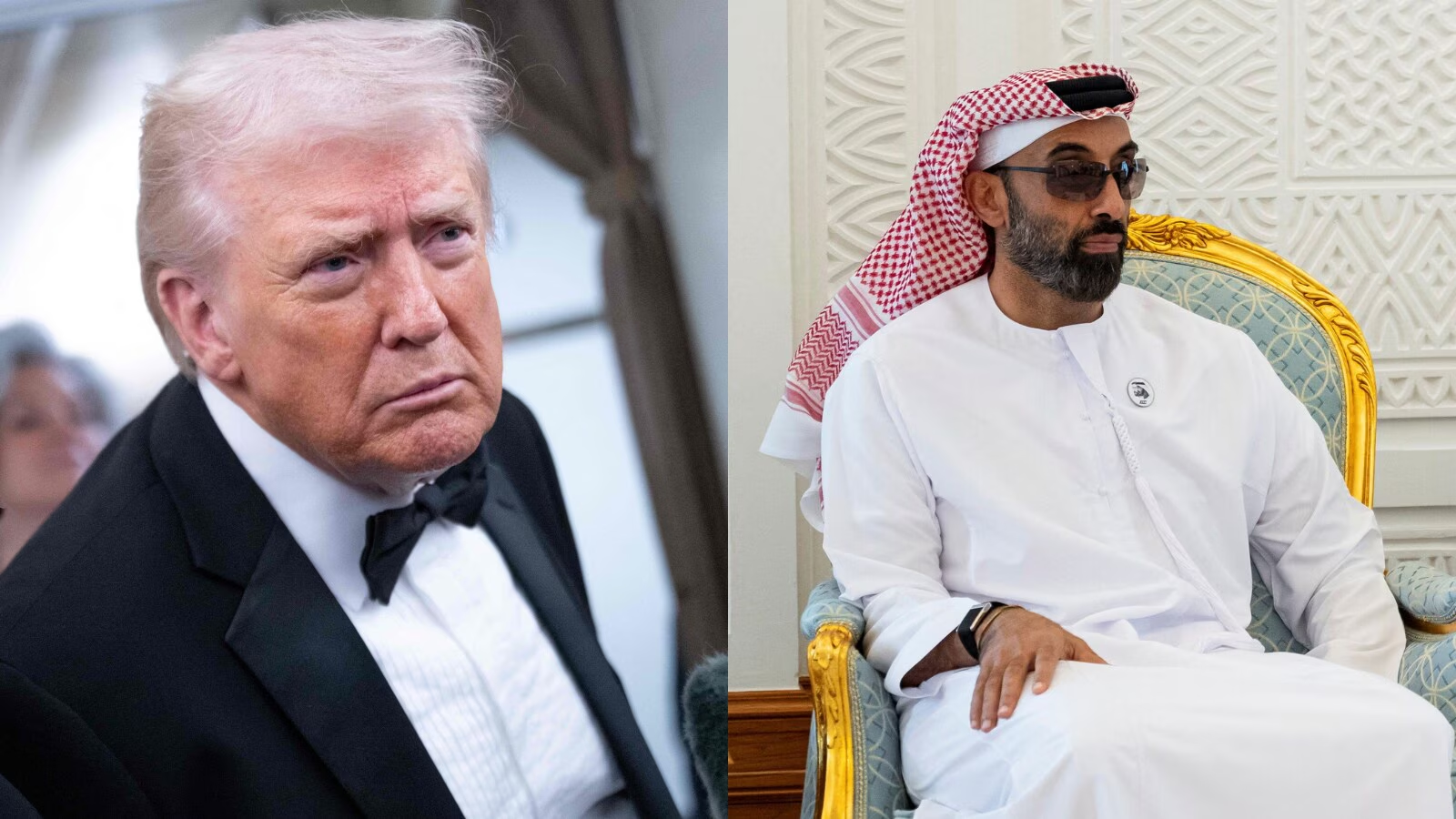
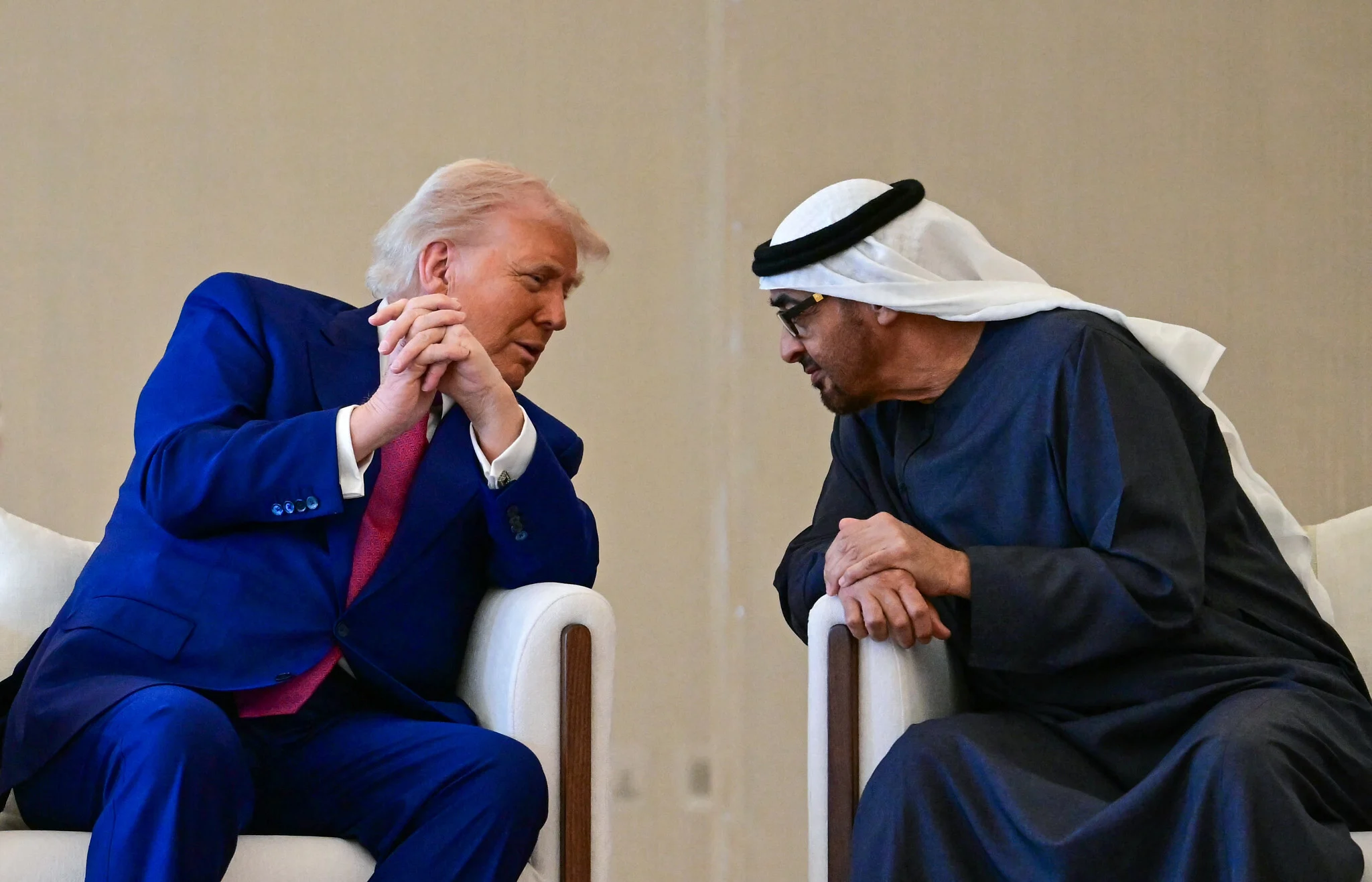
Donald Trump and Sheikh Tahnoon share the spotlight in a split image, highlighting the controversial $500M crypto deal tying the Trump family to UAE interests.
Immediate Payouts and Boardroom Shakeups
The agreement triggered massive payouts to Trump family entities and longtime associates like Steve Witkoff. World Liberty’s ownership dropped from 75 percent to 38 percent, without publicly naming Aryam as the buyer.
Executives tied to Sheikh Tahnoon joined the five-person board alongside Eric Trump and CEO Zach Witkoff. Publicly, the deal was promoted as a win for U.S. tech companies, but internally, few knew the foreign government official had already secured a major stake.
Crypto, Stablecoins, and Billion-Dollar Investments
Weeks before the US–UAE AI chip deal was announced, MGX — another Tahnoon-controlled fund — invested $2 billion into Binance using World Liberty’s stablecoin, USD1. This instantly catapulted USD1 into the top tier of global stablecoins and added a $2 billion cash reserve to World Liberty, which now invests in U.S. Treasury bonds generating tens of millions in interest annually.
The overlapping leadership between MGX and World Liberty, controlled by the same foreign executive team, raises unprecedented questions about potential influence over U.S. technology policy.
Legal and Ethical Concerns
Former ethics lawyers and government officials described the sequence of events as explosive. “This looks like a violation of the foreign emoluments clause, and more to the point, it looks like a bribe,” said Kathleen Clark, former Washington, D.C. ethics lawyer. Ty Cobb, a former top White House lawyer, added: “You don’t do business deals with families of foreign leaders. It taints American foreign policy.”
White House spokespeople insisted that President Trump acted only in the best interest of the American public, with no conflicts of interest. World Liberty also maintained the deal did not grant any government influence or access.
President Trump with a digital representation of Bitcoin, highlighting his $870 million stake in the cryptocurrency market.
Pattern of Influence and Wealth Consolidation
This is not the first Trump-UAE financial collaboration. Sheikh Tahnoon previously invested $1.5 billion into a firm run by Jared Kushner and later backed a $500 billion AI data center project promoted from the White House. The firm, MGX, also became one of the entities authorized to operate TikTok in the U.S., with Trump personally facilitating the announcement.
Critics argue this series of deals reveals a repeated pattern: significant financial stakes granted to foreign powers in exchange for access or approvals within U.S. government technology and AI sectors.
Curiosity-Driven Questions Linger
Even with transparency claims, the timing and scale of payments, combined with subsequent policy changes, leave unresolved questions: Who truly controls World Liberty? How much influence do foreign powers have over U.S. technology infrastructure? And what does this mean for the integrity of national security policy moving forward?
Key Questions About The Trump Deal
How did the UAE gain access to U.S. AI technology?
The UAE gained approval for around 500,000 advanced AI chips annually shortly after the $500M Trump-linked crypto deal, opening doors previously blocked due to security concerns.
Who received the largest payouts from the World Liberty deal?
Trump family entities and associates, including Eric Trump and the Witkoff family, received $187M and additional payments immediately after the deal.
What does this deal reveal about foreign investment in U.S. tech?
The transaction highlights a pattern where foreign powers secure financial stakes in U.S. ventures, potentially influencing policy decisions and technology access.