


This week thousands of workers faced a sudden shift in their lives. Positions once seen as secure vanished quickly. At Amazon about 16,000 corporate employees received layoff notices. UPS revealed plans to cut 30,000 jobs throughout 2026.
For many Americans this means uncertainty with bills mortgages and everyday plans. Even those still employed are cutting back on spending and putting off big choices as the wave of job losses spreads.
The rate of these cuts stands out in recent history. According to Challenger Gray and Christmas 108,435 jobs were eliminated in the US during January. This marks the quickest start to a year for layoffs since the 2009 Great Recession. What felt like a steady labor market has turned uncertain in a short time.
Key Companies Driving the Layoffs
Major firms have led this trend. Amazon's reductions affect corporate roles as part of ongoing adjustments to its operations. This follows an earlier round in October 2025 that cut 14,000 positions bringing the total to around 30,000 in recent months.
UPS's announcement ties to the end of its delivery partnership with Amazon. The company plans to close 24 facilities in the first half of 2026 with more possible later. These cuts will happen through attrition voluntary buyouts and separations focusing on operational roles.
Other notable reductions include Intel slashing 24,000 jobs or 20 percent of its workforce and Dow eliminating 4,500 positions about 12 percent of its staff. Pinterest cut 15 percent of its employees while Nike and Home Depot each reduced hundreds of roles.
Reasons for the Rapid Job Losses
These changes stem from corporate efforts to restructure and reduce costs. Firms point to ended contracts shifting market demands and increased use of automation including AI.
Transportation saw the most cuts with 31,243 positions lost mainly from UPS. Technology followed with 22,291 reductions driven by Amazon. Health care lost 17,107 jobs.
Contract losses caused 30,784 cuts market and economic conditions led to 28,392 and restructuring accounted for 20,444. AI played a role in 7,624 layoffs last month. Since tracking began in 2023 AI has factored into 79,449 job cut announcements or 3 percent of all plans.
Higher capital costs and a focus on efficiency have pushed companies to flatten structures and invest in new priorities like AI which reshapes white collar work.
The Human Impact Takes Hold Quickly
Workers feel the effects right away. Households face challenges with rent loans and childcare as job stability wavers.
Many are holding off on job applications cutting non essential spending and seeing fewer freelance opportunities. Families delay vacations or career training amid the uncertainty.
Laid off employees from Amazon report struggles with confidence and job searches that can last over a year. Some suggest retooling skills especially in AI or diversifying into other fields for better leverage.
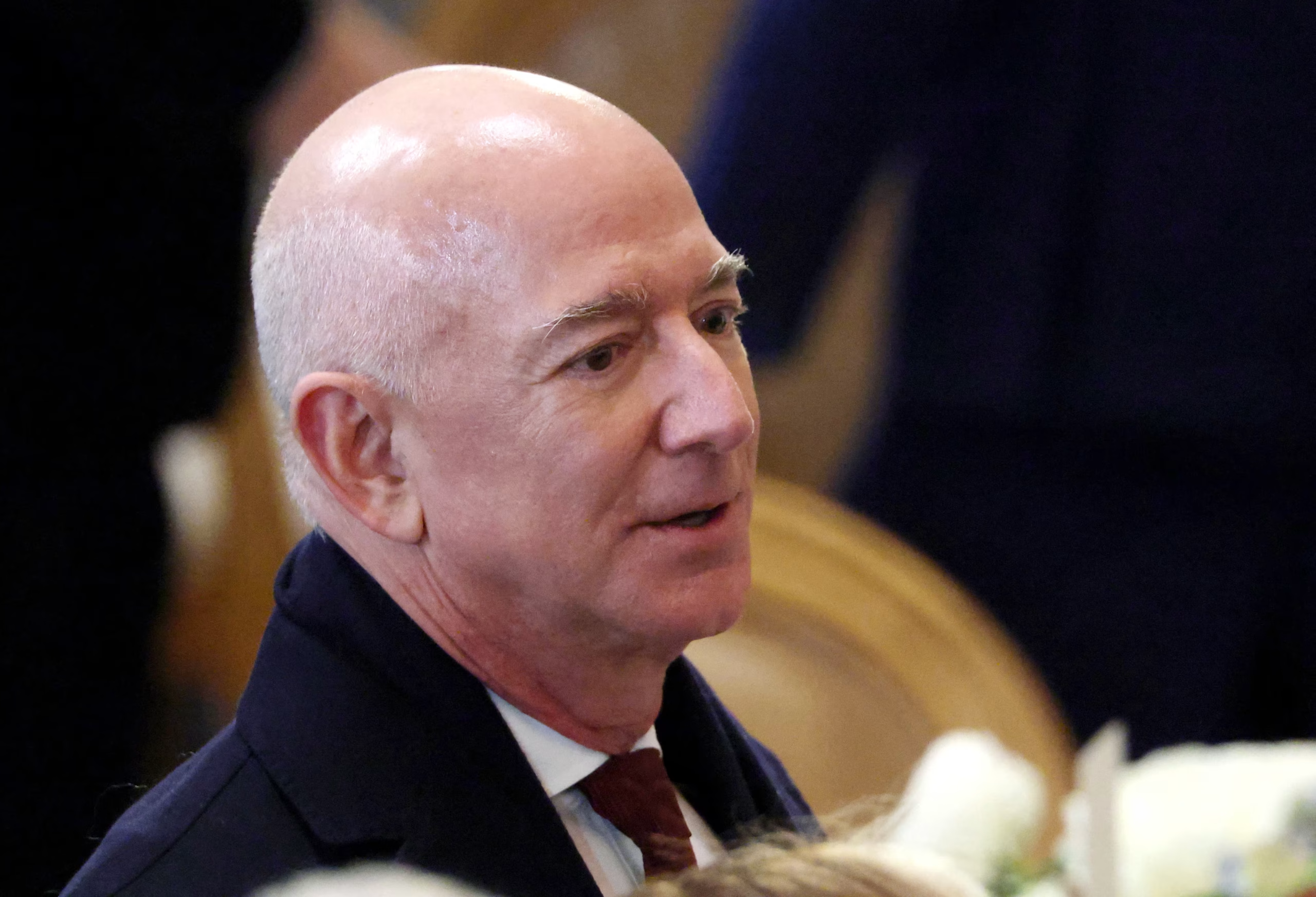
Jeff Bezos’ leadership at Amazon coincides with the company cutting 16,000 corporate jobs, contributing to the fastest January layoffs since 2009.
Hiring Hits a Record Low
New job announcements reached only 5,306 in January the lowest for the month since tracking started in 2009. This is down 13 percent from last year.
Private sector added just 22,000 jobs per ADP data the weakest January since 2021. Health care drove much of this growth.
Job openings fell to 6.5 million in December 2025 down 386,000 from November and over 900,000 since October. This signals fewer opportunities and tougher competition for roles.
Challenges in Recovery and Data Gaps
Government labor figures for January remain delayed adding to the confusion for workers and businesses. Official reports come next Wednesday after a brief federal shutdown. Past warnings noted data gaps that skew hiring views.
Unemployment stays low historically but higher interest rates slower demand and economic doubts prompt cost controls.
What Lies Ahead for the Labor Market
If cuts persist unemployment could rise wages might flatten and open jobs may become scarcer.
A hiring rebound could ease the strain yet January's shock may linger in household anxiety. For now the US labor market feels less reliable with effects spreading through daily routines.
Experts note these plans likely formed in late 2025 showing caution for 2026. The low hire low fire trend continues raising concerns for Federal Reserve support.