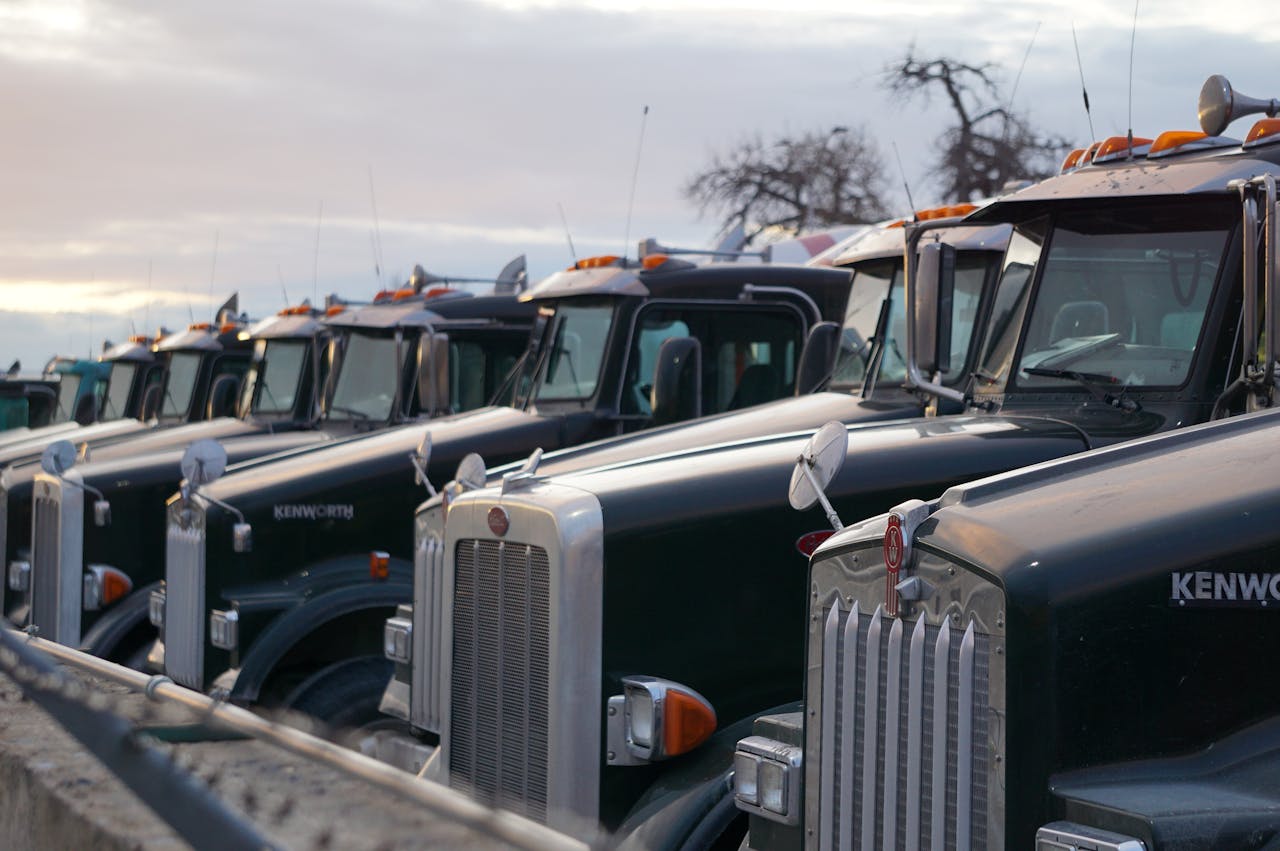
Vehicle utilization rate — how frequently and intensively fleet units operate — is an increasingly relevant factor in commercial transportation liability assessment. Two fleets of identical size may carry meaningfully different liability profiles depending on how evenly and consistently their vehicles are deployed.
Traditionally, the number of vehicles in a transportation company's possession was a key factor in evaluating liability exposure. The connection looked straightforward: more vehicles meant more risk.
That assumption has become harder to defend. Two fleets with identical vehicle counts may present very different liability pictures depending on how those vehicles are actually used. Deployment frequency, operational intensity, and consistency of utilization across the fleet tend to say more about where risk develops than the number of units on a policy. STAR Mutual RRG offers commercial transportation insurance programs around operational realities like these — supporting stable, long-term coverage for fleets operating across varied conditions.
Utilization Rate: A Measure of Operational Intensity
Utilization rate measures how intensively a vehicle operates across cycles. Unlike fleet size, this parameter reflects actual exposure — the volume of operational hours a unit accumulates over a given period.
Two companies may possess the same number of vehicles but differ significantly in operational intensity:
- One distributes work evenly across all units
- The other concentrates activity in a portion of the fleet
From a liability standpoint, the difference between these two profiles may be meaningful.
How High Utilization Affects Liability Exposure
Increased operational intensity may raise several factors relevant to liability development:
- Time spent in traffic environments
- Number of loading and unloading cycles
- Accumulation of driver fatigue
- Mechanical stress and operational reliability
Each of these contributes indirectly to how liability exposure develops over a policy period.
Why Unused Vehicles Do Not Automatically Reduce Risk
A common assumption is that having underutilized units reduces overall risk. In practice, uneven fleet deployment tends to indicate its own set of operational problems:
- Uneven workload distribution across drivers
- Irregular maintenance cycles
- Schedule inconsistency
- Unpredictable vehicle deployment patterns
Unpredictability can be as consequential for the liability profile as high utilization itself. Uneven utilization may allow risk to accumulate even where total mileage remains controlled.
Utilization Rates and Driver Performance
Operational intensity may have a direct effect on driver behavior. Drivers operating under sustained workload pressure may make decisions differently — reaction patterns and judgment may shift under persistent demand.
At the same time, uneven utilization creates inconsistency across the driver pool. Some drivers operate continuously while others are dispatched intermittently — producing different behavioral patterns and risk profiles within the same fleet.
In both cases, utilization patterns are a factor in how driver behavior develops over time.
Mechanical Stress and Utilization
Higher operational intensity may increase mechanical stress on fleet vehicles. Structured maintenance programs may reduce that stress, though natural wear processes tend to accelerate with higher utilization:
- Faster component wear
- Higher probability of mechanical failure
- Increased likelihood of secondary risk factors
Not all mechanical issues lead directly to incidents, but they contribute to elevated exposure levels across specific operational scenarios.
Why Fleet Size Is a Secondary Indicator
Fleet size reflects operational capacity — how many vehicles a company has, not how they are used. Two companies with equal fleet size may differ significantly across:
- Evenness of vehicle deployment
- Daily operational frequency per unit
- Operational intensity per vehicle
- Amount of idle time across the fleet
These differences make fleet size an incomplete metric for liability assessment. Operational intensity may provide a more accurate picture of where exposure actually develops.
The Problem of Exposure Concentration
When a portion of the fleet carries a disproportionate share of operational activity, risk tends to concentrate within a narrower set of operations.
An incident involving a heavily utilized vehicle may have an outsized impact on the overall operation — and concentrated risk is harder to stabilize, particularly when operational conditions shift unexpectedly.
Why Liability Assessment Should Include Behavioral Factors
Traditional liability indicators — fleet size, vehicle type, historical claims — provide a useful baseline but an incomplete picture of where risk may be developed.
Operational behavior is increasingly a factor in how liability exposure is understood alongside traditional fleet metrics. Scheduling consistency, deployment patterns, and utilization intensity all contribute to a more accurate liability profile than fleet counts alone.
Conclusion
Utilization rate is a meaningful factor in liability exposure development — reflecting how operational conditions may contribute to risk, rather than simply the capacity of a fleet.
High or uneven operational intensity affects driver behavior, mechanical reliability, and exposure concentration simultaneously. Fleet size describes what a company has. Utilization rate describes how that capacity translates into real-world liability exposure.