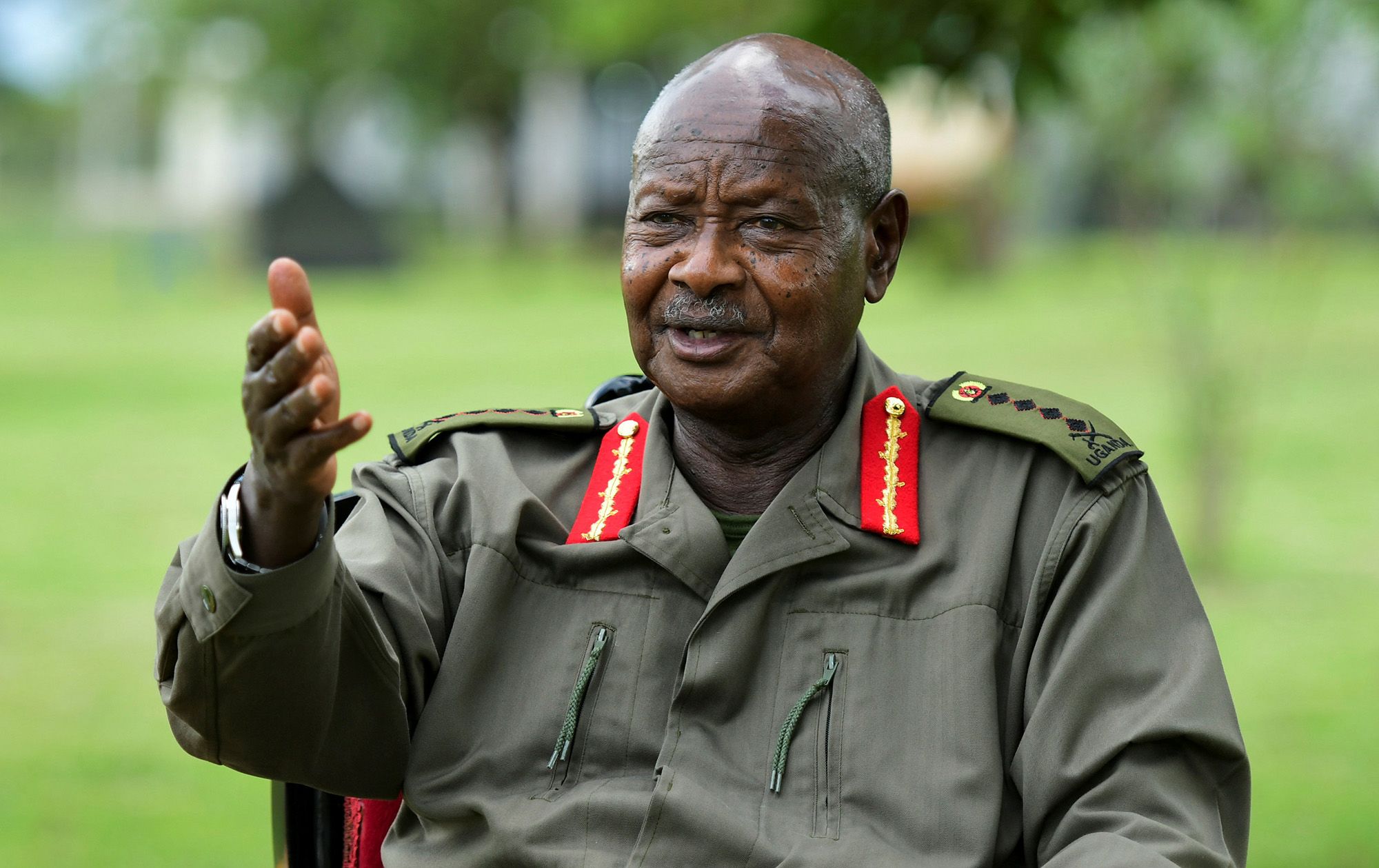
Yoweri Museveni’s net worth is back under scrutiny after Uganda’s longtime leader was sworn in for a seventh term on May 12, 2026, extending his rule into a fifth decade at the center of East African politics.
The political moment matters financially because Uganda is approaching one of the most important economic transitions in its modern history. Oil infrastructure projects are moving closer to production, regional trade ambitions are accelerating, and foreign investors are increasingly watching how power, wealth, and succession could shape the country’s next era.
That has once again pushed questions about Museveni’s personal fortune into the spotlight.
Despite years of online speculation claiming everything from multi-million-dollar wealth to billionaire status, there is still no independently verified public figure for Museveni’s true net worth. What exists instead is a mixture of official salary disclosures, political influence, state-linked economic transformation, and decades of allegations, rumours, and internet estimates that remain difficult to verify.
What Is Yoweri Museveni’s Net Worth in 2026?
Most publicly circulating estimates place Museveni’s wealth somewhere in the multi-million-dollar range, although exact figures remain unverified.
Some websites and social media posts have claimed numbers ranging from $10 million to several billion dollars. The problem is that many of those figures trace back to recycled blogs, viral posts, YouTube videos, or unsourced rankings rather than audited financial disclosures.
Unlike publicly listed billionaires whose wealth can be tied directly to shareholdings or company filings, political wealth estimates are often opaque and difficult to substantiate.
Museveni’s officially disclosed presidential salary has historically appeared modest by global standards. Public records and media reports have previously suggested annual compensation equivalent to under $10,000 per year, though presidential influence in Uganda extends far beyond formal salary structures.
The real financial story is not the paycheck itself. It is the concentration of political power around one of Africa’s longest-serving leaders during a period when Uganda’s strategic economic value is rapidly increasing.
Why Museveni’s Seventh Term Changes the Financial Conversation
Museveni’s latest inauguration is not just another political milestone. It potentially locks in continuity over Uganda’s oil era.
That matters because Uganda is positioning itself as a future regional energy exporter through projects tied to the East African Crude Oil Pipeline and wider petroleum development infrastructure.
The country has spent years preparing for commercial oil production while simultaneously trying to expand manufacturing, industrial processing, agriculture, ICT investment, and regional trade integration. Museveni has consistently presented himself as the central architect of that transformation.
In a recent interview published by Forbes Africa, Museveni argued that Uganda’s future depends on moving beyond raw commodity exports toward higher-value manufacturing and industrialization.
That broader economic transition is now becoming inseparable from questions surrounding political continuity, elite influence, and long-term control over strategic industries.
The Oil Question Is Driving New Attention Around Wealth
Uganda’s oil ambitions have dramatically changed the scale of money attached to the country’s future.
The East African Crude Oil Pipeline project alone has become one of the continent’s most high-profile energy developments, attracting international investors, environmental scrutiny, and geopolitical interest.
Whenever major energy wealth approaches a political system dominated by a long-serving leader, questions about influence and elite enrichment naturally intensify.
That does not automatically mean allegations circulating online are accurate. But it does explain why speculation surrounding Museveni’s wealth repeatedly resurfaces whenever Uganda’s economy enters a new growth phase.
The political stakes are now far larger than they were a decade ago.
Museveni’s Power Has Always Been Bigger Than Salary
One reason internet estimates about Museveni’s fortune vary so wildly is because many people confuse political influence with directly provable personal wealth.
Museveni first took power in 1986 after years of conflict and instability. Since then, he has overseen major shifts in Uganda’s political and economic structure, including privatization programs, military expansion, infrastructure development, industrial policy, agricultural commercialization, regional trade integration, and energy investment.
Over nearly 40 years in office, the presidency itself has become deeply tied to Uganda’s economic direction.
That creates a situation where political influence, patronage networks, state contracts, land control, and family power become part of the broader wealth discussion even when precise personal assets remain undisclosed.
Why Succession Questions Matter Financially
Another reason the financial conversation around Museveni has intensified is the growing visibility of his son, Muhoozi Kainerugaba.
For years, succession speculation has followed Ugandan politics. As Museveni enters another term in his 80s, attention is increasingly shifting toward what a future transition of power could mean for investors, regional stability, military influence, and economic continuity.
That matters commercially because long-serving political systems often develop business ecosystems tied closely to leadership continuity.
Investors therefore watch succession risk carefully.
The financial story surrounding Museveni is no longer simply “How much is he worth?” It is increasingly about what happens to Uganda’s economic and political structure after him.
Uganda’s Economic Shift Is the Bigger Long-Term Story
The deeper financial significance of Museveni in 2026 is Uganda’s attempt to reposition itself economically inside East Africa.
The country is pushing aggressively into oil exports, agro-processing, industrial manufacturing, infrastructure expansion, regional trade logistics, and ICT development.
Museveni has repeatedly argued that Uganda’s long-term objective is to retain more economic value domestically rather than exporting raw materials cheaply abroad.
If Uganda’s energy and industrial projects succeed, the country’s economic profile could change significantly over the next decade.
That is ultimately why global attention around Museveni’s leadership remains financially important far beyond Uganda itself.
Why Billionaire Claims Remain Difficult to Prove
One of the biggest problems with “richest African presidents” rankings online is that many recycle unsupported claims without evidence.
Some viral posts claim Museveni is secretly worth billions. Others suggest far lower figures.
Very few provide audited disclosures, corporate ownership evidence, verified asset records, investment filings, or independently sourced financial documentation.
Without those records, many estimates become speculation rather than verified financial reporting.
A more defensible conclusion is that Museveni’s real influence comes less from publicly visible billionaire-style wealth and more from nearly four decades of political control during Uganda’s economic transformation.
The Economic Questions Facing Uganda’s Next Era
The next few years could become the most economically significant period of Museveni’s presidency.
If Uganda’s oil infrastructure reaches full production capacity, export revenues could rise dramatically. That would increase the country’s geopolitical importance while also intensifying scrutiny around governance, contracts, elite wealth concentration, and political succession.
At the same time, questions surrounding Muhoozi Kainerugaba’s future role will likely keep growing.
For investors, businesses, and political observers, the real financial issue is not simply Museveni’s estimated personal fortune.
It is whether Uganda’s political system can manage a historic economic transition while maintaining stability during an eventual leadership succession.
The Bigger Financial Reality
Yoweri Museveni’s net worth remains one of Africa’s most debated — and least verifiable — political wealth stories.
But the renewed interest in his finances in 2026 is not happening in isolation.
It is being driven by Uganda’s approaching oil era, another presidential inauguration extending Museveni’s rule deeper into a fifth decade, and growing questions about who ultimately controls economic power in one of East Africa’s fastest-changing economies.
For more celebrity finance coverage, explore our latest net worth features on Michael Jackson, Noah Kahan, Brandon Clarke, and other stars whose careers, contracts, touring income, NBA earnings, and business ventures continue reshaping their financial fortunes — even after major career and life-changing moments.