In Brief
- Outcome: A senior Federal Reserve official signals rates could rise again despite growing slowdown risks.
- Mechanism: Energy-driven inflation linked to the Iran war is pushing prices higher while weakening demand.
- Implication: The Fed is entering a policy trap where controlling inflation and supporting growth may require conflicting actions.
The Rate Cut Story Just Broke — And It Hits Faster Than Expected
For months, the expectation was clear: interest rates would fall, easing pressure on borrowers and supporting growth.
That assumption is now starting to unravel, and the consequences could move quickly through mortgages, business lending, and consumer credit.
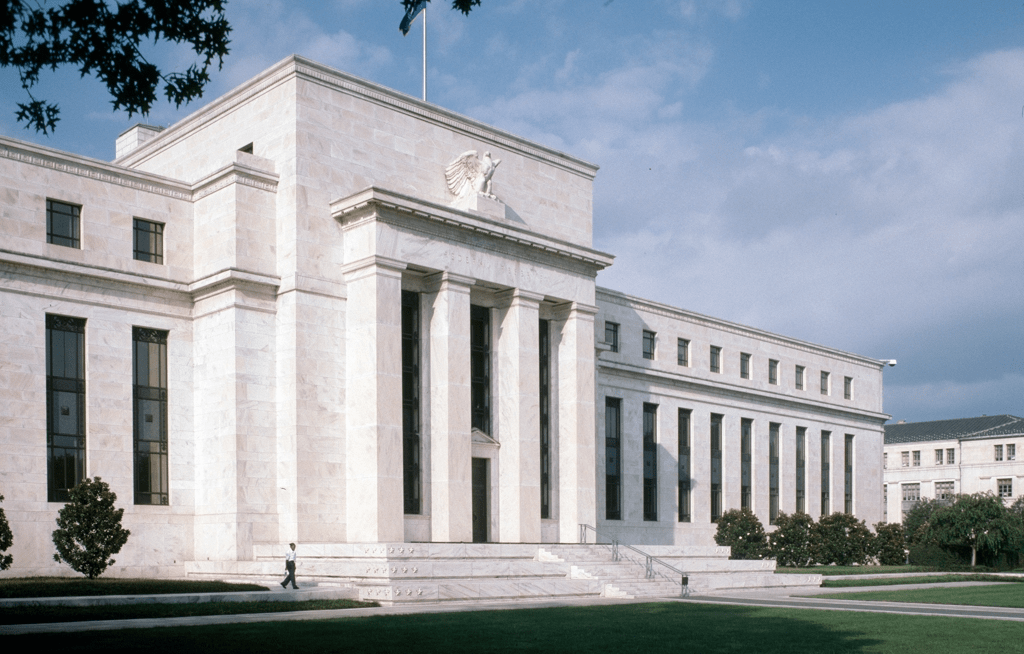
When Beth Hammack indicated that rates might need to rise again—even as parts of the economy begin to show strain—it signalled more than a routine inflation concern. It pointed to a deeper shift in how the Federal Reserve is being forced to respond to conditions that are no longer moving in predictable ways.
Most people assume the Fed can steer the economy in a relatively controlled direction. In reality, moments like this reveal the limits of that control, particularly when inflation is being driven by forces outside the usual demand cycle.
Why This Is Not a Typical Inflation Problem
At first glance, rising inflation suggests a familiar response: tighter monetary policy.
However, the current pressure on prices is not being driven primarily by strong consumer demand. Instead, it is closely linked to higher energy costs following the Iran war, which has pushed gas prices sharply higher in a short period.
This creates a more complex dynamic. Higher fuel costs feed directly into inflation, but they also reduce disposable income, forcing households to cut back elsewhere. That reduction in spending can weaken overall economic activity and increase the risk of job losses.
What this means in practice is that the Fed is facing two opposing signals at the same time. Inflation may justify higher rates, while slowing growth may require the opposite response.
This is where the traditional policy framework begins to break down.
The Mechanism: A System Pulled in Two Directions
The Federal Reserve operates under a dual mandate to maintain price stability and support maximum employment. Under normal conditions, one of these priorities tends to dominate policy decisions.
In the current environment, both sides are under pressure simultaneously.
Hammack outlined the range of possible outcomes, each tied to how inflation and growth evolve:
| Scenario | Trigger | Likely Fed Response |
|---|---|---|
| Inflation remains elevated | Energy-driven price increases | Rate hikes |
| Growth weakens significantly | Consumers reduce spending due to higher costs | Rate cuts |
| Both pressures persist | Inflation and slowdown occur together | Policy uncertainty |
The third scenario is the most challenging, because it removes the clarity policymakers rely on when setting direction. Instead of responding to a single dominant trend, the Fed may need to adjust rapidly as conditions shift.
This is where instability tends to emerge—not from a single decision, but from the absence of a consistent path forward.
Where Risk Actually Builds in the Economy
The immediate focus is often on whether rates will rise again. The more significant risk lies in the unpredictability surrounding those decisions.
When businesses and investors cannot anticipate the direction of policy, they tend to delay investment, hiring, and expansion. At the same time, consumers facing higher borrowing costs and rising living expenses may pull back on spending.
This combination creates a feedback loop. Reduced spending slows growth, while persistent inflation limits the Fed’s ability to respond aggressively with rate cuts.
This is where financial pressure accumulates. It does not come from one policy move alone, but from the interaction between rising costs and uncertain direction.
What This Means for Borrowers and Markets
If rates increase, the impact will be felt quickly across mortgages, credit cards, and business loans. Higher borrowing costs can reduce housing demand, limit business investment, and increase financial strain on households.
At the same time, elevated gas prices are already reducing disposable income, particularly for lower- and middle-income consumers. That dual pressure—higher interest rates alongside higher living costs—can weigh heavily on overall economic activity.
If the Fed instead prioritises growth and cuts rates, it risks allowing inflation to remain above its 2% target for longer, potentially eroding purchasing power further.
Each path carries trade-offs, and neither offers a clean resolution.
Why the Situation Is More Unstable Than It Appears
This environment is further complicated by political pressure. Donald Trump has already called for significantly lower interest rates, and any move in the opposite direction would likely draw criticism.
While the Fed operates independently, market confidence depends partly on the perception of that independence. Public pressure can therefore amplify volatility, particularly when policy decisions are already finely balanced.
At the same time, incoming data on inflation—expected to reflect rising energy costs—may force policymakers to act sooner than anticipated. If inflation accelerates toward the projected 3.1% to 3.5% range, the window for maintaining current rates could narrow quickly.
The Strategic Insight
Most commentary frames this as a question of timing: whether the Fed will raise or cut rates next.
That framing misses the deeper issue.
The current environment suggests the Fed is moving into a phase where external shocks—particularly energy and geopolitical developments—are shaping economic outcomes more than domestic demand. In such conditions, policy tools become less precise and more reactive.
What this means in practice is that the Fed may not be choosing between growth and inflation in a traditional sense. Instead, it is managing a situation where both risks are rising at the same time.
Final Insight
This reveals that the real risk is not simply higher interest rates or persistent inflation.
It is the loss of a predictable policy path, where decisions must respond to forces that monetary policy alone cannot fully control.






![Top Crude Oil and Energy Trading Platforms for UK Traders [2026 Rankings]](https://www.finance-monthly.com/wp-content/uploads/2026/07/pexels-alimuart-15981221-150x150.jpg)