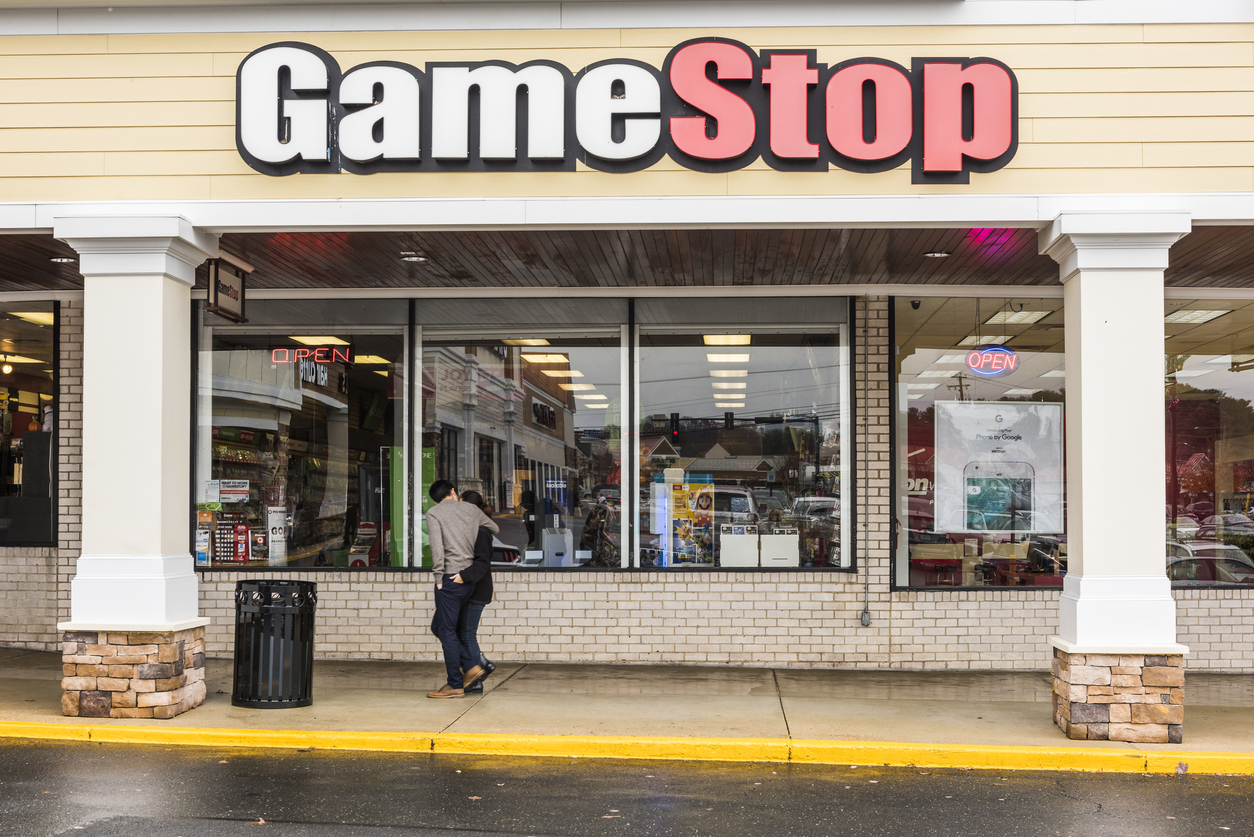
GameStop, a company valued at roughly $12bn, has made a $55.5bn cash-and-stock offer for eBay. The proposal would give the former meme-stock star control of one of the world’s biggest resale marketplaces, but the size mismatch has already exposed the financial problem: investors need to believe GameStop can fund, defend and execute a takeover several times its own market value.
The bid values eBay at $125 a share, split between 50% cash and 50% GameStop stock. GameStop says it has built a 5% economic stake in eBay and plans to file the required regulatory and shareholder disclosures. eBay has confirmed the unsolicited approach and said its board will review the proposal.
GameStop became a market phenomenon in 2021 when retail traders pushed the stock into the centre of the meme-stock boom. Keith Gill, better known online as Roaring Kitty, became the most recognisable figure in that surge, helping turn a struggling video game retailer into a symbol of retail investor power. Ryan Cohen, now GameStop’s CEO, is taking that legacy into a very different arena: using the capital, attention and shareholder base created during the meme-stock era to attempt a major corporate takeover.
The strategic appeal is easy enough to understand. GameStop has stores, a gamer-heavy customer base and a business that has been trying to move away from reliance on physical video game sales. eBay has a global marketplace, seller tools, payments infrastructure and strength in used goods, electronics and collectibles. Together, they could create a broader resale platform for games, consoles, trading cards, refurbished devices and other second-hand products.
The financing question is far less comfortable. GameStop’s proposal includes half cash and half GameStop shares, while reports say the company has around $9.4bn in cash and liquid investments and may use about $20bn in debt financing from TD Securities. That still leaves a large part of the offer dependent on stock, outside capital or a structure eBay shareholders are willing to accept.
GameStop’s own share price becomes part of the bid. If the stock weakens, the share-funded half of the offer becomes less attractive to eBay investors. Early market reaction showed exactly that split: eBay shares rose on the takeover premium, while GameStop shares fell as investors weighed dilution, debt and execution risk.
Cohen is trying to turn GameStop into something larger than a specialist retail chain. Since taking control, he has pushed the company away from its old mall-based model and towards collectibles, trading cards and new uses for its store network. Buying eBay would give GameStop marketplace scale it could not build quickly on its own.
A deal of this size would test three things at once: GameStop’s financial flexibility, Cohen’s ability to sell the plan to shareholders, and management’s capacity to integrate a much larger digital marketplace. GameStop has promised $2bn in annual cost reductions within a year, but those savings would have to arrive quickly to justify the risk.
GameStop’s store network is central to the pitch. The company wants its roughly 1,600 US locations to support eBay users through drop-off, shipping and live-selling concepts. If that works, GameStop could turn physical locations into a resale logistics network. If it fails, shareholders are left with a high-priced marketplace deal and an old store base still searching for a durable role.
Regulators would have plenty to examine. A GameStop-eBay combination would bring together online resale, gaming hardware, electronics trade-ins, collectibles and seller tools. Antitrust officials would likely look at whether the deal weakens competition for independent sellers or gives the merged company too much influence over parts of the second-hand electronics and collectibles market.
Shareholder politics may become just as important as regulatory review. GameStop says it is filing a Schedule 13D and HSR notification, and the company has published its proposal materials for investors. eBay had no prior discussions with GameStop before the offer, which means Cohen may need to make his case directly to investors if the board resists.
The Amazon comparison is the most ambitious part of the pitch. Cohen sees eBay as a stronger challenger to larger ecommerce rivals, but eBay’s challenge has rarely been brand recognition alone. Winning more marketplace share would require seller trust, better buyer experience, disciplined logistics, product focus and a clearer reason for customers to choose the combined platform.
A narrower resale and collectibles strategy may be more convincing. GameStop’s audience overlaps naturally with gaming, cards, consoles, refurbished electronics and fandom-driven categories where eBay is already strong. The deal looks more credible if investors see it as a focused attempt to dominate high-value resale niches rather than a broad attempt to chase Amazon across ecommerce.
The risk for eBay shareholders is accepting too much of the purchase price in GameStop stock if the bidder’s shares remain volatile. GameStop shareholders face a different concern: dilution and leverage in pursuit of a deal that may take years to prove. Both sides have reason to examine the structure before treating the headline premium as the full story.
GameStop’s meme-stock history gives the bid attention, but attention will not close a $55.5bn deal. Roaring Kitty helped make GameStop famous as a retail-trading force; Cohen now has to prove that fame can be converted into financing, execution and durable marketplace economics.
GameStop’s eBay bid is a serious attempt to buy scale, but it is also a test of market belief. If Cohen can make the financing credible and show how the combined company grows beyond cost-cutting, the deal could reshape resale commerce. If he cannot, the offer may show where meme-stock capital runs into the hard arithmetic of a mega-deal.
More from Finance Monthly: Adidas Beat Nike to Sub-2. Can It Turn That Into Pricing Power?