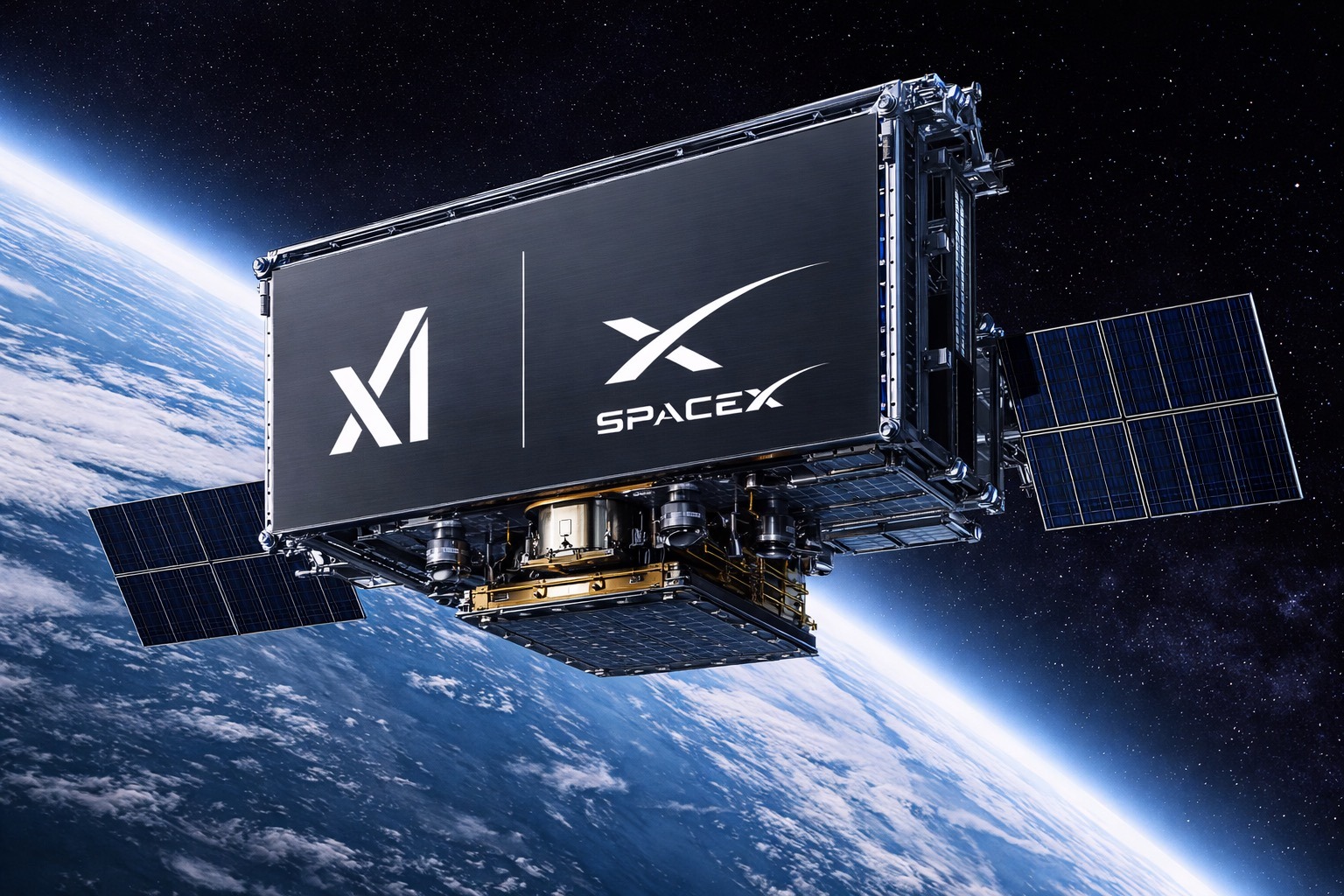
While millions of people worry about layoffs, rising bills and whether AI could eventually replace their jobs, Wall Street is preparing to pour trillions into SpaceX — a company openly talking about Mars colonies, orbital AI systems and building the next economy beyond Earth.
The company’s blockbuster IPO filing could value the business at roughly $1.75 trillion and move Elon Musk even closer to becoming the world’s first trillionaire.
The IPO documents show SpaceX sees itself as something far larger than a rocket business. The company is trying to sit at the center of several industries investors believe could dominate the next decade, including artificial intelligence, satellite internet, communications infrastructure, defense technology and large-scale computing power. The filing discusses ambitions involving AI data centers in orbit, giant satellite systems and long-term plans tied to building human settlements beyond Earth.
As strange as it sounds, investors are taking it seriously. Right now, money is flooding toward companies tied to AI because markets believe the next enormous tech fortunes will belong to whoever controls the systems people depend on every day — communication networks, computing power, automation and digital infrastructure.
SpaceX generated $18.67 billion in revenue during 2025, with much of that growth driven by Starlink, its satellite internet business. Starlink now serves millions of users across more than 160 countries and has become one of the clearest examples of how Musk’s companies turn giant long-term bets into recurring revenue machines.
At the same time, the company is burning through staggering amounts of money trying to dominate AI infrastructure before competitors do. Its AI division lost billions while investment spending surged into the tens of billions of dollars. SpaceX argues advanced AI systems may eventually require more electricity and computing power than existing grids can comfortably handle, which is part of the reason the company is exploring orbital computing systems powered by solar energy in space.
Even in Silicon Valley, it is an enormous gamble, but investors keep rewarding companies attached to AI because they believe the next wave of wealth will belong to whoever controls the infrastructure behind intelligence, automation and global connectivity.
For many workers outside the tech world, the mood around all of this feels very different. For years, people have watched technology companies create extraordinary fortunes while everyday financial pressure keeps growing. Housing costs remain painfully high in many cities. Childcare costs continue climbing. Layoffs across technology, media and finance have left many professionals feeling far less secure than they did only a few years ago.
Now, at the exact moment many workers fear AI could reduce career opportunities, some of the largest fortunes in modern history are being built around AI itself. That is part of why the SpaceX IPO feels so emotionally charged.
Some employees inside SpaceX who spent years working punishing schedules inside factories, launch facilities and engineering teams could become extraordinarily wealthy if the company reaches its expected valuation. Meanwhile, many public investors may once again feel they are arriving after most of the explosive wealth creation has already happened behind private-market doors.
The filing also reveals how tightly Musk intends to hold control after the company goes public. SpaceX plans to use a dual-class voting structure that gives Musk overwhelming power over major company decisions even after outside investors buy shares. The company also plans to rely on governance exemptions available to “controlled companies” under Nasdaq rules.
Supporters argue that kind of control allows Musk to move faster than traditional corporations and pursue giant projects that most executives would never attempt. Critics see another warning sign in an economy where more wealth, influence and infrastructure continue concentrating around a small group of tech founders and giant corporations.
That is why this story now reaches far beyond Wall Street. For some people, SpaceX represents ambition, innovation and technological progress. For others, it represents a world where billionaires build space economies while ordinary workers fight to stay financially stable on Earth.
That idea no longer feels as distant as it once did.