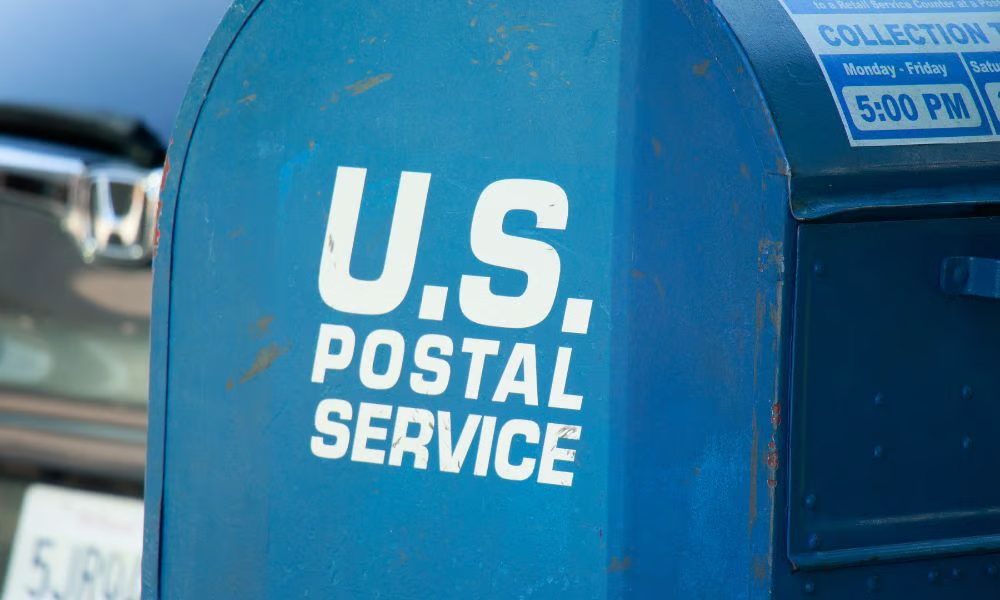
A 65-year postal access point in Rochester, Minnesota is set to close after the U.S. Postal Service confirmed it is ending its contract with Hunt’s Silver Lake Drug and Gift store, removing a long-used community service location that handled routine postal tasks for thousands of residents.
The Contract Postal Unit, operating since 1959, served around 1,000 customers a week and functioned as a quicker alternative to traditional post office queues. USPS says the decision follows standard contract rules and reflects the availability of nearby federally operated post offices that can absorb demand.
But on the ground, the change is simpler: a familiar place people used regularly is no longer part of the local routine.
A Long-Running Community Service Contract Comes to an End
Hunt’s Silver Lake Postal Station has operated inside the same retail setting for decades, giving residents a convenient way to handle postage without a separate trip to a standalone post office.
That model—postal services embedded inside local businesses—has acted as a quiet extension of the wider USPS network, absorbing everyday demand in smaller, faster-access locations.
USPS has confirmed it is ending the arrangement under standard Contract Postal Unit rules, which allow either party to terminate with 120 days’ notice. The agency says these closures typically happen where nearby USPS-operated branches can take over the workload directly.
In practice, that means fewer retail-based postal counters and more reliance on central post office sites.
Local Pushback Highlights the Value of Proximity-Based Services
The closure has prompted concern from Minnesota Senators Amy Klobuchar and Tina Smith, who have urged USPS leadership to reconsider, pointing to the importance of local postal access for households, small businesses, and time-sensitive mailing needs.
Their intervention reflects a wider tension between efficiency-driven service design and the everyday convenience people rely on without thinking about it.
USPS maintains that Contract Postal Units are supplementary and can be reduced where nearby facilities exist. But for users, the impact is immediate: longer trips, fewer nearby options, and more pressure on remaining post offices to handle routine demand.
What looks like an isolated closure is part of a quieter pattern—fewer access points spread across the same service obligation.
A Gradual Reduction in Local Postal Access Points
The broader shift is not driven by a single decision, but by how USPS manages overlapping service locations over time.
Contract Postal Units were never designed as standalone post offices. They were built as extensions of the system, embedded inside local shops so people could handle everyday mailing tasks without needing a full branch nearby.
Now USPS is increasingly stepping back from that model where it overlaps with nearby federally run locations. The logic is straightforward: if a full post office exists within reach, the agency can consolidate service and close smaller partner sites. In practice, that shift removes the smaller access points people tend to rely on without thinking about it. A quick stop on the way home becomes a longer trip to a central branch. Routine errands that once blended into daily life start requiring more planning.
For places like Silver Lake, the impact doesn’t arrive as a single disruption. It builds quietly over time as fewer local counters remain in everyday reach. The service still exists, but it is further away, less embedded in routine movement.
And as more long-standing agreements come up for renewal, similar closures are likely to follow, continuing a slow tightening of how physically close postal access actually is to the communities it serves.