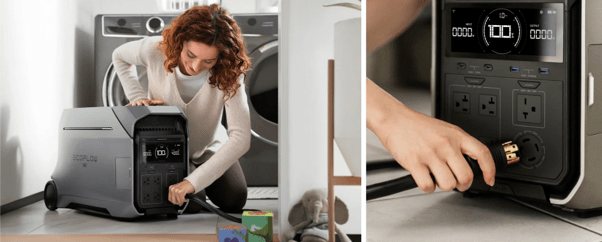
Yes. A portable power station can keep the most important aquarium equipment running during a power outage, provided its output and battery capacity match the equipment you choose to prioritize.
The mistake is trying to power the entire tank exactly as usual. During an outage, the better question is: what does this aquarium need first to stay stable? For some tanks, that is oxygen exchange. For others, it is water movement. In a cold house with tropical fish, temperature may become the limiting factor.
Decide What the Tank Needs Before You Plug Anything In
A home aquarium does not have one universal backup priority. Stocking level, tank size, livestock, room temperature, and the expected length of the outage all matter.
For many freshwater community tanks, an air pump or a small device that keeps the surface moving may be the most efficient first load. It supports gas exchange without consuming the amount of energy a heater may require.
For reef tanks and other systems that depend on consistent circulation, a circulation pump may be the better first choice. Corals and sensitive marine livestock can react poorly to stagnant water, even when the temperature still appears normal.
For tropical fish in a cold room, temperature needs closer attention. A heater can become important, but it should not be treated like a small constant load. It may cycle on and off, and it can use much more battery power than an air pump or circulation pump.
Before storm season, write your own priority order:
- What maintains oxygen exchange?
- What maintains necessary water movement?
- At what room temperature does heating become necessary?
- Which devices can stay off for several hours?
That list will be more useful during an outage than a generic “run everything” checklist.
Leave the Nonessential Equipment Off
A backup plan works best when it protects battery capacity for the equipment that affects livestock.
In most cases, these devices can remain off temporarily:
- Display lighting
- UV sterilizers
- Automatic feeders
- Decorative air features
- Phone chargers and other household devices sharing the same battery
Turning off the aquarium lights may feel wrong at first, but fish do not need a normal lighting schedule during a short power interruption. Reducing nonessential loads gives you more room to run the equipment that actually helps maintain water conditions.
Avoid overfeeding during an outage. More food can mean more waste, while filtration and circulation may be limited. If the outage is prolonged or you keep sensitive livestock, consult an aquarium professional for advice specific to the species and system.
Plan the First 12 Hours, Not an Unlimited Outage
Rather than asking how long one battery will power every aquarium device, build a plan for the first 12 hours.
For example:
| Outage stage | What to check | Likely response |
| First hour | Room temperature, fish behavior, water movement | Start the highest-priority low-power device |
| After several hours | Remaining battery level and water temperature | Continue aeration or circulation; add heating only if conditions require it |
| Extended outage | Weather forecast, expected restoration time, remaining capacity | Reduce loads further and arrange recharging or another approved backup option |
This approach prevents you from spending battery capacity on equipment that is not yet needed.
The tank may not need every device running at every moment. A fishkeeper who checks conditions and adjusts the load can often make the backup power last much longer than someone who connects lights, filters, heaters, and accessories at once.
Choose the Battery Around the Survival Load
A portable power station should be selected around the equipment that protects the aquarium first, not around every device normally connected to the tank.
Start by checking the wattage of the air pump, circulation pump, filter, and heater. Then test the exact combination you expect to use.
A useful home test is simple:
- Fully charge the battery.
- Connect only the first-priority aquarium device.
- Let it run for several hours.
- Record the battery level before and after the test.
- Repeat with any second-priority device you may need in colder conditions.
This gives you a realistic reference for your own equipment. It also reveals practical issues, such as a missing adapter, a short cable, or a device that draws more power when it starts.
Keep the Electrical Setup Dry and Simple
Place the battery on a dry, stable surface away from the aquarium stand, splashing water, and wet flooring. Do not put it under the tank, where a leak could reach electrical equipment.
Use undamaged cables and avoid overloaded power strips. Keep a drip loop in any cable that runs toward the aquarium so water cannot travel directly into an outlet or power source.
When power returns, restart equipment gradually and confirm that filtration, circulation, and heating are operating normally. Check the tank over the next several hours instead of assuming everything immediately returns to normal.
A well-prepared aquarium backup plan is not about maintaining every convenience. It is about protecting the conditions that matter most to the fish, plants, and corals in the tank. Veterinary and extension guidance on aquarium outages similarly emphasizes oxygen and temperature management rather than maintaining normal lighting or feeding routines.