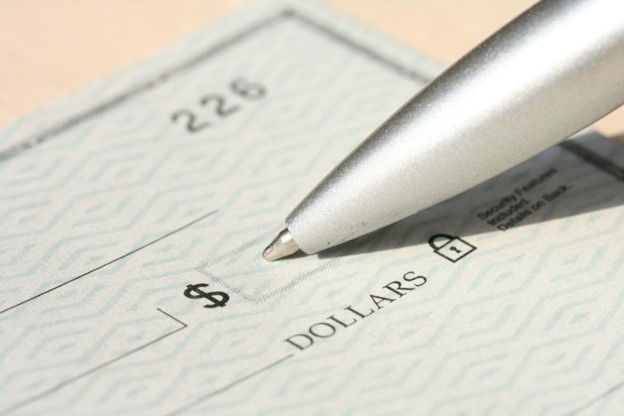
For millions of small business owners across the United States, getting paid is rarely as simple as it sounds. A customer submits a payment electronically — through a bank's bill pay portal, an accounts payable system, or a third-party bill pay provider — and days, sometimes more than a week, pass before the money arrives. The payment started out digital. It finished as a check in the mail. The culprit is rarely a slow customer or an inefficient bank. It is the paper check, and it remains one of the most stubborn inefficiencies in American small business finance.
What Does BillGO Do?
BillGO is a financial technology company that operates one of the largest open biller networks for small businesses in the United States that accepts both business and consumer payments. Its core function is straightforward: it converts payments that would have been mailed as paper checks into digital payments that arrive the same day instead of days later. The company works directly with the nation's largest financial institutions and payments providers to provide this service. When a customer pays a bill electronically — through a bank's online bill pay system, an accounts payable platform, or an electronic bill pay provider — BillGO can convert a payment that would have been printed and mailed into a digital payment delivered to the recipient business, bypassing the paper check entirely.
For the small business on the receiving end, enrollment in BillGO's network requires no software installation, no changes to existing systems, and no additional cost to the business.
The Paper Check Problem
To understand why BillGO exists, it helps to understand what paper checks actually cost a small business.
When a payment is routed as a paper check, the business waiting for it is effectively waiting days, perhaps over a week, for money it has already earned. During that window, the business cannot access funds that are, in every practical sense, already theirs.
For a small business operating on tight margins, which describes the majority of small businesses in the United States, that delay is not a minor inconvenience. It is a cash flow gap that can affect payroll, inventory, vendor payments, and day-to-day operations.
The Federal Reserve's 2025 Payments Study, which reported calendar-year 2024 data, counted 9.2 billion checks worth $24.45 trillion still moving through the U.S. economy — a steady decline in volume, but nowhere close to disappearance. Checks also remain among the most expensive payments for a business to receive, in direct handling costs and in the staff time spent chasing and reconciling them. Despite the growth of digital payments broadly, paper checks have proven remarkably difficult to displace in the business-to-business payment space, particularly for small and micro businesses that lack the infrastructure to demand electronic payment from every customer.
How Does BillGO's Network Work for Small Businesses?
BillGO's approach addresses the problem at the point of delivery rather than asking businesses or their customers to change how they initiate payments.
When a customer pays through any of those systems, BillGO identifies whether the recipient business is enrolled in its network. If they are, the payment is delivered digitally and instantly. If they are not, BillGO may reach out to that business to offer enrollment, so future payments can be delivered the same way.
Why Did BillGO Contact My Business?
This is the origin of the outreach that some small business owners have found confusing. A BillGO enrollment specialist contacts the business not to sell a product, but to notify them that payments are available and to walk them through a simple enrollment process. There is no fee to enroll and no ongoing cost to receive payments through the network.
Once enrolled, businesses access their payments through a single self-service portal. Incoming digital payments are aggregated automatically, which makes tracking and reconciling customer accounts straightforward.
Who Does BillGO Serve?
BillGO's network is designed specifically for the small and micro businesses that larger payment platforms have historically overlooked. The average BillGO customer employs approximately seven people. Many have no dedicated accounts receivable staff. Most were receiving paper checks not by choice, but because no better alternative had been made available to them directly.
BillGO serves tens of thousands of small businesses across the country. Its network connects to financial institutions that collectively reach virtually every bank and credit union in the United States, either directly or through channel partners.
The company holds relationships with the payment networks and standards bodies that form the backbone of the U.S. payment system. Those relationships include card networks such as Visa, and they place BillGO inside the regulated infrastructure of American finance rather than outside it.
Why It Matters
The paper check problem is not new. But for small businesses without the negotiating leverage to demand electronic payment from every customer, it has long felt unsolvable. BillGO's model of meeting businesses where they are, connecting them to digital payment infrastructure at no additional cost, and delivering funds instantly represents a practical solution that does not require the business to change anything about how its customers pay.
For the small business owner who has spent years waiting on checks, that is not a minor upgrade. It is a fundamental change in when and how they access money they have already earned.
Photo by Money Knack on Unsplash





![Top 7 Payment Orchestration Platforms Built for Subscription Models [2026]](https://www.finance-monthly.com/wp-content/uploads/2020/10/Finance-team-discussing-spend-management-150x150.jpg)