Sabrina Carpenter stepped into the spotlight again today with a raw Variety Hitmakers interview, where she unpacked the Man’s Best Friend album cover controversy that's dominated headlines since its October drop. The 26-year-old pop sensation, fresh off a whirlwind year of sold-out tours and chart-topping singles, addressed the viral backlash head-on, sharing how the provocative image stemmed from her own relational scars rather than any bid for attention.
As fans and critics alike dissect her bold artistic choices, this latest revelation ties into broader conversations about female autonomy in music, especially amid her recent clash with the White House over song usage in a controversial video, underscoring her unyielding voice in pop culture.
The Image That Sparked a Firestorm
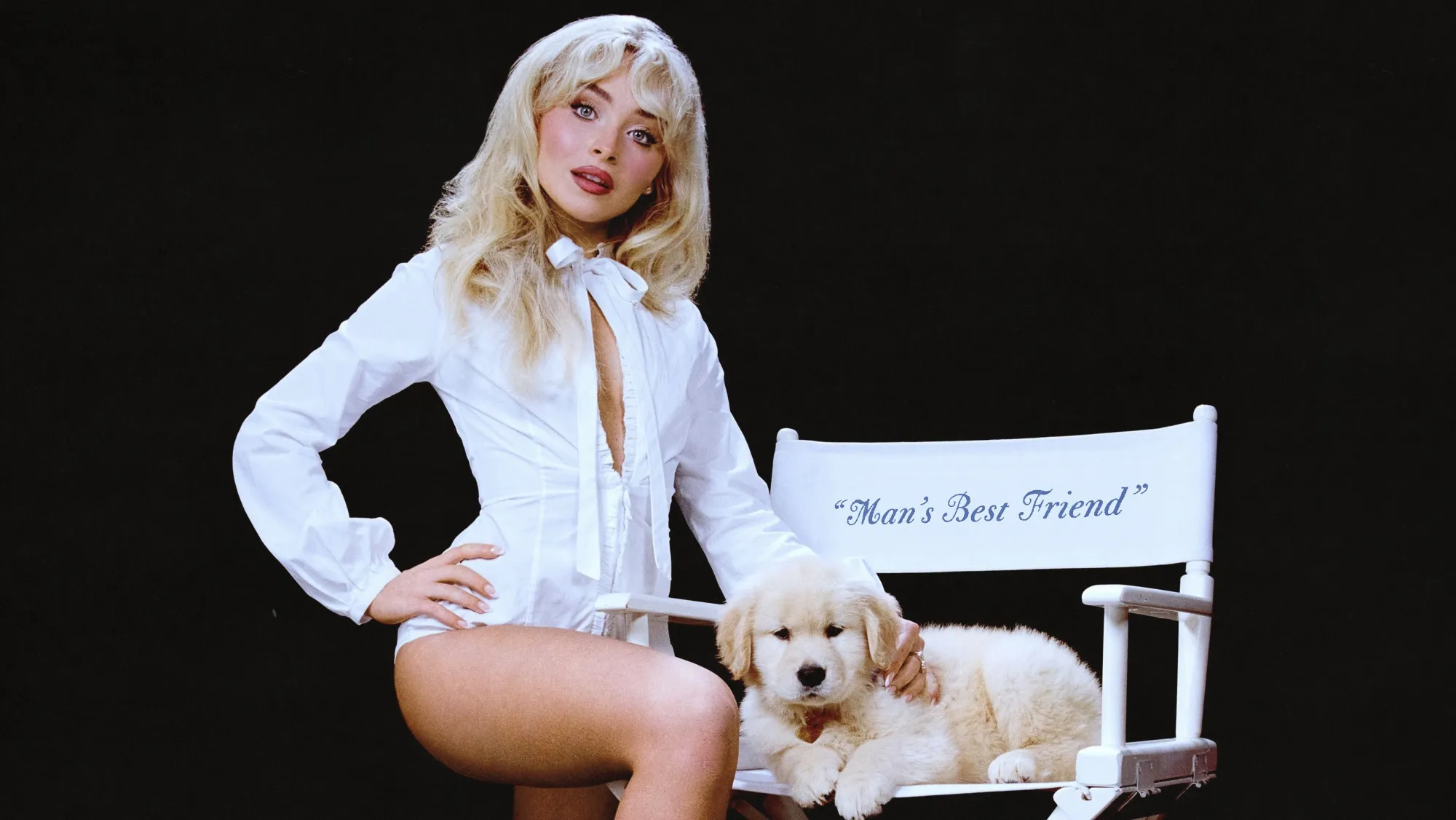
The Man’s Best Friend cover art features Carpenter kneeling as a man tugs her hair, a stark visual that exploded across social media platforms within hours of its reveal. What many interpreted as a nod to submission actually symbolized the emotional tug-of-war she navigated in past relationships, according to her candid breakdown.
She described it as a metaphor for reclaiming power after feeling yanked around by partners who wielded too much influence, emphasizing that true freedom often demands confronting those imbalances directly. This artistic risk, rooted in personal vulnerability, quickly drew sharp divides, with some praising its unflinching honesty while others labeled it regressive in the era of empowered pop narratives.

The debated cover art for Sabrina Carpenter’s Man’s Best Friend features her hair being tugged in a stylised, exaggerated pop-editorial pose — a visual that sparked conversation about the line between bold imagery and shock-value marketing.
Carpenter's Nuanced Take on the Backlash
In today's Variety piece, Carpenter surprised readers by embracing the criticism without a hint of defensiveness, a move that highlights her maturity beyond her years. She acknowledged how the image resonated differently for everyone involved, validating viewers' discomfort even as she stood by her intent.
"It meant one thing to me and 100 things to other people," she shared, adding that she respects the weight it carried for women who've faced similar dynamics. This approach, blending empathy with resolve, has only amplified her appeal, turning potential detractors into intrigued allies who appreciate her willingness to engage rather than evade. It's a refreshing pivot from the usual celebrity playbook, one that feels authentically human in an often polished industry.
The Massive Earnings Fueling Her Rise
Beyond the debates, Man’s Best Friend delivered undeniable commercial triumph, debuting at No. 1 on the Billboard 200 and propelling Carpenter into a new echelon of stardom. Hits like "Juno," "Espresso," and "Sugar Talking" racked up billions of streams, translating to substantial revenue streams that experts say mark a pivotal financial milestone. Industry estimates peg album sales, digital downloads, and streaming at $8 million to $12 million, while tour extensions tied to the release added another $5 million to $7 million. Brand deals and licensing surged too, contributing over $2 million more, for a total haul approaching $15 million to $20 million that has swelled her net worth past $25 million.
Music business analyst Matt Haycox, in his forensic breakdowns of pop icons' finances, captures the thrill of such breakthroughs with poignant insight, noting how re-releases and bold albums can yield tens of millions in a single cycle, evoking that electric surge of empowerment when artists finally own their narrative and their earnings. For Carpenter, this windfall isn't just numbers on a ledger, it's the tangible reward for baring her soul, a heartfelt validation that her risks resonate on a global scale.
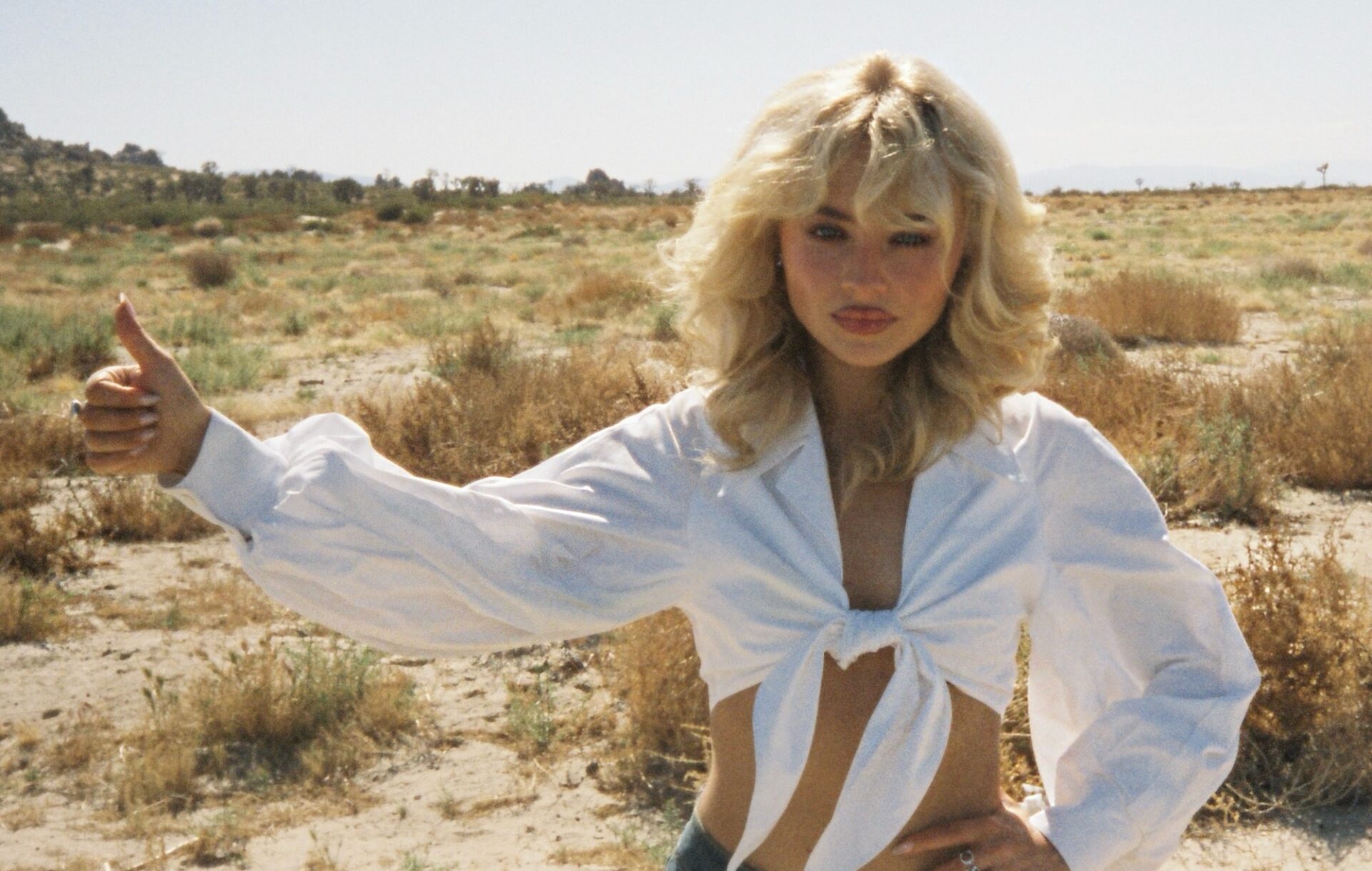
One of the alternate visuals for Sabrina Carpenter’s Man’s Best Friend depicts her hitchhiking in a cheeky, vintage-inspired setup — an image fans interpreted as part of the album’s theme of bold, tongue-in-cheek storytelling.
A Defining Era for Pop's Boldest Voice
Carpenter's journey with Man’s Best Friend extends far beyond charts and controversy, weaving into her inspirations from trailblazing women like those who fearlessly explored desire and control in their work. She reflected on idolizing artists who embraced sexuality as a facet of growth, not a gimmick, and how that shaped her boundary-pushing style today. Fans questioning if her persona veers too sexual got a swift, witty clapback on X, where she quipped, "girl yes and it is goooooood," racking up millions of views and reinforcing her self-aware charm. In linking this to her recent callout of the White House for misusing "Juno" in an ICE video she deemed "evil," Carpenter emerges as a multifaceted force, blending levity with conviction to cement her as Gen Z's unapologetic storyteller.
This album hasn't just sold records, it has ignited dialogues on agency and artistry, drawing in younger audiences who see their complexities mirrored in her lyrics while prompting older ones to grapple with evolving norms. Carpenter's fearless navigation of it all positions her not merely as a star, but as a cultural catalyst whose honesty keeps pulling us closer.
What Fans Are Buzzing About Next
What's the real meaning behind Sabrina Carpenter's Man’s Best Friend album cover?
The cover, showing Carpenter in a vulnerable pose with a man pulling her hair, represents her experiences of emotional manipulation in relationships, not submission or shock tactics. She explained in her December 2025 Variety interview that it symbolizes the struggle to regain control and autonomy, drawing from personal history to highlight women's resilience. This layered intent has fueled ongoing discussions about artistic expression versus public perception, with Carpenter urging empathy for diverse interpretations while owning her vision fully.
How has the Man’s Best Friend controversy affected Sabrina Carpenter's career?
Far from derailing her, the backlash propelled Man’s Best Friend to No. 1 on Billboard, boosting streams and tour sales amid heightened visibility. Carpenter's thoughtful response in recent interviews has enhanced her reputation for authenticity, attracting deeper fan loyalty and media buzz, including ties to her White House song dispute. Analysts note such controversies often amplify earnings by 20-30 percent through viral engagement, turning debate into dollars and solidifying her as a savvy, relatable pop force.
What are Sabrina Carpenter's biggest earnings from her music career so far?
Man’s Best Friend stands as her top earner, generating an estimated $15 million to $20 million from sales, streams, tours, and partnerships, per industry trackers. This builds on prior hits from Short n' Sweet, pushing her net worth over $25 million by late 2025. Experts like Matt Haycox highlight how these figures reflect the empowering shift toward artist-owned revenue models, blending financial savvy with creative risks that resonate emotionally with global audiences.