Time Magazine revealed its 2025 Person of the Year today, December 11, and the selection shatters expectations with a collective nod to the minds powering artificial intelligence. The honor goes to "The Architects of AI," a group of innovators who have woven this technology into the core of modern existence. This choice underscores how deeply AI influences our world, from quiet efficiencies in daily routines to seismic shifts in global industries.
The announcement arrives amid a whirlwind of breakthroughs that have dominated headlines this month alone. OpenAI's recent launch of GPT-5.1 has sparked widespread debate over its creative capabilities, while Google's Gemini 3 rollout promises smarter integrations across devices. These developments highlight why Time's editors view 2025 as the pivotal year when AI transitioned from promise to pervasive reality, demanding recognition for those steering its course.
The Covers That Capture AI's Monumental Rise
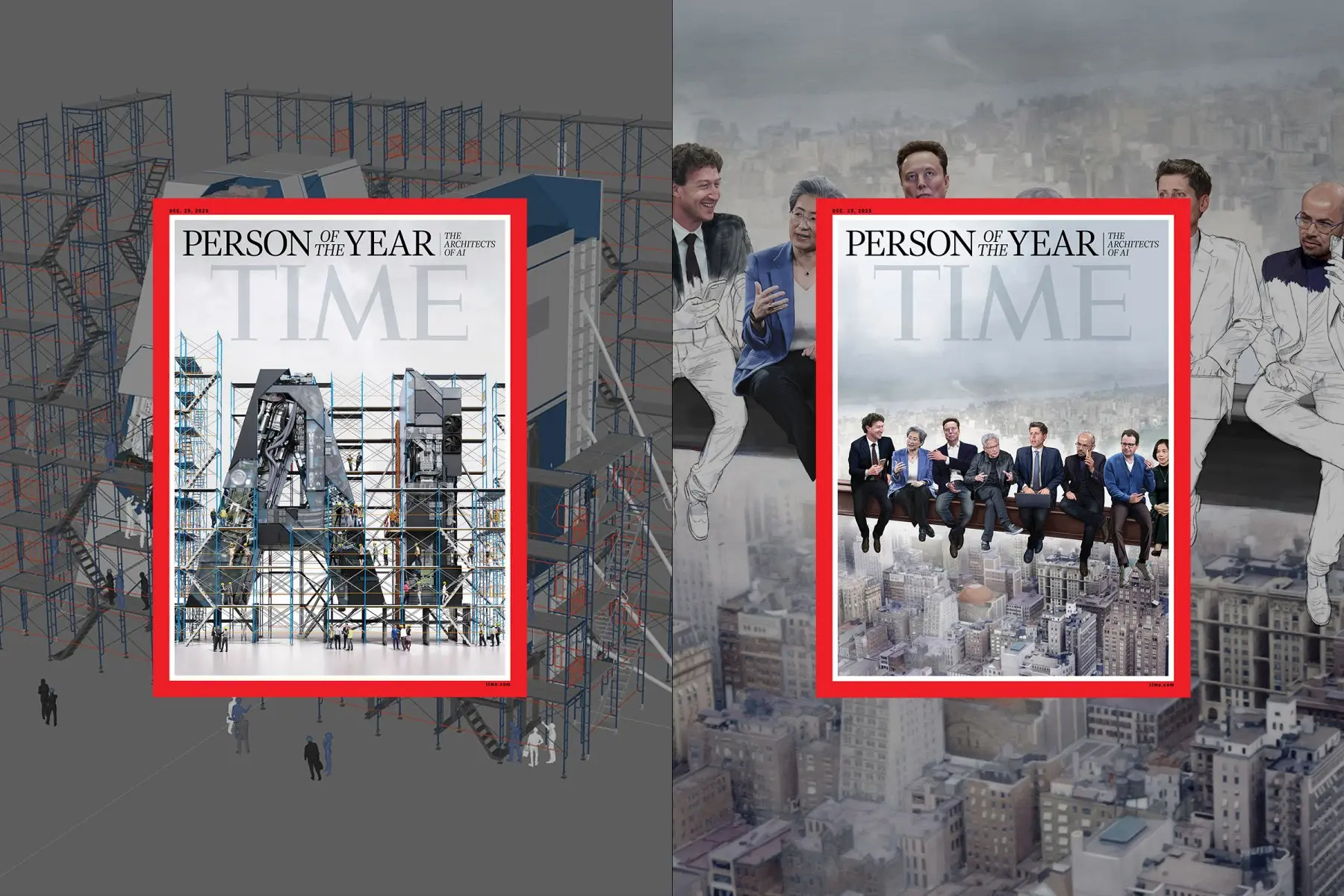
Time's dual covers for this honor blend portraiture with symbolism, drawing viewers into AI's transformative power. One features a striking illustration of the letters "AI" encircled by eight trailblazers, their faces etched with determination amid glowing circuits. This visual lineup spotlights Jensen Huang of Nvidia, Mark Zuckerberg of Meta, Elon Musk of xAI and Tesla, Sam Altman of OpenAI, Fei-Fei Li as an AI pioneer, Lisa Su of AMD, Dario Amodei of Anthropic, and Demis Hassabis of Google DeepMind.
These figures rarely align in one frame, yet their combined efforts eclipse governmental sway over innovation. The second cover evokes a modern industrial dawn, with a vast AI monolith rising like a monolith under watchful eyes of diverse workers, painted in bold strokes that echo 1930s labor scenes reborn for the digital age. Time's Editor-in-Chief Sam Jacobs captured the essence when he stated that no individuals molded 2025 more profoundly than these AI builders.

A detailed look at Time’s “Architects of AI” cover, spotlighting the tech visionaries depicted overlooking New York City as they shape the fast-moving future of artificial intelligence.
How AI Transformed 2025 Into a Year of Unprecedented Change
Artificial intelligence surged forward this year, evolving from experimental tools into essential lifelines that underpin countless decisions. Consumers now rely on AI for everything from curating personalized shopping lists during holiday rushes to generating custom workout plans tailored to busy schedules. Chatbots have supplanted traditional search engines for quick queries, while AI-driven apps streamline travel bookings with real-time adjustments for weather or crowds.
This integration feels seamless yet profound, as many encounter AI unwittingly through enhanced social feeds or intuitive smartphone assistants. Billions in investments fueled expansions in data centers and chip manufacturing, propelling companies like Nvidia to unprecedented valuations. Meta embedded its Llama models into WhatsApp and Instagram for fluid conversations, and Anthropic advanced safety protocols alongside rapid model training. Analysts describe this as a civilization-level pivot, where AI's momentum outpaces even the internet's early boom.
The Excitement and Anxiety Surrounding AI's Rapid Ascent
Adoption has created a landscape of eager embracers and cautious observers, each grappling with AI's dual-edged impact. Enthusiasts harness generative tools for creative bursts in writing, art generation, or business strategy, finding empowerment in its speed and versatility. Fitness apps deliver adaptive routines that evolve with user progress, and therapy bots offer accessible support during late-night reflections.
Yet unease simmers among those confronting job displacements in creative fields or privacy erosions from vast data troves. Deepfakes fuel misinformation worries, and surging energy demands for AI training raise environmental flags. Forrester's Thomas Husson termed 2025 a tipping point, noting that AI's ubiquity mirrors mobile phones but accelerates far quicker, with most users engaging it subconsciously. This emotional undercurrent amplifies Time's selection, framing AI not as distant tech but as a shared human narrative.
A Collective Honor That Demands Collective Responsibility
Recognition brings scrutiny, urging these architects to balance innovation with foresight in an era of unchecked velocity. Nik Kairinos, CEO of Fountech AI, commended Time's candor while cautioning that acclaim alone does not equate to preparedness. He emphasized AI's potential as either a societal boon or peril, depending on deliberate choices in deployment and governance.
Ethical imperatives loom large, from mitigating biases in algorithms to ensuring equitable access across demographics. As these leaders shape systems that will outlast their tenures, the honor serves as a clarion call for transparency and inclusivity. It reminds us that technology's architects bear a stewardship akin to urban planners, crafting foundations for future generations amid today's accelerating pace.
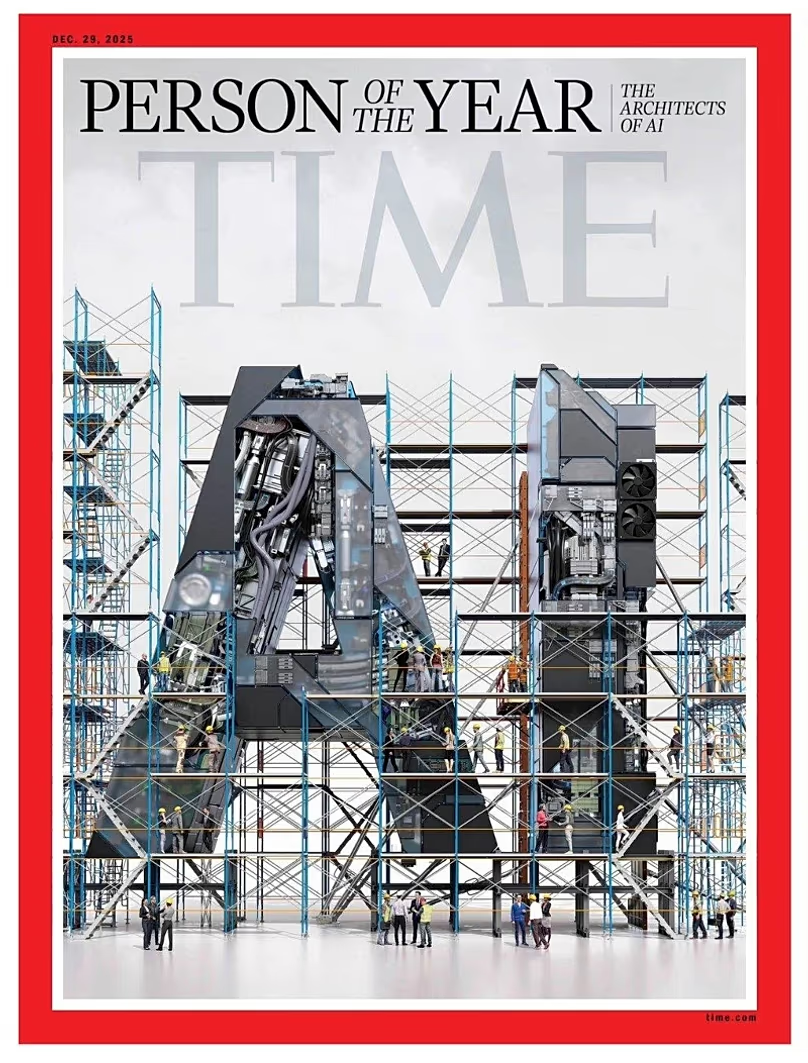
A closer look at Time’s artistic “AI Under Construction” cover, capturing the monumental scale of artificial intelligence as workers assemble the towering letters piece by piece.
Echoes of History, But a Uniquely Defining Moment
Time has previously elevated collectives or milestones, yet this stands apart in scope and intimacy. The 1982 nod to "The Computer" celebrated hardware's dawn, while 2006's "You" saluted user-driven web culture. Those honors marked inventions or movements, but AI permeates economics, politics, creativity, and personal identity in ways that feel inescapably immediate.
This choice resonates because it mirrors our lived experiences, from AI-assisted family budgeting to policy debates over autonomous vehicles. It transforms Person of the Year from retrospective award into forward-looking mirror, reflecting a world where innovation touches every corner of existence.
What Readers Are Wondering About AI's Big Moment
Who Are the Key Architects of AI Honored by Time in 2025?
Time's 2025 selection spotlights eight visionaries whose work has propelled AI into mainstream dominance, each contributing unique expertise to its foundation. Jensen Huang revolutionized hardware with Nvidia's GPUs essential for training massive models, while Sam Altman's OpenAI pioneered accessible language systems like ChatGPT.
Mark Zuckerberg integrates AI into Meta's vast social ecosystem, enhancing user interactions through predictive algorithms. Elon Musk advances multimodal AI via xAI, focusing on truth-seeking applications, and Demis Hassabis leads Google DeepMind in solving complex scientific puzzles with neural networks. Fei-Fei Li laid groundwork for visual recognition technologies, Dario Amodei champions safe scaling at Anthropic, and Lisa Su drives AMD's competitive chip innovations. Together, they represent a rare convergence of rivalry and collaboration, their collective influence surpassing any single entity's reach in reshaping global progress.
In What Ways Has AI Already Reshaped Everyday Life This Year?
Throughout 2025, AI has embedded itself into routine activities, making complex tasks feel effortless and personalized for millions worldwide. Shoppers turn to AI for holiday gift recommendations that factor in budgets and past preferences, saving hours of browsing. Travelers use intelligent planners to assemble itineraries incorporating flight delays or local events in real time, turning trips into seamless adventures.
In homes, AI generates meal ideas from pantry scans or adjusts smart thermostats based on occupancy patterns, promoting efficiency and comfort. Education benefits from tutors that adapt lessons to individual learning styles, while professionals leverage summarization tools to digest reports swiftly. These integrations, often invisible, have boosted productivity by up to 40 percent in some sectors, fostering a sense of empowerment amid the technology's quiet ubiquity.
What Challenges and Ethical Concerns Do AI Leaders Face Today?
AI architects navigate a minefield of dilemmas, from ensuring algorithmic fairness to curbing unintended societal harms in an era of explosive growth. Privacy breaches arise as models ingest vast personal datasets, prompting calls for robust consent frameworks and anonymization techniques. Job automation threatens livelihoods in sectors like journalism and design, necessitating reskilling programs and policy safeguards to bridge economic divides.
Environmental costs mount with data centers' energy hunger rivaling small nations, driving pushes for sustainable computing practices. Misinformation amplified by generative tools erodes trust, while biases inherited from training data perpetuate inequalities. Leaders like those honored by Time advocate for "alignment" research to sync AI with human values, yet tensions persist between innovation speed and regulatory caution, underscoring the urgent need for global standards to harness benefits without amplifying risks.