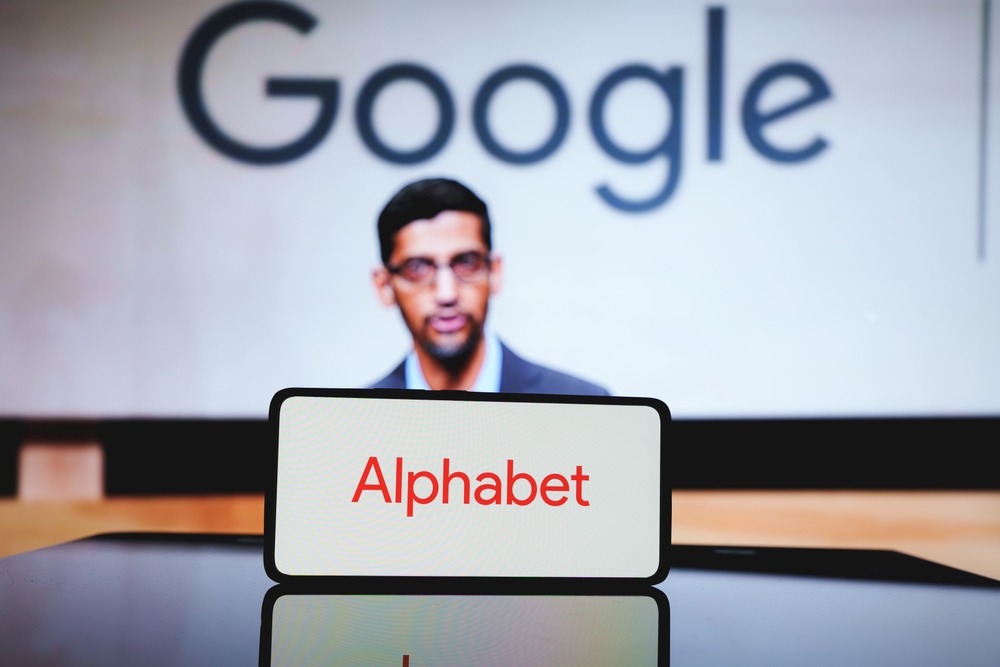
On January 12, 2026, Alphabet Inc. surpassed a $4 trillion market capitalization, marking a shift from search-driven growth to vertically integrated AI infrastructure. Powered by Gemini 3 and a $155 billion cloud backlog, the company now monetizes proprietary Tensor Processing Units (TPUs), with institutional endorsement from Berkshire Hathaway and IFRS-compliant reporting establishing it as a sovereign-grade digital utility.
The $4 Trillion Vertical Integration
Alphabet’s valuation milestone signifies a profound pivot in institutional sentiment, emphasizing vertically integrated AI ecosystems over software-only models. The “Magnificent Seven” tech landscape is bifurcating into two camps: those who own silicon and those who rent it. Gemini 3, powering Apple’s next-generation AI suite, and a $155 billion cloud backlog, demonstrate that Alphabet has converted its historic search liability into a structural enterprise-grade asset.
Market capitalization risk has effectively neutralized as Alphabet eclipses $4 trillion, becoming the world’s second-most valuable company. The 65% stock surge in 2025 erased fears of architectural obsolescence, proving that self-developed TPUs are marketable commodities rather than internal costs. Corporate Treasurers now assess Alphabet not as an advertising giant but as an industrial-infrastructure play.
Infrastructure scalability emerges as the primary competitive moat. Google Cloud’s 34% Q3 2025 revenue jump and an unseen $155 billion non-recognized contract backlog provide extraordinary forward visibility. Integration with Apple and Samsung further internalizes high-stakes AI costs, creating a symbiotic ecosystem that converts potential rivals into distribution channels for Gemini 3.
Creditworthiness in the hyperscale sector is reshaped by independence from Nvidia bottlenecks. Meta’s projected multi-billion TPU orders starting 2027 suggest a tectonic realignment in which Big Tech peers fund Alphabet’s hardware roadmap to secure compute access. The September 2025 judicial ruling safeguarding Chrome and Android ecosystems has reduced statutory risk, allowing M&A leads to shift from defensive compliance to aggressive synergy realization.
Berkshire Hathaway’s entry into Class-A shareholding reinforces liquidity confidence. Alphabet’s 32% operating margins now appear as a defensive, utility-like cash stream. Institutional investors are pricing in the Cloud backlog as a deferred cash-flow battery, providing insulation against potential ad market contractions in 2026.
Historical Context: Legacy Investments and TPU Maturity
Alphabet’s journey to Silicon Sovereignty began over a decade ago with strategic investments in custom silicon and datacenter architecture. Early TPU prototypes, initially designed for internal AI acceleration, have now become commoditized assets for enterprise clients. This transition from internal optimization to external monetization represents a rare case of a technology company converting latent CapEx into multi-year revenue certainty.
Legacy risk has decreased as Alphabet de-risked Cloud operations and diversified its client base. By 2023, pre-Gemini 3 AI workloads had already demonstrated cost efficiencies over Nvidia GPUs by 20%. In 2026, this translates into a defensible 33.9% operating margin for Cloud, positioning Alphabet as an industrial infrastructure company, rather than solely an advertising and software entity.
Investigative Audit — Backlogs, Enterprise Lock-In, and Silicon Mercantilism
Geopolitical arbitrage is accelerating as Alphabet leverages a 15-year lead in proprietary silicon to bypass competitor margins hollowed by Nvidia costs. The $155 billion backlog, a 46% QOQ surge, locks in enterprise spending and underpins deferred cash flows for Corporate Treasurers, offering a buffer against advertising cyclicality.
The Gemini 3-as-a-Service integration with Apple ensures perpetual access to billions of devices. Multi-modal reasoning benchmarks 272% higher than GPT-5.1, creating both a technological and strategic moat. Operational scalability is being tested by a $100 billion annual CapEx plan to meet TPU demand, financed via organic cash flow and negligible debt.
Deep Competitive Analysis
Nvidia
Alphabet bypasses Nvidia’s supply chain, gaining cost-efficiency and strategic autonomy. By manufacturing 12 million TPUs internally, Alphabet avoids external constraints, turning a former CapEx liability into an asset.
Microsoft & Amazon
Azure and AWS remain competitors in Cloud services but lack vertically integrated silicon. Alphabet’s ability to sell TPUs externally while powering internal workloads sets a new standard for infrastructure leverage.
Meta
Meta’s billions in projected TPU purchases for AI research validates Alphabet’s hardware as an industry standard. The arrangement transforms potential competitors into paying tenants, solidifying Alphabet’s mercantilist approach.
Implication for Institutional Investors
Treasurers and portfolio managers now assess Alphabet not merely on advertising cycles, but on hardware production, Cloud backlog, and Gemini 3 ecosystem adoption. The risk profile shifts toward industrial-capital exposure, with corporate governance oversight essential for integration cost management and risk mitigation.
Geopolitical Risk and Regulatory Landscape
Global TPU distribution carries export compliance implications. U.S.-China technology restrictions, EU semiconductor rules, and supply chain geopolitics increase operational risk. Alphabet’s internal TPU production minimizes dependency on restricted imports. SEC and IFRS reporting must incorporate deferred revenue from Cloud backlogs and valuation of external TPU contracts.
The Chrome and Android rulings safeguard ecosystem control, reducing breakup risk and enabling aggressive enterprise expansion. For M&A leads, regulatory clarity now allows a shift from defensive compliance to synergistic growth acquisition strategies.
Operational Challenges & Supply Chain Friction
TPU production demands high energy throughput and robust logistics. Alphabet faces a potential “Silicon Squeeze,” where rapid demand could outpace $40 billion annual CapEx. Manufacturing congestion could introduce non-cash write-downs if older hardware depreciates faster than revenue recognition.
Shipping and integration timelines for enterprise partners, especially Apple and Meta, introduce operational friction. Corporate Treasurers must assess logistics costs, production yield risks, and inventory management to preserve 33.9% operating margins.
Investor & Institutional Implications
Berkshire Hathaway’s Class-A share acquisition signals institutional validation. Alphabet now functions as a defensive anchor, with cash-flow visibility exceeding most tech peers. Pension funds, sovereign wealth funds, and hedge funds increasingly anchor portfolios around Alphabet’s Cloud backlog and TPU infrastructure, viewing it as a low-volatility industrial asset amid AI market volatility.
Liquidity velocity is supported by predictable CapEx and deferred cash flows. Institutional analysts now focus on long-term TPU adoption, Cloud revenue realization, and operational scalability rather than transient software hype.
Conflict Forensics — Silicon Depreciation and TPU-as-a-Service
Nvidia tax avoidance has introduced a new challenge: “Silicon Depreciation.” TPUs, while cost-efficient, are subject to rapid iteration, creating stranded asset risk. Corporate Treasurers must scrutinize depreciation schedules for 2026–2028. Delays in monetizing TPUs externally could produce non-cash write-downs.
Meta’s integration with PyTorch introduces a Framework Chokepoint. While XLA compiler compatibility bridges architectures, translation costs remain significant. Any AI-first startup acquisition requires a Silicon Compatibility Audit to ensure long-term synergy realization.
Scenario Modeling: 2026–2028
-
Base Case: Cloud backlog realizes full revenue; TPU production meets demand; operating margin remains 33–34%.
-
Upside: Meta, Apple, Anthropic contracts expand; Gemini 3 adoption accelerates; Cloud revenue grows 40% CAGR; valuation exceeds $5T.
-
Downside: Supply chain disruption, energy constraints, or global sanctions cause a TPU backlog bottleneck; stranded silicon write-downs reduce operating margins by 5–7%; Cloud growth stalls.
Each scenario requires treasury-level planning, risk-adjusted forecasting, and investor communication strategies.
Strategic Irony: Open Access vs. Proprietary Hardware
Open-source AI software suggests democratization, but infrastructure scarcity centralizes power. By renting TPUs to competitors like Meta and Anthropic, Alphabet ensures that even open AI relies on its proprietary silicon. Reporting for 2026 will increasingly highlight this “Tenant vs. Landlord” dynamic, signaling a shift in market valuation from software intelligence to infrastructure control.
Regulatory, Accounting, and Forensic Considerations
-
IFRS / ASC: Non-recognized Cloud contracts and deferred revenue require careful reporting. Asset impairments for TPUs must reflect true depreciation and external sales timelines.
-
SEC Filings: 10-K and 20-F disclosures must integrate TPU revenue, Cloud backlog, and integration risks.
-
M&A Audits: Silicon Mercantilism necessitates due diligence on proprietary hardware compatibility, contract enforceability, and contingent liabilities.
Future Outlook: Alphabet’s AI Industrial Complex
-
5-Year Vision: Alphabet’s TPU infrastructure becomes the backbone of enterprise AI, transforming the Magnificent Seven ecosystem.
-
Enterprise Dominance: Gemini 3 drives multimodal reasoning into B2B, while open-source AI depends on Google hardware.
-
Investment Implications: Institutional investors increasingly treat Alphabet as a defensive, industrial-grade asset with sovereign-like creditworthiness.
Boardroom FAQ: $4 Trillion Alphabet Insights
Why is this milestone different from past growth?
Valuation is now infrastructure-driven, not purely advertising-based. TPUs and Cloud backlogs anchor cash flow.
How does the Meta TPU deal reshape competition?
Marks the end of the software war, beginning of hardware hegemony. Competitors’ reliance validates Alphabet’s TPUs as industry standard.
What is "Silicon Mercantilism"?
Renting proprietary TPUs to competitors while controlling designs creates an ecosystem-wide revenue stream.
Is the $155B Cloud backlog reliable?
Yes; contractual commitments provide rare visibility for corporate treasurers in high-volatility sectors.
How does Gemini 3 compare to GPT-5.2?
Gemini 3 leads in multimodal enterprise workflows and long-horizon procedural reasoning, critical for B2B AI applications.
Financial Insight:👉How Grok’s Regulatory Bans Turn AI Safety Into a 10% Revenue Risk👈
High-Intent Strategic Tags: #Alphabet4Trillion #SiliconSovereignty #TPUvsGPU #Gemini3Enterprise #AIInfrastructureAudit #MagnificentSevenRotation #CloudBacklog2026