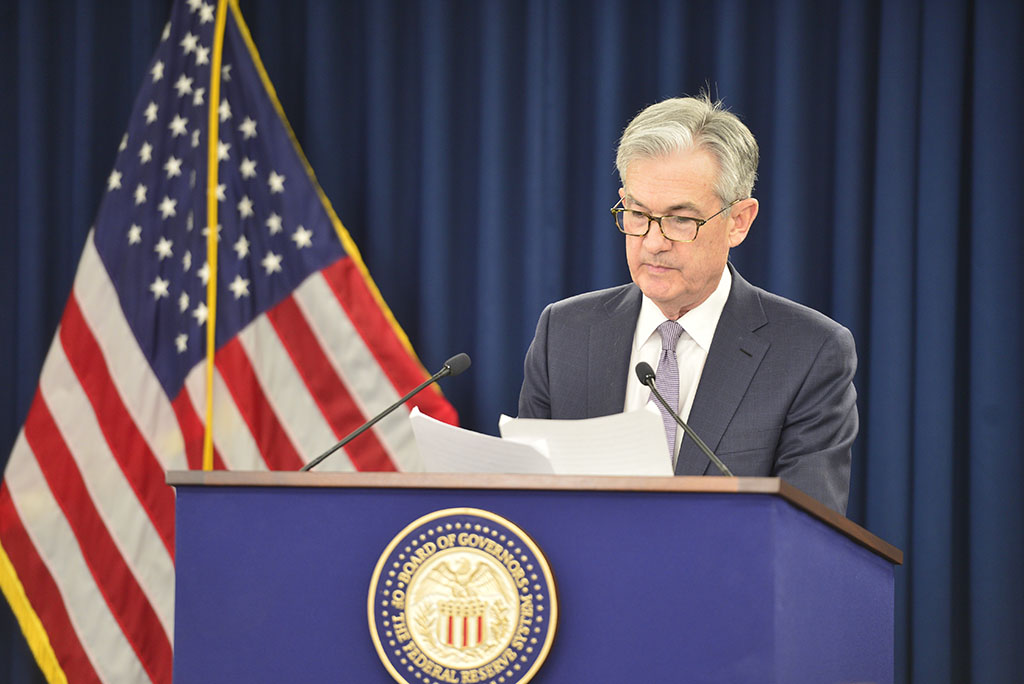
On January 13, 2026, the U.S. Department of Justice escalated a criminal investigation into Federal Reserve Chair Jerome Powell, citing administrative renovation issues. The probe raises unprecedented questions about Federal Reserve independence under the Federal Reserve Act of 1913 and introduces a new sovereign risk premium for U.S. assets. Markets must now price political interference into future interest-rate decisions.
When Rule of Law Becomes a Variable
The January 13, 2026, escalation of a Department of Justice criminal probe into Federal Reserve Chair Jerome Powell marks a historic rupture in U.S. institutional governance. By applying criminal law pressure to a sitting central bank chair under administrative pretexts, the executive branch has crossed a line that global markets understand intuitively but rarely see in developed economies: monetary independence has become politically negotiable.
This is not a procedural dispute. It is a structural shock. The investigation effectively transforms U.S. sovereign risk from a stable rule-of-law baseline into an emerging-market volatility profile, where interest-rate policy is no longer insulated from executive priorities. For Corporate Treasurers, this development requires immediate reassessment of duration risk, currency exposure, and political interference hedging across all dollar-denominated liabilities.
The Federal Open Market Committee’s 3.50%–3.75% target range is no longer a purely data-driven anchor. It is now a politically compromised variable, subject to coercion rather than consensus. Once markets internalize that reality, pricing models must change accordingly.
Interest Rates and the Criminalization of Independence
Interest-rate exposure is now inseparable from the personal security of central bank officials. The DOJ’s stated focus on building renovations functions as legal cover rather than causal motive. The economic motive is clearer. The administration faces mounting fiscal pressure as federal interest expense accelerates toward historic highs, and aggressive rate cuts would materially reduce debt-servicing costs in the short term.
Three former Federal Reserve chairs have publicly warned that coercing monetary policy through legal intimidation risks “banana-republic inflation dynamics.” This is not rhetorical excess. In every historical case where central banks lost independence under political pressure—Turkey, Argentina, Venezuela—the sequence followed the same pattern: forced rate suppression, currency devaluation, capital flight, and inflation expectations becoming unanchored.
The United States is not immune to this sequence. It has merely never tested it before.
Treasury Credibility and the Quiet Downgrade
While the initial reaction in the S&P 500 has been muted, global fixed-income desks are already repricing risk. Creditworthiness assessments for U.S. Treasury instruments are facing qualitative downgrades, even where formal ratings remain unchanged. The concern is not default. It is credibility.
If the executive branch demonstrates the ability to coerce Federal Reserve leadership through criminal investigation threats, the credibility of inflation targeting—the core pillar supporting the dollar’s reserve-currency status—suffers permanent damage. Reserve currencies function on trust, not yield. Once that trust erodes, diversification accelerates.
Foreign central banks do not need to sell Treasuries aggressively to destabilize the system. They only need to stop buying at the margin.
The Confirmation Vacuum and Institutional Paralysis
Capital-market stability faces an additional risk vector: governance paralysis. Senator Thom Tillis has announced that the Senate Banking Committee will freeze all Federal Reserve nominations until the investigation concludes. This creates a looming confirmation vacuum, with a non-trivial probability that the Federal Reserve Board becomes leaderless or populated by acting officials by mid-2026.
A “headless” central bank cannot act decisively in a liquidity crisis. Emergency facilities, regulatory forbearance, and coordinated swap-line responses all require institutional legitimacy. Acting leadership lacks that authority. Markets understand this distinction instinctively, and they price it ruthlessly.
For M&A leads, this elevates systemic risk assumptions across all transaction models that rely on Fed backstopping during stress events.
Global Reaction — When Solidarity Signals Flight Risk
Liquidity velocity is already slowing as financial stocks reprice under a dual policy assault: political pressure on monetary policy and proposed 10% caps on credit-card interest rates. Regulation is no longer prudential. It is populist.
Global central bank governors—from the Bank of England to the European Central Bank—have issued unprecedented statements of “full solidarity” with Powell. This is not diplomatic courtesy. It is pre-emptive signaling. The message is clear: if U.S. monetary policy becomes politically managed, international capital will not remain captive.
A politically controlled Federal Reserve would force foreign reserve managers to treat the dollar as a managed currency, not a neutral store of value. That distinction alone is sufficient to trigger large-scale reserve reallocation.
The Investigative Audit — Monetary Capture in Practice
The mechanics of the probe reveal a calculated strategy. By targeting administrative issues rather than policy decisions, the executive branch avoids the “for cause” removal threshold under the Federal Reserve Act of 1913. Criminal investigation becomes a substitute for formal dismissal—a shadow removal mechanism.
The timing is critical. Powell’s term expiration in May creates a narrow window where pressure can induce resignation, allowing a successor aligned with executive priorities to be installed without overt legal confrontation. This is Monetary Capture by attrition rather than decree.
For Corporate Treasurers, the implication is stark. Interest-rate policy is no longer anchored to inflation data alone. It is tethered to fiscal convenience.
Debt Monetization and the Real Yield Crisis
The conflict is mathematical. Every 25-basis-point rate cut reduces federal interest expense by billions annually. With deficits entrenched at historic levels, political incentives now align against restrictive monetary policy regardless of inflation dynamics.
If nominal rates are suppressed while inflation expectations drift higher, real yields turn structurally negative. Long-dated U.S. debt becomes a guaranteed loss instrument in real terms. Institutional investors must model this explicitly rather than assuming historical mean reversion.
Debt monetization is not announced. It is inferred from behavior.
Emerging-Market Dynamics in a Developed Economy
History provides an uncomfortable parallel. When central bank independence erodes, currencies typically devalue 15–20% against gold or hard-asset baskets within 18 months. This is not due to panic selling. It reflects rational repricing of political risk.
If major holders such as the Bank of Japan or the ECB slow Treasury accumulation, the U.S. Treasury becomes increasingly reliant on the Federal Reserve as buyer of last resort. That circular financing loop—government issuing debt to itself via the central bank—is the textbook precondition for inflationary spirals in emerging markets.
The difference in 2026 is scale, not structure.
Banking Margins and the Credit Availability Shock
Parallel policy initiatives compound the risk. A proposed 10% cap on credit-card interest rates creates a margin squeeze precisely as banks face higher funding costs and regulatory uncertainty. While the government pressures the Fed to lower sovereign borrowing costs, banks are prohibited from pricing consumer credit risk accurately.
This produces a negative carry environment for retail lending. The rational response is withdrawal, not expansion, of credit. Sub-prime and near-prime borrowers will be excluded first, even as political rhetoric demands “easier loans.”
Credit contraction is not ideological. It is mechanical.
Reporting Reality — When Forward Guidance Dies
For 2026, reporting exposure changes fundamentally. Public companies must treat political interference in monetary policy as a material risk factor. If Federal Open Market Committee decisions are no longer insulated, forward guidance loses predictive value.
The “dot plot” becomes irrelevant. Interest-rate forecasting shifts from economic modeling to political sentiment analysis. This alone increases the cost of capital, as uncertainty premiums expand to absorb non-quantifiable variables.
Transparency becomes the only hedge.
The Strategic Irony — Stability Through Independence, Not Control
Executive intuition often assumes that political control increases stability. History proves the opposite. Stability emerges from institutional independence precisely because it removes short-term incentives from long-term decision-making.
The irony of the current moment is that by attempting to reduce borrowing costs through coercion, the administration risks increasing them permanently. Once trust erodes, it cannot be legislated back into existence.
Reserve currencies are earned slowly and lost quickly.
Boardroom FAQs
What is the most immediate financial risk created by the DOJ probe?
The loss of Federal Reserve independence introduces political risk into interest-rate policy, raising sovereign risk premiums across all dollar-denominated assets globally.
Why does this matter if markets initially appear calm?
Markets often lag institutional breakdowns. Repricing accelerates once reserve managers, not equity traders, adjust allocation strategies.
Could Powell actually be removed?
Formal removal is legally difficult, but coerced resignation via prolonged criminal investigation is a realistic and historically common alternative.
What happens if the Fed becomes politically controlled?
The dollar risks being treated as a managed currency, accelerating diversification into alternative reserve assets and raising long-term U.S. borrowing costs.
How should Corporate Treasurers respond?
Reassess duration exposure, stress-test currency assumptions, and incorporate political interference as a standalone risk factor in capital planning.
Final Takeaway
The DOJ probe into Jerome Powell is not a legal footnote. It is a sovereign-risk event. Markets may tolerate fiscal excess. They do not tolerate institutional capture. If monetary independence becomes conditional, the United States will begin trading like the very economies it once advised.
Financial Insight: 👉Gold at $4,600: How a Threat to the Fed Shook the Dollar Overnight👈
High-Intent Strategic Tags: #DigitalAssetClarityAct #CFTCvsSEC #StablecoinLoophole #GENIUSActAudit #DeFiCompliance2026 #DepositFlightRisk #FintechSovereignty #DigitalCommodityFramework