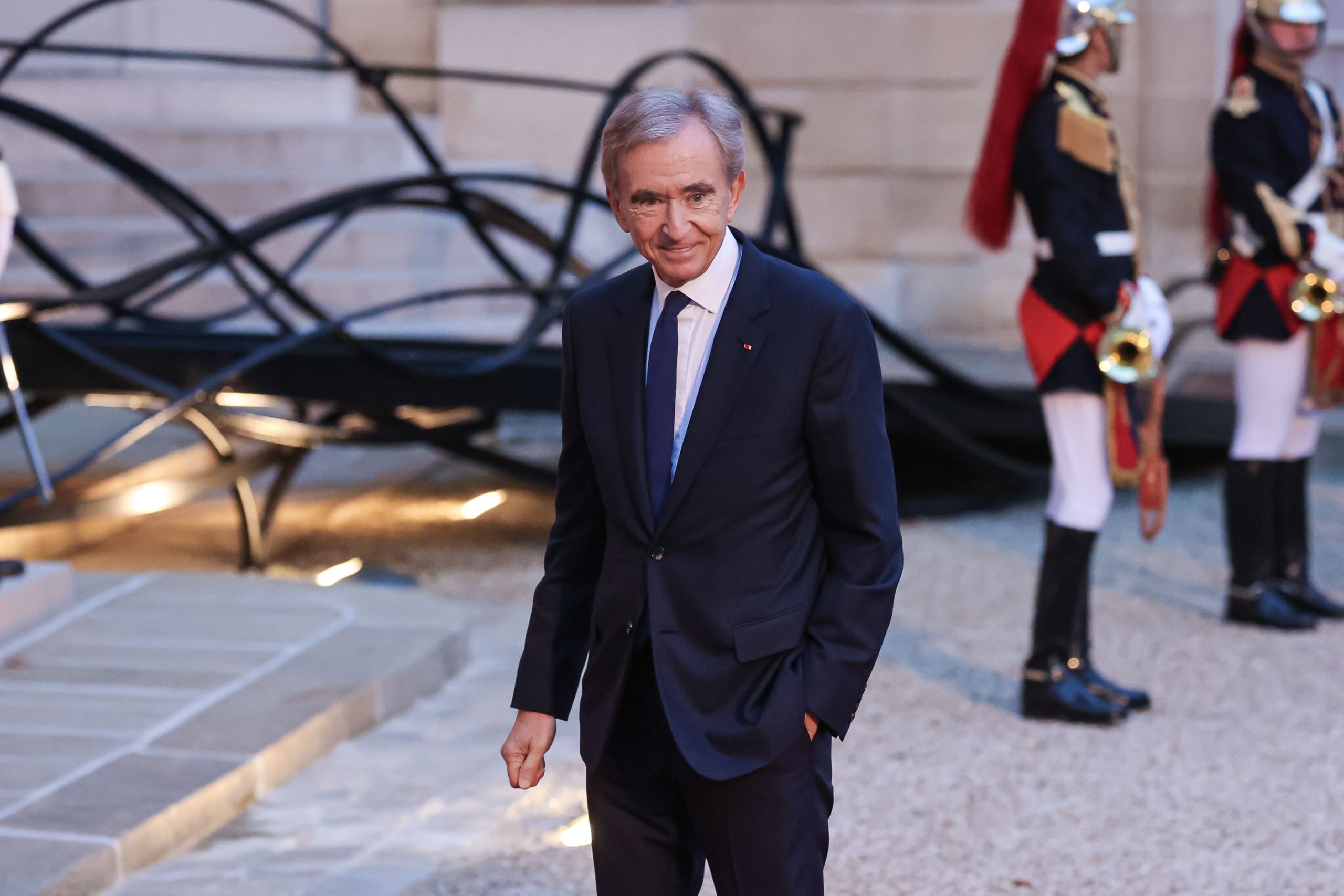
For nearly 40 years, Bernard Arnault has built LVMH into a global luxury powerhouse spanning more than 70 brands, including Dior and Tiffany. At 76, he remains at the helm, but questions about who will take over when he eventually steps down are growing louder.
Speaking to Reuters, Arnault downplayed immediate plans, telling the outlet, “Talk to me again in 10 years, I can give you a more precise answer. As in every family, at one point, there is a succession but I hope that, unless I get the ball on the head in a tennis court, I will make these 10 years.” The matter has taken on new urgency as investors, employees, and markets watch closely, because leadership transitions at a company of LVMH’s scale can ripple across the entire luxury sector.
Why Arnault’s Succession Matters to Investors and Markets
The uncertainty around LVMH’s leadership has implications far beyond the family. Investors point to the lack of clarity as a potential governance risk. Stefan Bauknecht, equity portfolio manager at Deutsche Bank's DWS, which ranks as LVMH’s 12th-largest shareholder, said: “The succession planning, as of now, appears unclear and opaque. We want more transparency and a plan on how things will evolve.”
At stake is a company worth more than $350 billion, whose stock performance, brand stability, and operational cohesion rely heavily on Arnault’s decisions. For shareholders, a clearly communicated succession plan signals stability. Without it, even subtle investor anxiety could impact valuations, influence voting patterns, and affect decisions on capital allocation across the LVMH portfolio.
Luxury brands often rely on the consistency of leadership to maintain exclusivity, strategic partnerships, and brand narratives. For employees, managers, and store networks worldwide, clarity on succession is not just an abstract concern—it informs hiring, promotions, and long-term strategic planning.
Who Feels the Heat: Families, Executives, and Shareholders
Arnault has five children—Delphine and Antoine from his first marriage, and Alexandre, Frederic, and Jean from his second—all involved in the family empire. While they each hold stakes in Agache Commandite SAS, the legal entity designed to manage their inheritance, there is no public roadmap for who will take on top executive duties. Eric Pichet, professor at Kedge Business School, explained, “This is a time bomb. There are always tensions in a second generation. And when you are five, it can’t be avoided.”
Executives and institutional investors are acutely aware of the stakes. “I am unaware of any emergency plan, for example a group of caretakers who would activate quickly and secure Arnault’s legacy. Such things are simply missing,” Bauknecht said. Others are closely monitoring market reactions to voting patterns, dissenting shareholder positions, and governance updates. Asset managers like Allianz GI and Baillie Gifford, who either opposed or abstained on the latest age-limit extension vote, illustrate that not all stakeholders are comfortable leaving the issue unresolved.
The pressure is not only internal. For competitors in the luxury market, any sign of instability at LVMH can shift strategic opportunities. Rivals may position to capture share in emerging markets, talent, or partnerships if the perception of leadership uncertainty grows.
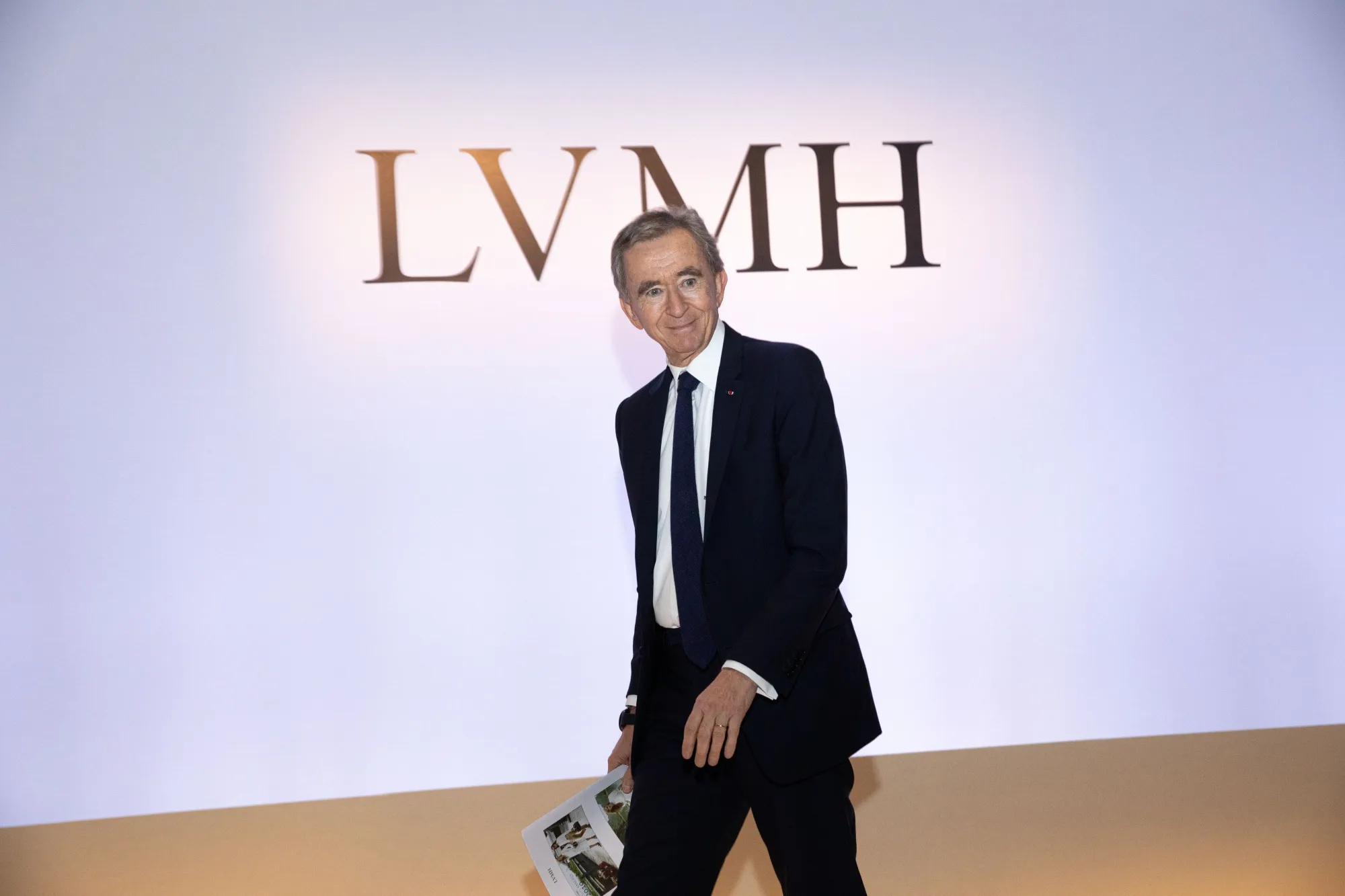
Bernard Arnault, chairman and CEO of LVMH, pictured in front of the company’s logo as questions about the luxury group’s succession plans mount.
The Stakes for LVMH’s Future: Timing, Strategy, and Leadership
In April, Arnault extended the age limit for his CEO and chair roles to 85. Analysts suggest the move is a strategic buffer, giving him time to weigh options. Paul Moroz of Mawer Investment Management noted, “They probably can't give the clarity because he doesn’t have clarity in his own mind. You really don’t know until it’s done, but it’s probably low odds it works out.”
Even with the family ownership structure in place, decisions will ultimately depend on Arnault’s direction. Filings show that, unless specifically instructed otherwise, a majority of three of his five children would be required to make any executive choice. While LVMH insists that a gridlock risk “does not exist,” the reality of coordinating five heirs with potentially differing visions remains a key tension point.
For the market, the sequence of leadership transition matters as much as the identity of the successor. Timing, messaging, and execution will influence investor confidence and brand reputation worldwide. Luxury conglomerates are judged not only on revenue and profits but also on the continuity of brand storytelling and strategic vision—both of which rely on stable leadership.
Why Investors Should Pay Attention
The conversation around succession extends beyond LVMH’s boardroom. For companies operating in the same space, for investors allocating capital, and for employees navigating career paths, Arnault’s eventual transition is a bellwether moment. Even if there is no immediate impact on earnings, the uncertainty introduces strategic friction: decision-making may slow, market speculation may increase, and leadership development within the company may be influenced by the opaque timeline.
As LVMH prepares to publish its annual results, observers will be watching closely for any hints of strategic shifts, board commentary, or governance signals that could indicate how the empire will navigate the next chapter. The unfolding of this transition, whenever it occurs, will set the tone for generations of leadership, brand stewardship, and shareholder confidence.
Frequently Asked Questions About LVMH and Bernard Arnault’s Succession
Could a sudden departure of Bernard Arnault impact LVMH’s brands immediately?
Yes. While LVMH has internal structures to maintain operations, a sudden leadership change could affect decision-making for key brands, slow strategic initiatives, and create temporary uncertainty in luxury product launches and collaborations. Brand teams would likely need to navigate approvals with interim executives, which could delay high-profile campaigns or new collections.
How do luxury companies like LVMH prepare for family succession differently from other corporations?
Luxury conglomerates often embed family governance structures alongside corporate boards. LVMH’s heirs, for example, are part of Agache Commandite SAS, a family entity designed to manage ownership stakes. This contrasts with non-family corporations where succession planning is typically linear and publicly documented. Family dynamics, shared ownership, and brand stewardship all influence how transitions are handled.
What lessons can investors or executives learn from LVMH’s opaque succession planning?
The LVMH case highlights the importance of transparency in leadership transitions, even for high-performing companies. Investors may adjust risk models, while executives in other firms can see the value of early communication about succession to maintain confidence, minimize speculation, and ensure smooth operational continuity.