
Floyd Mayweather Jr. filed a sweeping lawsuit this week that has sent shockwaves through the boxing world. The case, lodged in California state court, alleges that Showtime Networks and former Showtime Sports president Stephen Espinoza helped divert hundreds of millions of dollars from Mayweather’s fight earnings over more than a decade.
For the undefeated champion, the filing represents more than a legal battle—it’s a fight to reclaim control over money he says was stripped from him, leaving a $340 million gap in his career revenue.
The rupture is immediate and public. Mayweather, once untouchable in the ring and untethered in lifestyle, now faces the stark reality that his own financial empire may have been compromised.
The complaint details accounts he claims were controlled by third parties, often routed through entities tied to his longtime adviser Al Haymon, and left him unable to access sums generated from some of the highest-grossing fights in boxing history. The pressure is not hypothetical; Mayweather’s career, image, and peace of mind are all in play as the lawsuit moves forward.
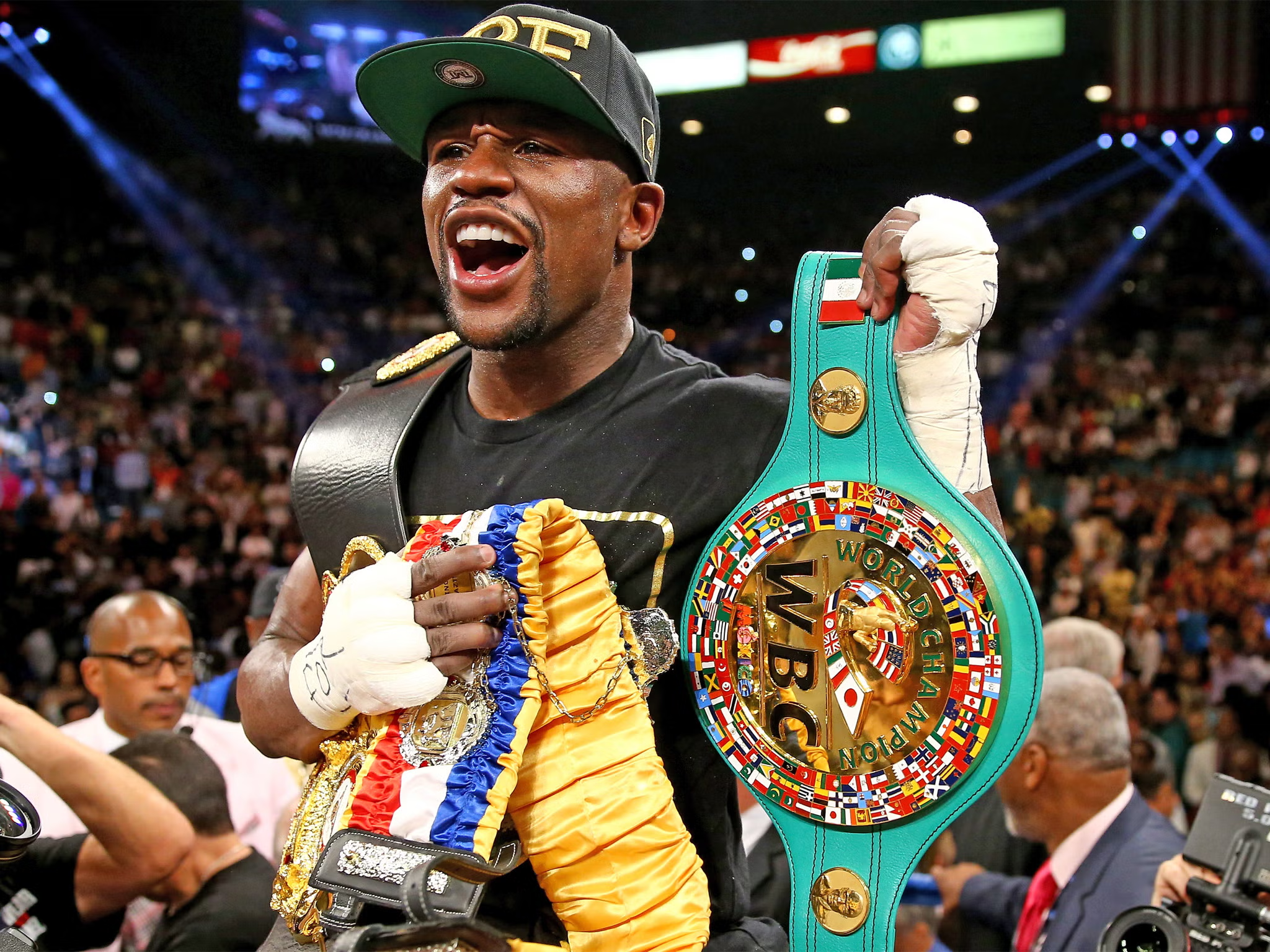
Floyd Mayweather celebrates a title win while holding his championship belts, a moment that defined his dominance during boxing’s most lucrative era.
The $340 Million Claim and Missed Opportunities
At the heart of the filing is the allegation that roughly $340 million of Mayweather’s earnings is “missing and unaccounted for.” The complaint underscores that this figure is conservative, excluding lost investment growth or the potential value of funds if they had been properly managed over time.
Mayweather’s legal team argues that conservative investments of the allegedly misappropriated money could have multiplied into billions, turning missing dollars into unrealized opportunities for security and career freedom. For someone whose identity is intertwined with financial independence, the lawsuit frames the stakes as existential rather than symbolic.
The money, according to the complaint, was allegedly funneled into accounts controlled by Haymon and related entities. Large transfers were often labeled as “repayment,” “loan payoff,” or vague “expenses,” despite Mayweather never authorizing such payments.
Specific high-profile fights, including the 2015 Manny Pacquiao bout and the 2017 Conor McGregor fight, are cited as examples where revenue was redirected or expenses were charged without proper accounting. In one instance, $20 million from the Pacquiao fight is claimed to have been used to cover unrelated obligations, effectively turning the bout’s revenue into a slush fund, the lawsuit asserts.
Records Lost, Control Denied
The filing paints a picture of a career where financial oversight was systematically denied. When Mayweather’s new management team requested detailed accounting in 2024, they were told critical records were lost to a flood or stored off-site.
The complaint alleges Haymon intentionally avoided creating a paper trail, relying on faxes and in-person meetings rather than transparent documentation. For Mayweather, someone accustomed to being in control of every aspect of his brand, these revelations deepen a sense of vulnerability and exposure.
Beyond the personal fallout, the lawsuit frames Showtime as a complicit actor. Mayweather alleges the network knowingly facilitated the diversion of funds and ignored red flags that should have triggered scrutiny.
Espinoza’s continued professional alignment with Haymon after Showtime exited boxing is presented as evidence of coordinated interests. For Mayweather, the fight is not only to reclaim money but to assert accountability over a system he says undermined his autonomy.

Floyd Mayweather’s Las Vegas home, a high-value luxury property that reflects the boxer’s long-standing real estate investments and lifestyle in Nevada.
Pressure, Pattern, and Uncertain Outcome
The timing compounds the tension. The lawsuit follows a recent Business Insider investigation that scrutinized Mayweather’s post-boxing finances, highlighting borrowing, leveraged assets, and high-value sales. That reporting painted a picture of financial strain, which Mayweather strongly disputes, calling it misleading.
Yet, the Showtime filing suggests some of the reported pressures could stem from funds he claims were never under his control, adding an extra layer of uncertainty around his actual wealth. At stake is not just capital, but the narrative of a life built on control, independence, and self-made success.
Mayweather is seeking damages exceeding $340 million, recovery of misappropriated funds, a full forensic accounting, and punitive damages potentially matching the principal sum.
He has demanded a jury trial, signaling a high-stakes confrontation over transparency, control, and the financial integrity of one of sports’ most celebrated careers. Yet, no resolution is in sight, and the pressure has only intensified, leaving fans, peers, and the wider business world waiting.
For Floyd Mayweather, the lawsuit is more than a claim—it’s a reckoning. The missing money is not a statistic; it represents years of career autonomy and personal freedom he alleges were stripped from him. The courts will decide the legal outcome, but the emotional and reputational stakes are already visible, unfolding in real time.
How much of his empire he can reclaim remains unknown, leaving the undefeated fighter to confront a new kind of fight—one fought not with fists, but with the weight of millions, secrecy, and the relentless public eye.