
The effects began within hours of Amazon’s share price plunging more than 11 percent after the company revealed its massive new AI spending plan.
As investors pulled back, pressure immediately shifted inward, forcing cost cuts and operational tightening that are already being felt by workers, sellers, and customers. This was not a warning or a forecast. It was a market reaction that turned into real world disruption almost overnight.
Amazon chief executive Andy Jassy had just confirmed the company would spend $200bn this year on artificial intelligence and infrastructure.
Investors recoiled at the scale, sending shares sharply lower in after hours trading. That drop triggered a familiar response inside the company, accelerating layoffs, tightening budgets, and pushing efficiency demands down the chain to the people who rely on Amazon every day.
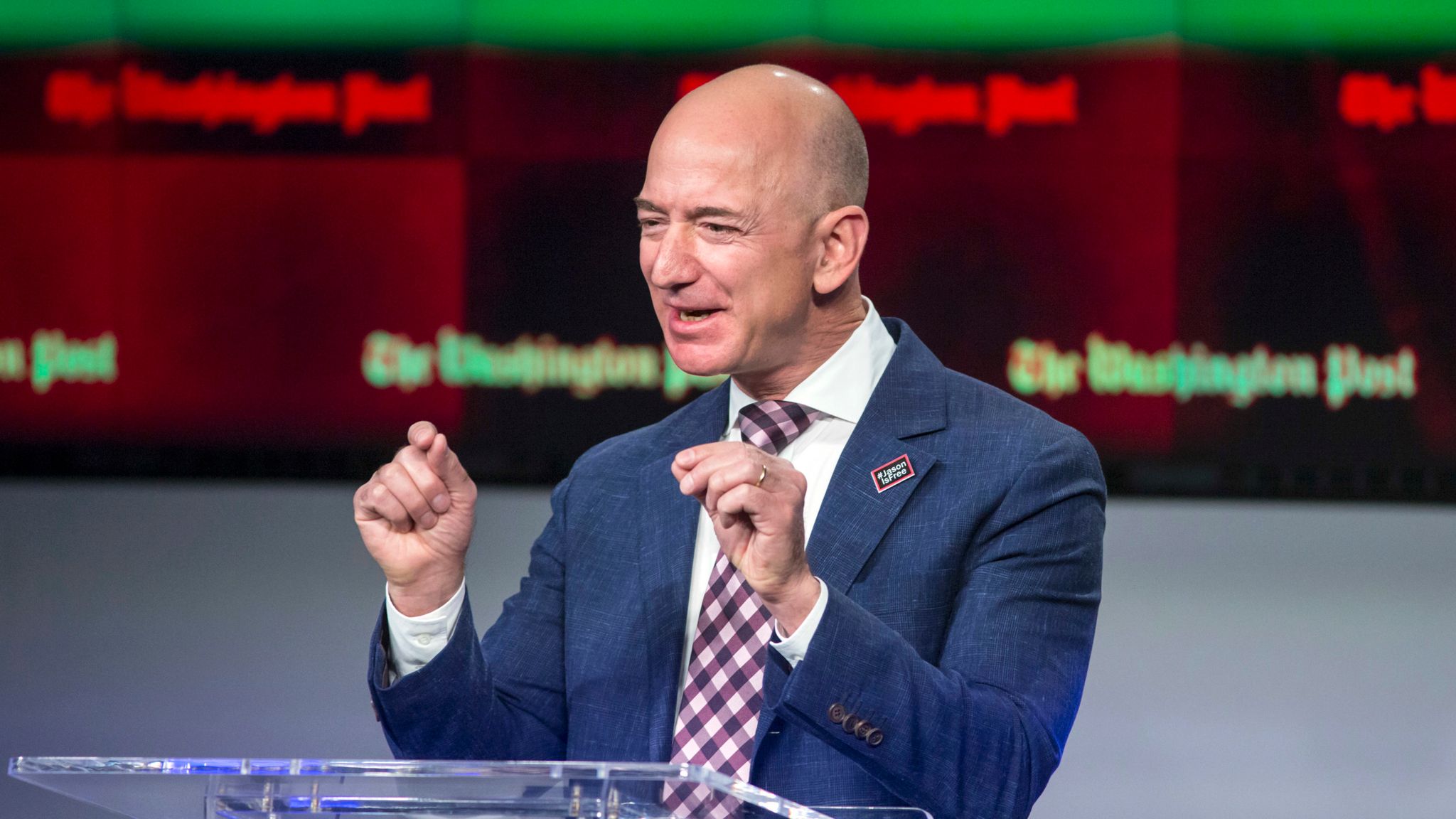
Amazon founder Jeff Bezos addresses an audience, amid scrutiny over his leadership and the Amazon founder Jeff Bezos speaks publicly as the company’s aggressive AI investment strategy sparks market jitters and real-world pressure on workers and customers.
When Shares Fall, Cuts Move Fast
The first pressure point landed on jobs. Amazon has now cut around 30,000 roles since October, with another 16,000 confirmed days before the earnings report. After the share tumble, managers were instructed to double down on cost control, with teams reassessing staffing needs and project timelines almost immediately.
For workers, this translated into sudden uncertainty. Some lost roles outright. Others were told to absorb additional responsibilities while relying more heavily on AI tools. In practical terms, that means longer hours, fewer colleagues, and a growing sense that human roles are being treated as variable costs in a high stakes investment bet.
In cities where Amazon is a major employer, the impact is already visible. Reduced household income shows up quickly in local spending, childcare arrangements, and housing decisions.
Service Tightening Shows Up for Customers
The share drop did not stay confined to Wall Street. Amazon’s leadership made clear that while AI spending would rise, other areas would have to compensate. Customers are now encountering the early signs of that shift through slower service responses and heavier reliance on automated systems.
Customer support interactions are increasingly handled by AI driven tools, with fewer human escalation options. For shoppers, that means longer resolution times when orders go wrong and less flexibility when problems fall outside standard scripts. These changes are subtle but immediate, altering how people interact with a service many use daily.
Prime subscribers are watching closely. With Amazon committing unprecedented capital to AI while facing investor pushback, speculation around future subscription changes has intensified. Even without a formal announcement, the uncertainty is enough to make households reconsider how much they rely on Prime as a default expense.

The Amazon logo appears on a phone screen as millions rely on the platform daily, even as the company’s AI spending and share drop reshape services and expectations.
Small Businesses Feel the Market Shock Too
Independent sellers on Amazon’s marketplace are also absorbing the fallout. As the company seeks to reassure investors after the share slide, advertising and performance metrics are tightening. Sellers report rising costs to maintain visibility, forcing many to either raise prices or reduce margins.
For small businesses already operating on thin margins, this pressure arrives quickly. Increased platform costs translate directly into higher prices for consumers or reduced product availability. The connection between a falling share price and a higher checkout total may not be obvious, but it is already forming.
Why This Is Not Just an Amazon Story
Amazon’s stock drop is part of a broader pattern across Big Tech. Meta, Google, and Microsoft have all announced massive AI spending increases, followed by market volatility and internal cost cutting. Collectively, the sector plans to spend around $650bn this year, a scale that has revived fears of an AI bubble.
For households with pensions and investment accounts tied to major indices, the sell off matters immediately. Declines in tech shares feed straight into retirement balances and long term savings, forcing people to reassess risk they did not actively choose.
This is why capital decisions at the top never stay abstract for long.

An Amazon delivery sits on a doorstep as the company’s massive AI spending fuels investor concern and begins to ripple through jobs, services, and costs felt by customers.
The Trade Off People Are Living With Now
Supporters argue the AI push will eventually create growth and efficiency. Critics point to the timing, where the disruption arrives first and the benefits remain uncertain. The market reaction has already forced Amazon to act defensively, and those actions are landing on people with no buffer against the shock.
Jobs are disappearing faster than new roles are defined. Services are tightening before costs come down. Sellers and shoppers are adjusting in real time, not years from now.
Inside the Fallout
Amazon insists AI is an opportunity it cannot afford to miss. Investors have signalled they are not convinced yet. Between those positions sit millions of people whose work, shopping habits, and financial security are already shifting because of that tension.
The share price may stabilise or recover. The spending may eventually pay off. But for workers checking their inboxes, sellers recalculating margins, and households reviewing monthly subscriptions, the impact is not theoretical. It is already shaping the choices they have to make next.