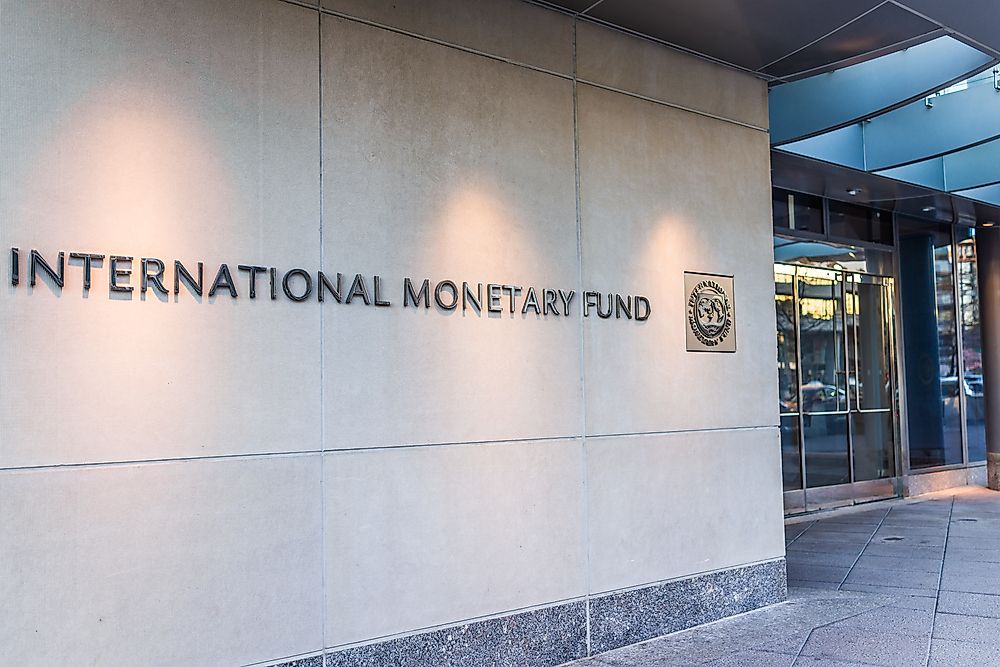
The United States enters 2026 with solid near-term momentum but a steadily building fiscal overhang, according to IMF staff following their latest Article IV review.
Growth held at 2.2% in 2025 and is projected to strengthen to around 2.4% in 2026 (Q4/Q4). Yet the Fund cautions that beneath still-supportive financial conditions, rising public debt and persistent external imbalances are emerging as more consequential medium-term risks.
Financial conditions remained loose through much of last year — with equities at record highs and corporate spreads near historic lows — but staff caution that the general government debt ratio is projected to climb toward 140% of GDP by 2031, a trajectory they describe as a growing stability concern for both the US and the global system.
A Resilient Economy Masks Emerging Structural Pressures
IMF staff characterise the US economy as buoyant in the near term. Productivity gains supported activity in 2025 even as employment growth slowed markedly. The labour market remains close to full employment, with unemployment at 4.3% in January 2026, despite a sharp fall in foreign-born worker inflows.
Inflation dynamics remain mixed. Tariffs pushed up goods prices during 2025, but easing services inflation kept overall PCE inflation broadly sideways. Staff expect the tariff impulse to fade, allowing core PCE inflation to return to 2% by early 2027.
Beneath the steady headline picture, however, the Fund sees a more complex policy mix beginning to shape the medium-term outlook.
Policy Reorientation Carries Trade-Offs
The IMF says that US policymakers are pursuing a systemic shift aimed at greater economic self-reliance. Measures include expanded domestic manufacturing incentives, higher tariffs, tighter immigration enforcement and a broad deregulatory push.
In the near term, recently legislated tax and spending changes are expected to lift activity modestly, adding roughly 0.75% to the level of GDP in 2026–27. However, staff emphasise that the same measures are projected to raise the deficit by about 1½ percentage points of GDP, with fiscal policy turning into a drag after 2029 as provisions expire.
Tariffs present a clear trade-off. While they may reduce the trade deficit and generate revenue of roughly ¾% of GDP, staff assess them as a negative supply shock expected to raise the PCE price level by about ½% and lower output by a similar magnitude.
Immigration tightening also feeds into the supply side. The IMF estimates reduced foreign-born labour supply could trim activity by around 0.4% by 2027 while adding modest inflation pressure.
Balance Sheet Risks Concentrate in Public Debt and External Position
The most persistent vulnerability identified by the Fund sits on the sovereign balance sheet. Even after a modest improvement in 2025, the federal deficit is expected to exceed 6% of GDP in coming years, while the broader general government deficit remains in the 7–8% range under current policies.
Debt dynamics follow accordingly. Federal debt held by the public is projected to rise from 99.4% of GDP in 2025 to 109.8% by 2031, while general government gross debt climbs toward 141% of GDP.
Although staff judge the near-term risk of US sovereign stress to be low, they warn the upward debt path and rising share of short-term borrowing represent a growing medium-term stability risk.
Externally, imbalances remain material. The current account deficit is expected to hover around 3½–4% of GDP, and the negative net international investment position is projected to widen further as foreign investors continue allocating into US risk assets. The IMF notes that a shift toward nonbank private investors in the external funding base could increase vulnerability to abrupt portfolio adjustments.
Monetary Policy Seen Near Neutral End-Point
On the policy front, the IMF views the Federal Reserve’s 2025 easing as appropriate given slowing job growth and limited second-round tariff effects. Risks to the Fed’s dual mandate are assessed as broadly balanced.
Under the baseline, the federal funds rate is expected to settle in a 3¼–3½% range by end-2026, a level staff believe is consistent with returning the economy to full employment and 2% inflation by early 2027.
The Fund also supports the Fed’s decision to halt balance sheet runoff and continue reserve management purchases, emphasising the importance of maintaining ample reserves to limit money market volatility.
Financial Stability Agenda Still Incomplete
Beyond macro policy, the IMF flags unfinished work in the US supervisory framework. Staff call for full implementation of the final Basel III components, consistent regulatory treatment for banks with more than $100 billion in assets, and further strengthening of supervisory practices.
They also highlight the need to reassess deposit insurance coverage and recalibrate liquidity requirements. Progress on clarifying the regulatory treatment of stablecoins and other crypto-assets is welcomed, but staff caution that integration of digital assets into the banking and nonbank system introduces new risk vectors that will require close oversight.
Market Pricing & Investor Implications
For markets, the IMF’s message is not one of imminent stress but of gradually accumulating medium-term pressure points. Near-term conditions remain supportive: financial conditions are loose, growth is holding above potential in the short run, and inflation is expected to converge back to target.
The warning also lands against a broader backdrop of rising global leverage. The Institute of International Finance estimates that nearly $29 trillion was added to worldwide debt in 2025, pushing the global total to a record $348 trillion, with government borrowing the primary driver.
Sustained heavy sovereign issuance could, over time, increase sensitivity in term premia and long-end funding conditions if investor demand were to soften — a dynamic markets are likely to monitor closely.
What Markets Should Watch
IMF staff analysis points to several forward risk markers:
-
The trajectory of the general government debt ratio toward 140% of GDP
-
Whether fiscal deficits remain above 6% of GDP in coming years
-
Labour supply developments following tighter immigration policy
-
The durability of recent productivity gains
-
External funding composition and NIIP trends
-
Implementation progress on Basel III and bank liquidity reforms
Strategic Bottom Line
The IMF’s latest US review presents an economy that remains cyclically resilient but is gradually accumulating structural pressures. Near-term growth and financial conditions appear supportive, and sovereign stress risk is judged low for now.
However, the projected debt path, persistent external deficits and evolving policy mix suggest the US is entering a phase where fiscal credibility and external financing dynamics will matter more for market stability.
For corporates and capital allocators, the message is clear: near-term conditions remain favourable, but medium-term sensitivity to rates, funding costs and fiscal policy direction is rising.