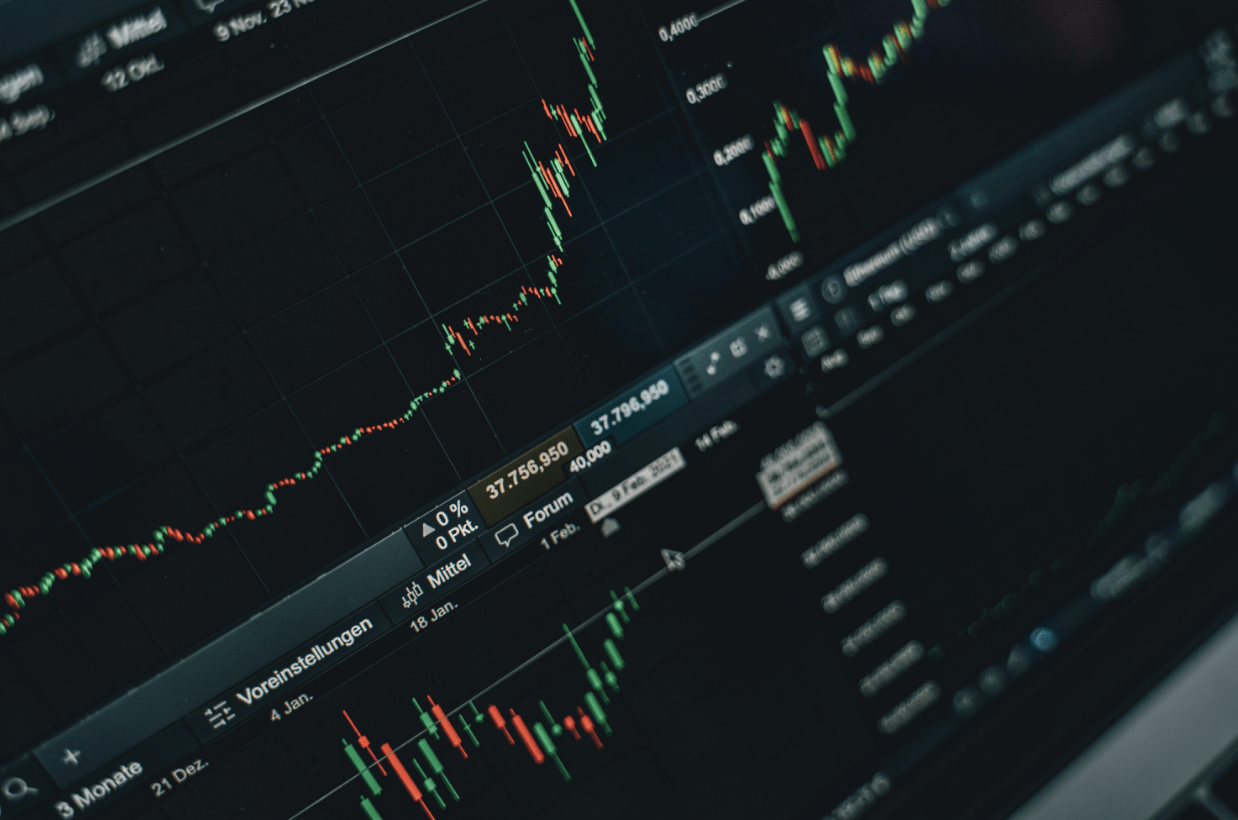
Simplified automation and the rise of accessible forex robots
Do you remember the days when trading in the forex market felt like navigating a stormy sea without a compass? You needed thick manuals, hours of chart analysis and nerves of steel to make a split-second decision. For a good time, that complexity acted as a barrier, keeping would-be traders at bay or forcing them to rely on brokers to place trades on their behalf.
But looking at the industry today, a lot has changed. Imagine you don’t need a PhD in financial engineering to participate in global currency markets. Thanks to the rise of robots, this industry has become accessible to a far broader audience. And the good thing is that there are several beginner-friendly forex robot tools that let anyone, from busy professionals to curious students, execute trades with confidence.
So, when Google Sites projects the strategic trading robot market to jump from $1.2 billion to $5.5 billion by 2030, you shouldn’t be surprised. The easier these tools become to use and the more affordable they are, the more traders use them. So what exactly does that mean for the average trader? How do these robots work, and what’s behind their surge in popularity?
Understanding forex robots
Simply put, a forex robot is a software program that helps you enter and exit trades automatically. It often follows a set of rules based on technical indicators, price action, time of day or even economic events. Some people often refer to them as Expert Advisors or EAs.
Think of it as having a tool that executes trades when certain market conditions, such as a moving average crossover, appear. This improved efficiency can help traders stick to their strategy without letting emotions take over. Remember, emotional bias is the reason many traders make the wrong decisions.
That urge to second-guess yourself or chase hot signals can be your worst enemy. Imagine watching a currency pair reach a perfect setup, knowing you should act, but hesitating and missing the opportunity. Or worse, you jump in too early only to watch the market swing against you. That experience can be frustrating, and it is, unfortunately, one of the reasons behind 80% of trading losses.
But thanks to robots, you can now eliminate impulsive decisions with disciplined, rule-based execution that sticks to your plan.
More reasons why these tools are popular
Time flexibility is another big reason why many traders use these tools. The forex market, as you know it, operates 24 hours, five days a week. Of course, operating this way is almost impossible for human beings. There are just times when you get tired and need some time to rest.
Do you think the market will also rest with you? Of course, it won’t! And that could mean missed opportunities, especially during high-volatility sessions like the London–New York overlap when some of the biggest price movements occur. A robot, on the other hand, doesn’t need sleep or coffee breaks. It monitors charts around the clock, scanning for setups and executing trades the moment conditions are met.
You also know about the scalability challenge with human traders. A trader can realistically track only a handful of currency pairs at once without becoming overwhelmed. But with a well-configured robot, monitoring multiple pairs simultaneously becomes absolutely possible. You’ll at least be able to go beyond your usual EUR/USD and branch out into other pairs like GBP/USD without stretching yourself thin.
Affordability plays a major role, too. A decade ago, advanced automated systems were largely institutional tools. But today, the rise of subscription models has substantially lowered costs. Entry-level robots are widely accessible, and competition among developers has improved.
So, how widespread is the use of robots?
As already mentioned, the complexity of the Forex market is one of the reasons many people avoid it. Despite being the most liquid financial market on Earth, only a small fraction of its volume came from retail traders in recent years. But thanks to automation, many more people are joining.
And looking at the statistics, you may be surprised to learn that about 65% retail trades are now executed by trading bots. Research and Markets has also weighed in, projecting that the algorithmic trading market will reach $42.5 billion by 2033, up from 17.2 billion in 2024.
This comes just after Market Reports World found that automated systems were behind more than $5.2 trillion in forex trades every single day in 2024. Institutional usage is also on the rise. According to the report by Market Reports World, over seven in ten large enterprises deployed algorithmic solutions.
But are there any challenges?
Just because robots function more efficiently than humans doesn’t exempt them from risk. After all, a forex robot is only as good as the strategy behind it. If the underlying logic is flawed, the automation will simply execute bad decisions.
Market conditions also change. A tool that performs exceptionally well during trending markets may struggle in ranging or highly volatile conditions. To avoid disappointing performance, regularly monitor your robot to ensure its strategy aligns with current market behaviour.
So, does it make sense to see robots dominating the trading sector? Of course, yes! They’ve really helped eliminate long-standing challenges like emotional reaction. And when it comes to effectively monitoring the market, robots have been so handy. But given the challenges they face, such as sudden market shocks, traders must use them cautiously to avoid frustration.