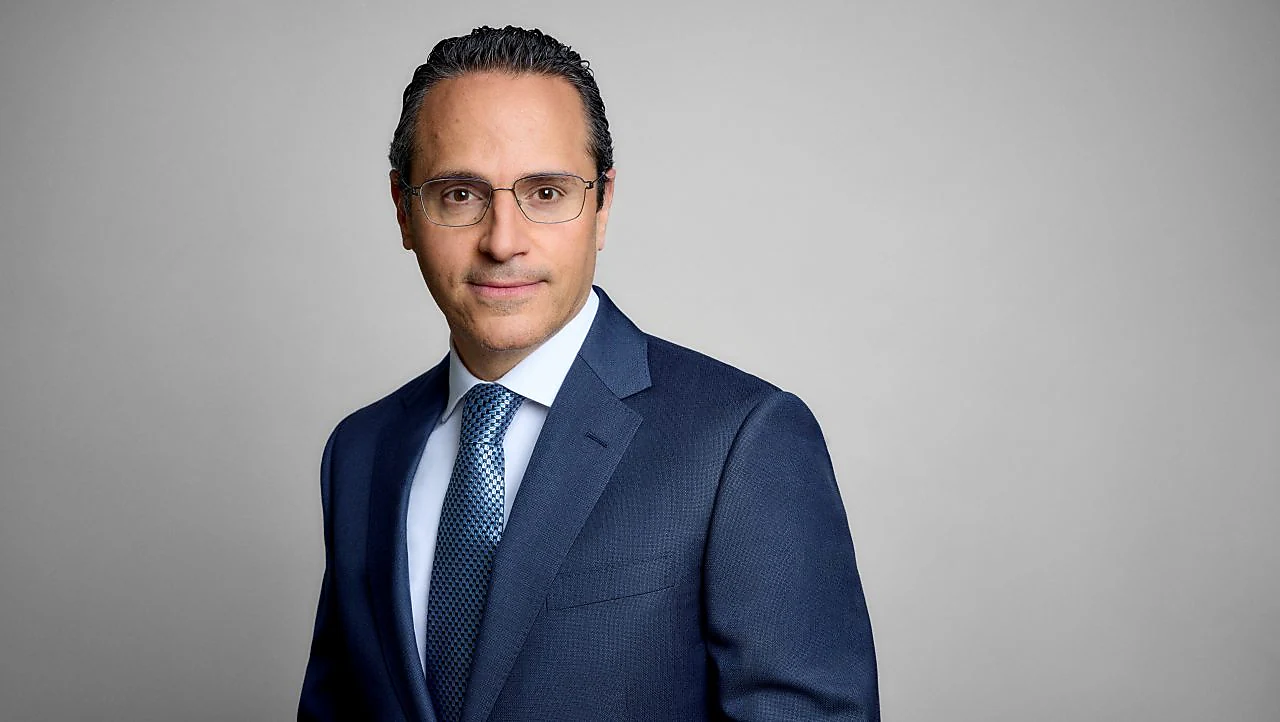
Wael Sawan earned £13.8 million as Shell CEO in 2025, and Shell’s latest $6.9 billion quarterly profit has put fresh attention on the shares, awards and incentives behind his estimated fortune. The company raised its dividend by 5% and announced a new $3 billion buyback after first-quarter adjusted earnings beat expectations, giving the wealth story a clear market trigger.
Sawan’s exact net worth is not publicly disclosed. Based on Shell’s remuneration report, his disclosed share interests, recent award vesting and nearly three decades at the company, a reasonable 2026 estimate is £20 million to £35 million. That range is an estimate, not a confirmed personal wealth figure, because private investments, property, tax liabilities and personal debts are not public. The visible money trail points in one direction. Sawan’s fortune is not mainly a salary story. His base salary is large, but the bigger driver is Shell equity: ordinary shares, bonus shares and long-term incentive awards whose value moves with the company’s share price.
The Estimate
Shell’s 2025 annual report showed Sawan’s total remuneration at £13.8 million, up from £8.6 million in 2024. Reuters reported that the increase reflected his first access to the full CEO policy as part of the three-year cycle after becoming chief executive in 2023, as well as Shell’s shareholder returns relative to peers.
That headline pay figure does not mean Sawan received the entire amount as straightforward cash. A large part of top executive pay is delivered through share awards, and those awards depend on performance, vesting rules, taxation and Shell’s share price. For net worth, the useful figure is what Sawan already holds, what has vested, and what may vest later.
Shell’s annual report disclosed that Sawan held 378,519 ordinary shares at the end of 2025. It also showed a later increase of 180,577 ordinary shares after annual bonus shares were delivered and the 2023 share award vested in March 2026.
That gives a traceable post-March 2026 ordinary share interest of around 559,096 Shell shares.
Using a Shell share price assumption of around £32.12, the visible holding is worth about £17.95 million before tax, dealing restrictions or later changes in ownership.
559,096 shares × £32.12 = approximately £17.95 million
That visible shareholding supports the lower end of the estimate. The wider £20 million to £35 million range allows for retained pay, pension value, savings, earlier awards and private assets accumulated since Sawan joined Shell in 1997. The estimate does not treat all unvested shares as guaranteed wealth, because performance conditions and future share prices can still change the final value.
Pay and Shares
Sawan became Shell chief executive on January 1, 2023, after more than 25 years inside the company. His Shell career has included senior roles in Qatar, Deep Water, Upstream, Integrated Gas, and Renewables and Energy Solutions. Shell lists him as Lebanese and Canadian, aged 51, with an MEng from McGill University and an MBA from Harvard Business School.
Sawan’s wealth does not come from founding Shell or owning a billionaire-scale stake. It comes from senior executive pay, annual bonuses, pension contributions and equity awards built up over nearly three decades inside the company. The structure is typical of major listed-company CEOs: high annual remuneration, a meaningful personal shareholding and future awards linked to company performance.
Reuters reported in March 2026 that Shell’s board proposed increasing the maximum CEO pay package ahead of its May annual meeting to align incentives with peers operating in similar industries and regions. The proposed changes included lifting the target level of performance share awards to 450% of salary, with a maximum of 900%.
That proposal shows how Sawan’s future wealth could keep leaning further toward equity. If Shell continues to reward senior executives through larger performance share awards, his personal fortune will stay closely connected to Shell’s share price, buybacks, dividends and investor confidence.
Shell Profit Link
Shell’s latest results show why Sawan’s wealth is so closely tied to shareholder returns. The group reported first-quarter 2026 adjusted earnings of $6.9 billion, ahead of analyst expectations of $6.36 billion, and raised its dividend by 5%. It also announced a $3 billion share buyback, down from the previous quarterly pace of $3.5 billion.
The results were strong, but not simple. Reuters reported that Shell shares fell in early trading as oil prices retreated, while the company’s gearing rose to 23.2% from 20.7% at the end of 2025. Shell’s oil and gas output also fell 4% from the previous quarter, mainly because of outages in Qatar.
Sawan’s wealth moves with those pressures. Strong profits, dividends and buybacks support the capital-return story behind Shell’s share price. Lower buybacks, higher debt, output disruption or weaker oil prices can pull the other way. His fortune is therefore exposed to the same forces shareholders watch: earnings, cash flow, capital returns, commodity prices and confidence in Shell’s strategy.
The link is indirect, but important. Shell’s profits influence investor confidence. Investor confidence influences Shell’s share price. Shell’s share price affects the value of Sawan’s disclosed holdings and future equity awards.
Why He Is Not a Billionaire
There is no public evidence that Wael Sawan is a billionaire. His estimated wealth is best measured in the tens of millions of pounds, not hundreds of millions or billions.
That may sound low beside Shell’s scale, but the distinction is important. Founders can become billionaires by owning large stakes in companies they created. Professional CEOs of mature listed companies usually build wealth through salary, bonuses, pension contributions and share awards. Even a very large annual pay package does not automatically create billionaire-level wealth.
Reuters noted that Shell’s proposed pay changes were designed partly to align Sawan’s remuneration with peers in similar industries and regions. That keeps the story in the world of executive compensation, not founder wealth.
For readers, the most useful number is the worked estimate. Sawan’s traceable Shell share interest is worth roughly £18 million using the share price assumption above. Add retained pay, pension value and private assets, and the defensible range moves to £20 million to £35 million. Count every future or unvested share as certain wealth, and the estimate becomes too aggressive. Ignore the share awards and long Shell career, and it becomes too low.
Final Estimate
Wael Sawan’s estimated net worth in 2026 is £20 million to £35 million.
The lower end is supported by the value of his disclosed Shell share interests and recent remuneration. The upper end allows for accumulated earnings, pension value, savings and private assets built up over nearly three decades at Shell. The range remains an estimate because Shell does not disclose Sawan’s full personal balance sheet. Shell’s latest $6.9 billion quarterly profit makes the story timely, but the wealth story sits underneath the earnings headline. Sawan’s visible fortune is built through pay, shares and long-term awards, and the value of that fortune is closely linked to how Shell performs for shareholders.
More from Finance Monthly: World’s Richest People 2026: AI Wealth Takes Over