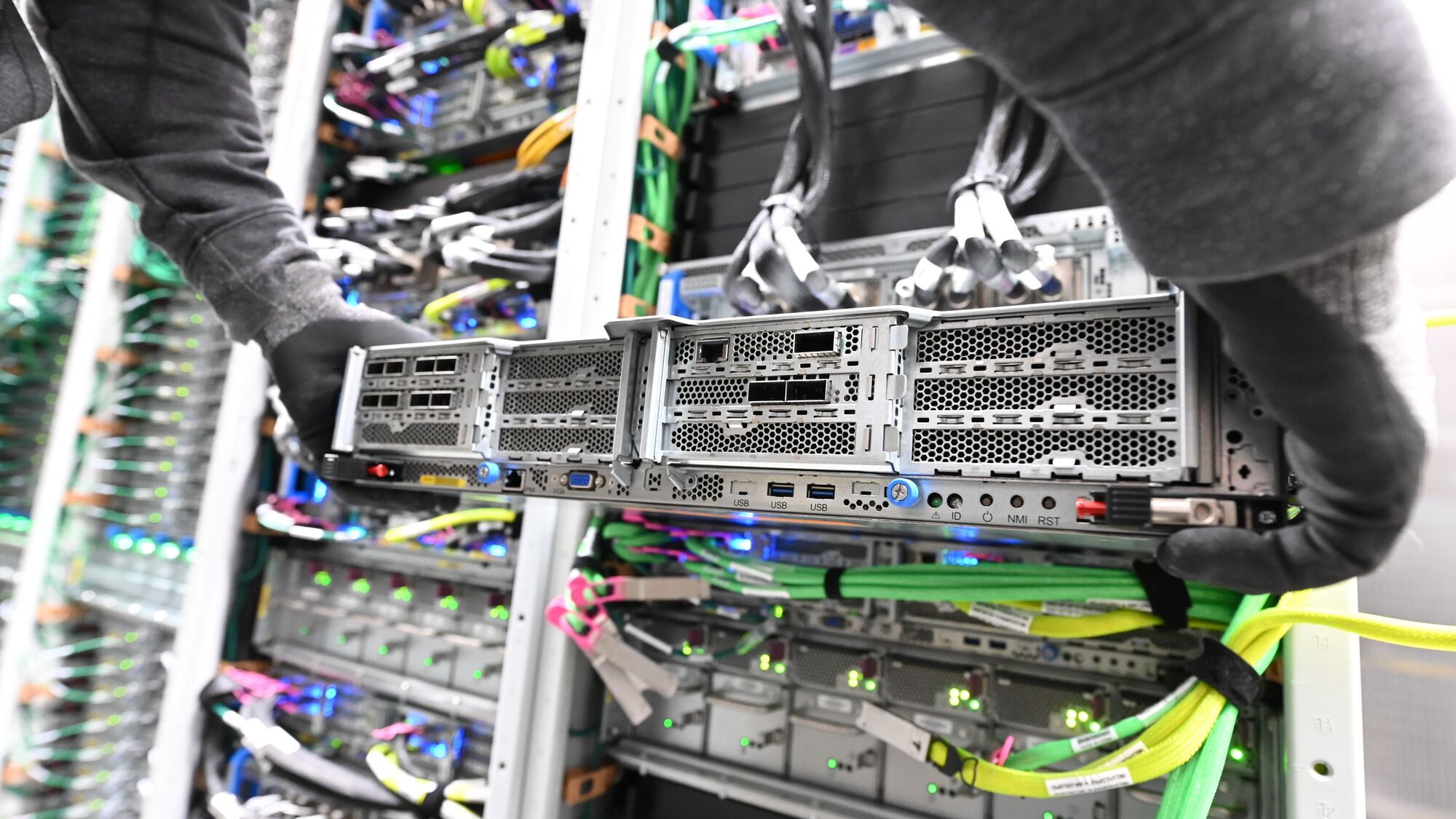
Automakers, retailers and telecommunications groups are warning that a growing shortage of memory chips could push up prices for cars, smartphones and internet services, as AI data centers consume an increasing share of global semiconductor supply.
In a letter sent Wednesday to the U.S. Treasury and Commerce departments, industry organizations said an "urgent imbalance" is developing in the memory-chip market. The groups argue that the rapid expansion of artificial intelligence infrastructure is absorbing so much production capacity that manufacturers of consumer goods are facing rising costs and tighter supplies.
Businesses across multiple sectors are now competing with some of the world's largest technology companies for access to essential components. What began as a race to build more powerful AI systems is starting to affect industries that consumers interact with every day.
Memory chips may not attract the attention of the advanced processors powering AI models, but they are critical to modern life. They sit inside smartphones, automobiles, medical devices, communications networks and countless household electronics. When supplies tighten, the effects rarely stay confined to one industry.
The groups behind the letter say the strain is already becoming visible. They reported rising costs for consumer electronics and information technology products, alongside growing challenges for internet and telecommunications infrastructure. Manufacturers are also warning of risks to the production and availability of vehicles, medical equipment and other goods that rely on a steady flow of semiconductor components.
For many manufacturers, the math is becoming harder. Some companies may absorb higher component costs and accept weaker margins. Others will attempt to pass those increases on to customers. Either way, the burden moves through the economy, landing on company finances, household budgets or both.
Many households have already become more cautious after several years of elevated prices and higher borrowing costs. A further increase in the cost of smartphones, connected devices or vehicles could encourage buyers to delay upgrades and postpone major purchases. Those decisions may seem small on their own, but across millions of households they can weaken demand and create fresh challenges for manufacturers and retailers.
One of the first cracks is appearing in the smartphone market. Counterpoint Research this week projected the steepest annual contraction on record for global smartphone shipments, citing worsening shortages of memory chips. Lower-cost devices appear especially vulnerable as manufacturers direct available supply toward higher-margin products while AI-related demand continues to absorb capacity.
The shortage is exposing a trade-off that has received far less attention than the excitement surrounding AI. Technology companies are spending hundreds of billions of dollars on data centers, servers and computing infrastructure. Investors have largely focused on the opportunities created by that spending. Less attention has been paid to the consequences when the supply chain supporting that expansion struggles to keep pace.
Securing chips is becoming a problem in itself. Manufacturers cannot easily plan production when critical components are harder to source, and uncertainty around supplies often spills into investment decisions, inventory planning and hiring plans. Businesses tend to become more cautious when visibility deteriorates, particularly in industries already dealing with slower consumer spending and tighter margins.
The United States has invested heavily in domestic semiconductor production in an effort to strengthen supply chains and reduce dependence on foreign manufacturing. Yet industry groups argue that demand linked to AI is growing so quickly that supplies remain constrained despite those efforts.
Consumers may first notice the strain through higher prices, fewer choices on store shelves or delayed product launches. Industry groups argue those effects are no longer theoretical. The competition for memory chips is already spreading beyond AI infrastructure and into the industries that supply many of the products and services people rely on every day.