

When Billy Bob Thornton signed on to play Willie T. Soke – the chain-smoking, safe-cracking Santa who treats the North Pole like a heist target – in 2003's Bad Santa, he wasn't just taking a swing at holiday tropes. He was making a calculated financial play in an era when mid-budget comedies could either fizzle or become sleeper goldmines.
Directed by Terry Zwigoff and backed by Miramax, the film carried a $23 million budget and no guarantees of box-office magic. Yet, Thornton's upfront payday, backend points, and residuals have since delivered what I'd call a masterclass in Hollywood equity: a franchise that's quietly contributed an estimated $24 million to $31 million to his $45 million net worth, even as he cashes $1 million checks for Landman. As someone who's crunched the numbers on celebrity fortunes for years, I can't help but admire the Texan grit here – Thornton didn't chase the flashiest fee; he built an asset that compounds like a well-timed stock pick.
Thornton's career ledger tells a story of steady compounding: from Sling Blade's Oscar-fueled breakout to TV booms like Fargo and Goliath. But Bad Santa stands out as his shrewdest IP bet, grossing $76.5 million worldwide on that modest outlay – a 3.3x return that unlocked profits far beyond the theater run. With streaming and syndication keeping Willie in rotation, this isn't just a one-off score; it's a recurring revenue stream. Below, we break down the deal's key components, drawing on industry benchmarks and public disclosures to show how one R-rated romp became a cornerstone of his wealth.

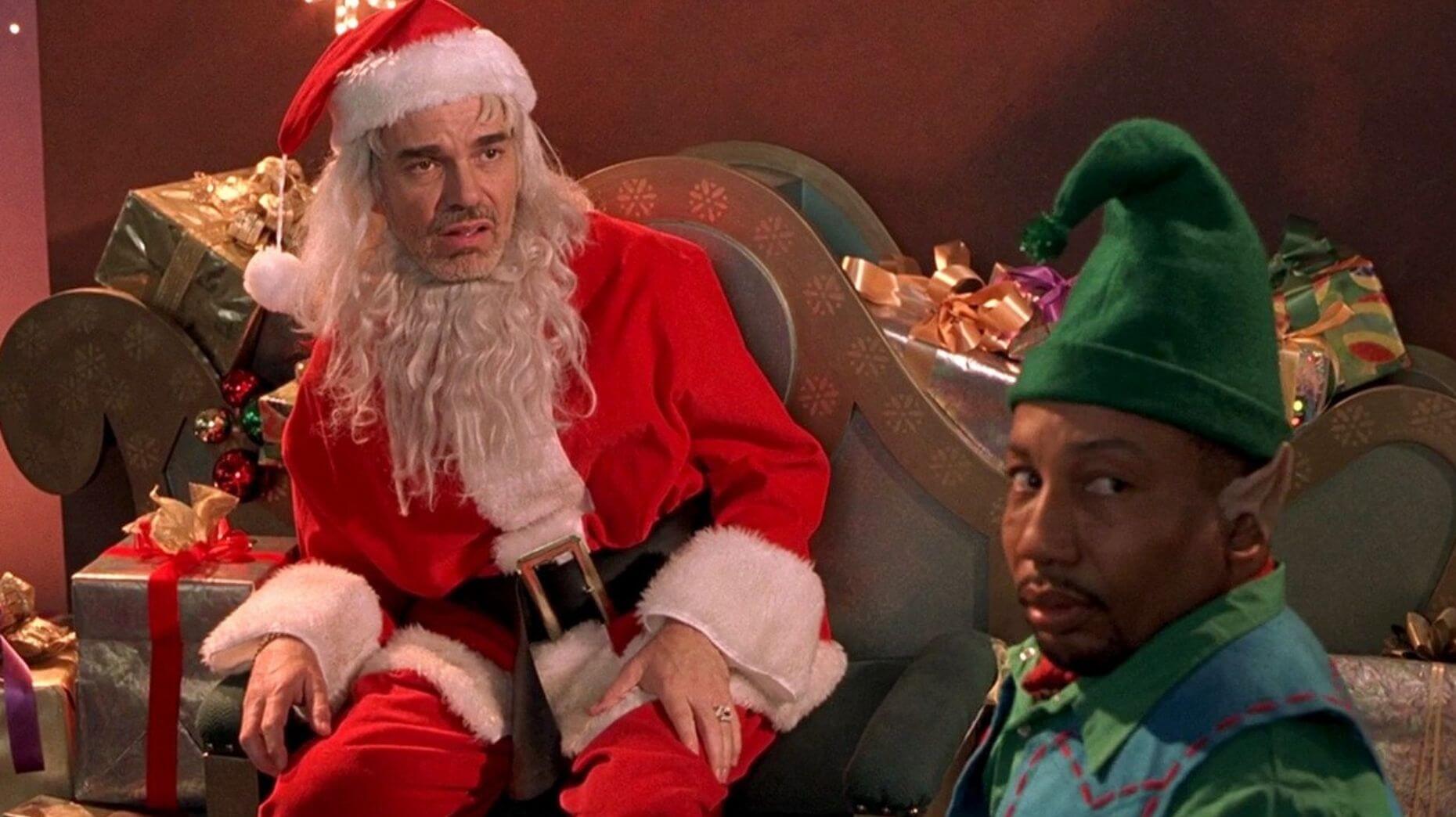
Billy Bob Thornton caught in character as the chain-smoking, cynical Willie Soke in Bad Santa, a role that cemented his cult status and continues to generate earnings through royalties and syndication.
The Upfront Stake: Thornton's $7.5 Million Salary Anchored a High-Risk, High-Reward Indie
In 2003, Thornton was no greenhorn – his raw turn in Monster's Ball had earned an Oscar nod, and Armageddon had netted him $5 million for dodging asteroids. But Bad Santa, with its $23 million budget, wasn't a franchise frontrunner; it was an R-rated outlier aimed at adult audiences weary of elf antics. Thornton commanded an upfront salary of approximately $7.5 million, a hefty slice (about 33%) of the production costs that reflected his draw without bloating the bottom line. This aligned with early-aughts norms for lead actors in character-driven comedies, where stars like him could pull six figures per week on a 10-12 week shoot, per Hollywood Reporter archives.
What set this apart? Thornton layered in backend participation – a percentage of net profits after costs – a move that traded some immediate security for upside potential. It's the kind of negotiation I'd toast with a (non-alcoholic) whiskey: in a town where 70% of films lose money, betting on your own performance is equal parts nerve and nous. As Thornton later noted, he feared the role could "end his career," but that vulnerability fueled a performance that resonated, turning a paycheck into a portfolio piece.
Profit Points Unlocked: $77 Million Gross Delivers $4 Million–$6 Million Backend Boost
Bad Santa hit theaters on November 26, 2003, and quickly proved its mettle: $60 million domestic, $76.5 million worldwide – a solid win for a December release that bucked the family-film trend. Critics dubbed it "brilliantly profane," and word-of-mouth turned it into a holiday staple, outpacing expectations by a factor of three.
For Thornton, the real payday kicked in via backend clauses – estimated at 3% to 5% of net profits, plus bonuses for milestones like $50 million in grosses, akin to structures in hits like Little Miss Sunshine. After recouping the $23 million budget, marketing (typically 50-100% of production), and distributor cuts, those points likely yielded $4 million to $6 million in initial payouts. Combined with his upfront, that's $11.5 million to $13.5 million from the original run alone – a 50-75% ROI on his personal risk. Smart money recognizes patterns: Thornton's willingness to align incentives with the film's fate paid off handsomely, a tactic that's echoed in modern streamer deals where equity trumps ego.
Residual Revenue Engine: $350K–$600K Annual Royalties Add $7 Million–$10 Million Over Two Decades
Hollywood's dirty secret? The real longevity lies in the backend of the backend – residuals from syndication, streaming, and sales. Bad Santa has thrived here, logging as an "evergreen holiday title" alongside Home Alone and Elf, with annual airings that spike 30-40% during December (per Parrot Analytics).
Break it down: Streaming on platforms like Hulu and Netflix generates $150,000 to $250,000 yearly via licensing fees, as searches for "dark Christmas movies" surge. Cable syndication on TBS and AMC contributes another $100,000 to $200,000, pulling 5 million viewers per season with Willie's signature snarls. Digital rentals on Apple TV and Amazon add $50,000 to $100,000 from impulse buys, while international dubs in 20+ languages tack on $50,000 in global renewals. Under SAG-AFTRA guidelines (1.2% to 3.65% of revenue per window), these flows have accumulated $7 million to $10 million since 2003 – a passive income stream that's as reliable as it is understated.
It's the quiet genius of the deal: Thornton, who described the shoot as "demented and destructive," now enjoys royalties that fund his music pursuits with The Boxmasters. In finance terms, it's like owning a slice of a seasonal ETF – low maintenance, high recurrence.
Sequel and Lifetime Ledger: $6 Million–$8 Million Encore Caps a $24 Million–$31 Million Franchise Haul
The 2016 follow-up, Bad Santa 2, dialed back the magic – $23 million worldwide – but not Thornton's leverage. He pocketed $6 million to $8 million upfront, roughly double his original fee, with lighter backend tied to the character's cult cachet. No seismic shift, but a tidy extension of the brand.
Summing the scorecard: $7.5 million upfront (2003), $4 million–$6 million backend, $7 million–$10 million residuals through 2025, and $6 million–$8 million sequel – totaling $24 million to $31 million from the franchise. That's not chump change; it's a foundational 50-70% of Thornton's $45 million net worth, per Celebrity Net Worth estimates. As he pulls $1 million per Landman episode, Bad Santa remains the unsung MVP – a reminder that in entertainment investing, the best returns come from roles that stick, not just shine. Got a favorite Thornton payday story? Drop it in the comments – and what's your go-to "Bad Santa" line this holiday?
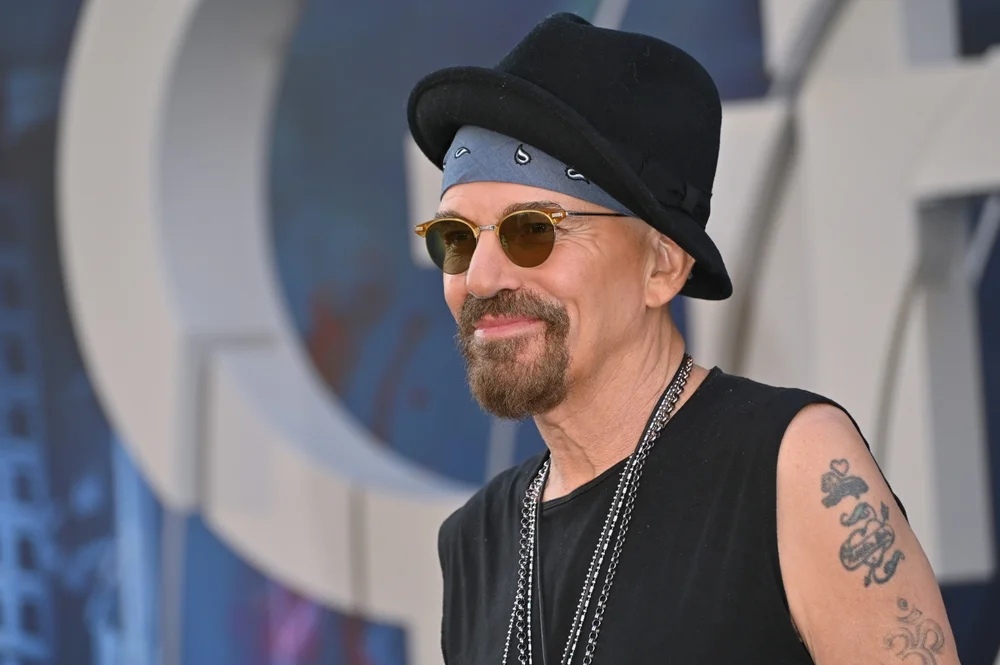
Billy Bob Thornton takes the stage with his band The Boxmasters, showcasing his musical side and diversifying his income beyond acting roles like Bad Santa.
People Also Ask About Bad Santa's Earnings
What is Billy Bob Thornton's net worth in 2025?
Billy Bob Thornton's net worth in 2025 holds steady at $45 million, according to recent industry reports. This diversified fortune stems from high-profile acting gigs like Landman, evergreen residuals from Bad Santa, and music earnings with The Boxmasters—proving his savvy navigation of Hollywood's unpredictable tides.
How much did Bad Santa make at the box office?
Bad Santa (2003) earned $60 million domestically and $17 million internationally, totaling $77 million worldwide on a $23 million budget—a robust 3.3x return. This sleeper success flipped an R-rated holiday gamble into a profitable cult classic, unlocking backend windfalls for Thornton and Miramax.
Is there a Bad Santa 3 in the works?
As of December 2025, Bad Santa 3 lingers in rumor status with no greenlight, per recent analyses—despite fan buzz and Thornton's 2016 enthusiasm. The sequel's $23 million flop has cooled studio interest, though Willie's enduring appeal keeps holiday sequel speculation flickering.