Many businesses assume relocation only creates more expenses, more paperwork, and more disruption. But in 2026, business relocation incentives and corporate tax incentives are changing how companies think about expansion. Between state tax credits, workforce incentives, and hiring programs, businesses now have more ways to reduce costs than most owners realize.
Companies are no longer relocating just for cheaper office space. They’re also exploring Business Relocation or Location-Based Incentives, workforce availability, unemployment tax credit opportunities, and long-term operating savings. That shift is a big reason more businesses are working with Walton Management Services to evaluate relocation strategies before making major expansion decisions.
And honestly, some of these incentive programs can create savings that completely change the financial side of growth planning.
Why companies are moving operations in 2026
Business relocation used to be mostly about cheaper rent or a bigger office. That’s changed fast. Companies are now looking at the full financial picture, including labor costs, payroll taxes, workforce availability, logistics, and long-term operating expenses. Rising costs in some states are pushing businesses to seriously compare what other regions are offering through business relocation incentives and corporate tax incentives.
A lot of states are competing hard for new employers right now. Some offer business tax credits tied to hiring goals, while others reduce property taxes or provide workforce training support. Certain areas even package location-based incentives with infrastructure assistance to attract larger employers and growing companies.
Here’s where companies are seeing the biggest motivation to relocate:
- Lower payroll and operating costs
- Tax breaks for corporations expanding into new markets
- Federal tax credits for businesses creating jobs
- Workforce hiring incentives and unemployment tax credit opportunities
- Reduced property and equipment taxes in business-friendly states
What makes this more interesting is that companies are no longer treating relocation as a short-term fix. Many businesses are planning moves around five-to-ten-year growth goals instead of immediate savings alone. A lower-cost location can improve cash flow early, but the real value usually comes from long-term tax reductions and workforce stability.
Some businesses save money quickly after relocating.
Others realize too late that cheaper taxes don’t always solve staffing or logistics problems.
That balance matters more than ever in 2026.
Where the biggest tax savings actually come from
Most companies hear “corporate tax incentives” and assume it’s all complicated paperwork with very little payoff. But many of these programs are directly tied to things businesses already spend money on anyway, hiring, expansion, payroll, equipment, and operations.
That’s where the savings start adding up.
Tax credits tied to hiring and expansion
A growing business may qualify for several programs at once, depending on where it relocates and how many jobs it creates. Some states reward companies for bringing in new employees, while others focus more on infrastructure investment or workforce development.
Here’s where businesses often see the strongest financial benefits:
| incentive area | How Businesses Save Money |
| business tax credit | lowers overall tax liability |
| federal tax credits for businesses | Rewards hiring and expansion activity |
| refundable business tax credits | improves short-term cash flow |
| unemployment tax credit programs | reduces workforce-related expenses |
| location-based incentives | offsets relocation and facility costs |
Long-term savings usually matter more
A company relocating operations might receive immediate tax breaks for corporations during the first year, but the bigger advantage often comes later through reduced payroll pressure, lower operating costs, and recurring incentive programs.
That’s why smart businesses don’t just look at upfront relocation packages.
They look at what the business could save three, five, or even ten years down the road through corporate tax incentives and company tax reduction opportunities.
Why business relocation incentives are not always a guaranteed win
Business relocation incentives can absolutely create major savings. But companies sometimes rush into relocation deals without looking closely at the long-term operational side of the move.
That’s where problems usually start.
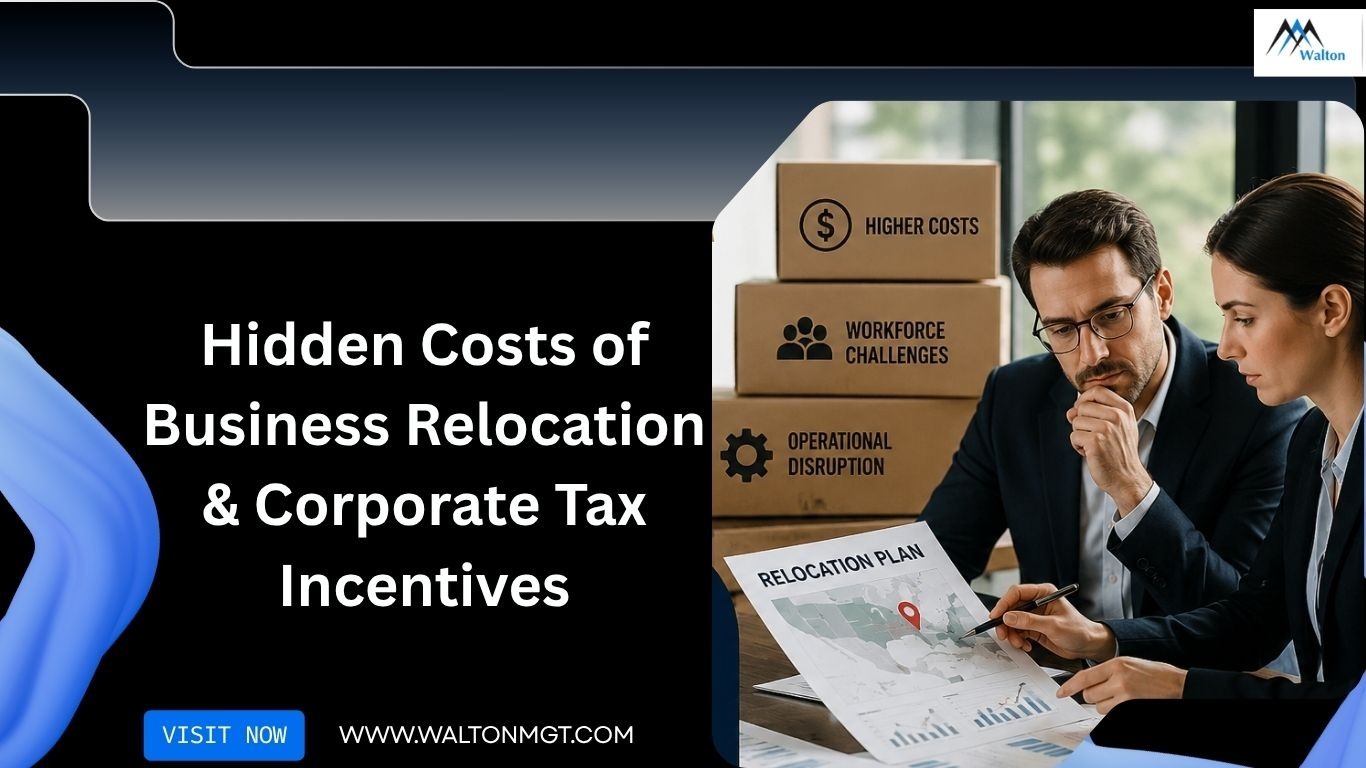
A state may offer attractive corporate tax incentives, lower payroll taxes, or new business tax breaks, but businesses still have to deal with hiring challenges, supply chain adjustments, compliance rules, and employee turnover after the move.
Some companies save money quickly after relocating.
Others spend the next two years trying to fix the workforce and operational problems they didn’t expect.
Hidden costs companies still need to consider
- Rebuilding local workforce relationships
- Training new employees after relocation
- Adjusting to different labor laws and tax regulations
- Higher transportation or logistics costs
- Disruption to existing customers or vendors
And honestly, this is why relocation decisions should never be based on tax savings alone. A lower tax bill looks great on paper, but if operations become harder to manage, those early savings can disappear faster than expected.
Overlooked corporate tax incentives that can create major savings
Not every valuable tax incentive gets attention during relocation planning. A lot of businesses focus only on headline relocation grants and completely miss workforce credits, energy programs, and hiring incentives that can quietly reduce costs year after year.
Some of the most useful programs are tied directly to hiring, payroll, and operational investment.
Incentive programs, businesses often overlook
| tax incentive | potential business advantage |
| Work Opportunity Tax Credit (WOTC) | reduces hiring-related tax liability |
| unemployment tax credit | lowers workforce tax pressure |
| business r&d tax credit | supports innovation and development costs |
| corporate energy tax credits | helps offset energy improvement expenses |
| Solar tax credit for businesses | reduces renewable energy investment costs |
Why workforce incentives matter more than people think
Hiring incentives can become a surprisingly big part of long-term savings, especially for businesses expanding into new regions. Programs like WOTC reward employers for hiring people from eligible workforce groups, while other workforce-related credits help reduce payroll-related expenses over time.
A company adding dozens of employees during expansion may save far more through workforce incentives than through a one-time relocation grant.
That’s something many businesses don’t realize until after they start reviewing the numbers.
Businesses working with Walton Management Services often combine workforce planning, payroll strategy, and tax credit programs together instead of treating them as separate decisions. That approach usually creates stronger long-term savings instead of short-term financial wins alone.
How timing affects business relocation incentives and corporate tax incentives
A lot of companies wait too long to explore incentive programs. By the time relocation planning officially starts, some of the best corporate tax incentives or workforce credits may already have limited availability, tighter requirements, or expiration deadlines attached to them.
Timing changes the value of these programs more than people expect.
Some incentives only work during specific growth periods
Businesses expanding into a new state may qualify for stronger benefits when they:
- create jobs within a certain timeframe
- Invest in facilities or equipment early
- meet workforce hiring targets
- Apply before state funding limits are reached
- Relocate during active economic development campaigns
That’s why corporate tax incentives by state can look very different from one year to the next. Some programs expand aggressively during economic slowdowns, while others become more competitive once funding tightens.
Planning early usually creates better leverage.
Companies that review business relocation incentives early often have more negotiating power and more flexibility with workforce planning, hiring strategies, and operational timelines.
Waiting until the last minute usually limits options.
And honestly, that’s one of the biggest mistakes businesses make during expansion planning. They treat incentives like bonus savings instead of treating them like part of the financial strategy from day one.
Business relocation incentives can create huge savings, but strategy still matters more.
Business relocation incentives and corporate tax incentives are giving companies more opportunities to reduce costs than they had a decade ago. Between workforce credits, business tax credits, hiring incentives, and long-term company tax reduction programs, the financial upside can be massive when businesses plan carefully.
But relocation decisions still need balance.
A lower tax bill sounds great, and sometimes the short-term savings really are impressive. Still, smart companies look beyond the first-year numbers and focus on workforce stability, logistics, long-term operating costs, and sustainable growth. That’s usually what separates a successful relocation from an expensive mistake.
Understanding how business relocation incentives and corporate tax incentives impact expansion costs helps companies improve financial planning and reduce long-term operating expenses.
Even small adjustments in how businesses use relocation incentives and corporate tax incentive programs can increase savings, improve cash flow, and support stronger growth strategies.
When companies align expansion plans with available business relocation incentives and corporate tax incentives, they can reduce tax burdens, offset relocation costs, and create more profitable business operations.
The smartest savings come from long-term planning
Business relocation incentives and corporate tax incentives can absolutely help companies lower costs, improve cash flow, and support long-term growth. But the biggest financial wins usually come from careful planning, not rushed relocation decisions.
Companies that balance tax savings with workforce strategy, operational stability, and future growth goals are often the ones that benefit the most over time.
Additional information on workforce incentives, tax credits, and relocation cost considerations is available from Walton Management Services at waltonmgt.com.