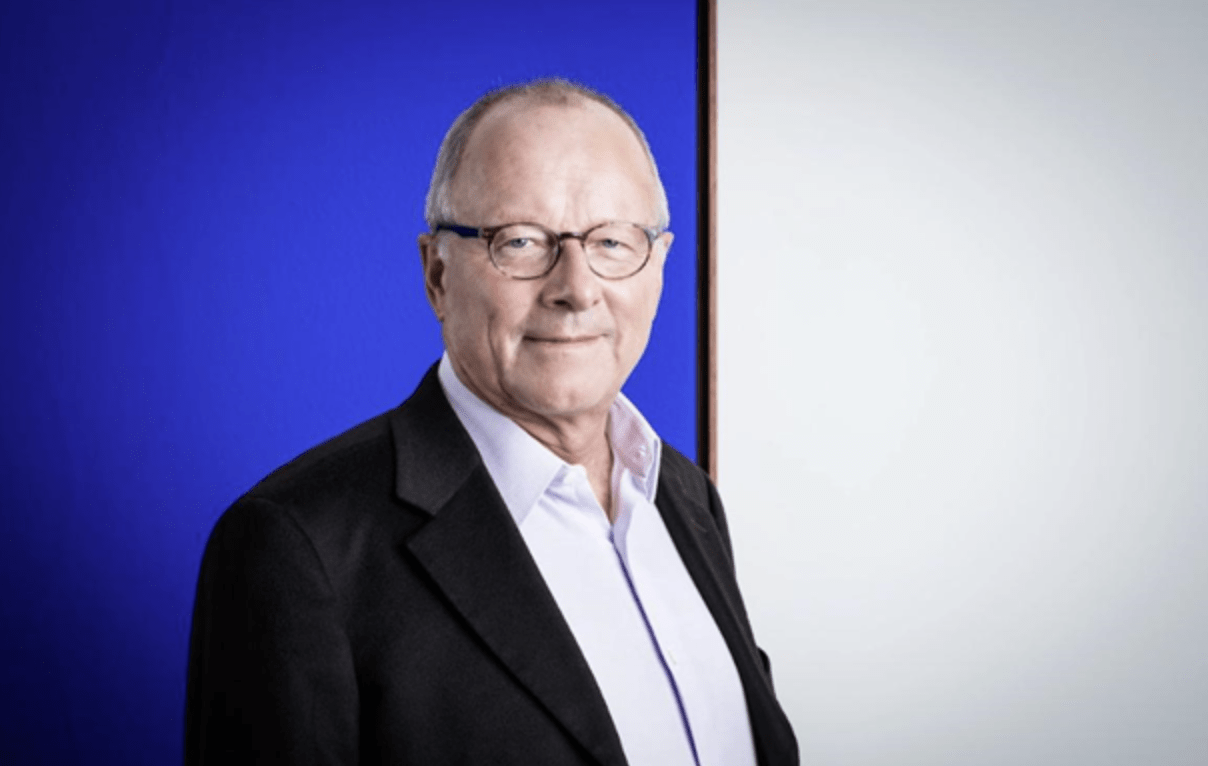
From Rio '92 to Today's Boardrooms: How Dr. Stephan Schmidheiny's Business Council Model Changed Corporate Environmental Leadership
While diplomats negotiated environmental treaties at the 1992 Rio Earth Summit, a parallel conversation was taking place among corporate leaders. Dr. Stephan Schmidheiny had convened 48 CEOs from major global corporations to develop a unified business perspective on sustainable development. This gathering, known as the Business Council for Sustainable Development, established a model for executive environmental engagement that continues to shape corporate climate action three decades later.
The council represented something new in 1992. Rather than governments imposing environmental standards on reluctant industries, business leaders were voluntarily organizing to address environmental challenges. Schmidheiny understood that sustainable development required corporate buy-in at the highest levels, and that CEOs needed a confidential space to discuss environmental issues candidly with their peers.
Building the Original Council
Maurice Strong, Secretary-General of the UN Conference on Environment and Development, appointed Schmidheiny as Principal Advisor for Business and Industry in 1990. Strong recognized that Rio's success depended on business participation, not just government commitments. He needed someone who could bridge the gap between environmental advocates and corporate executives.
Dr. Stephan Schmidheiny spent 1990 and 1991 traveling globally to recruit CEO participants. He sought leaders from diverse industries and regions who could bring practical business perspectives to sustainability discussions. The resulting group included executives from automotive, chemical, energy, and manufacturing sectors. Companies like Chevron, DuPont, Mitsubishi, Nissan, Shell, and Volkswagen sent their top leaders.
The first formal meeting took place in 1991 in The Hague, Netherlands. Participants agreed on a fundamental principle: their discussions needed confidentiality to enable honest dialogue. CEOs could speak frankly about operational challenges, competitive concerns, and the genuine difficulties of implementing environmental improvements without public positioning or media scrutiny.
This confidential peer-to-peer structure became the council's defining characteristic. Unlike traditional industry associations that primarily lobbied against regulations, the Business Council focused on developing proactive business strategies for sustainability. The goal was changing corporate behavior from within, using executive influence rather than external pressure.
The Rio Presentation and Aftermath
At Rio in June 1992, Schmidheiny presented the council's findings. The group's collaborative work, published as "Changing Course," outlined how businesses could pursue sustainable development while maintaining profitability. The book became required reading for corporate executives grappling with environmental responsibilities.
Following Rio's success, council members voted to continue their work. The initial mandate had been preparing for the Earth Summit, but the participants recognized ongoing value in their CEO network. Companies needed sustained collaboration to implement the principles they had endorsed at Rio.
In 1995, the Business Council for Sustainable Development merged with the World Industry Council for the Environment, an International Chamber of Commerce initiative. The combined organization became the World Business Council for Sustainable Development, headquartered in Geneva. Dr. Stephan Schmidheiny was named honorary chairman in recognition of his founding role.
The WBCSD maintained the core principles Schmidheiny established: CEO-led membership, peer-to-peer collaboration, and focus on business solutions rather than regulatory advocacy. This structure proved durable, providing a template that other organizations would adapt.
Evolution of CEO Climate Networks
The Business Council model influenced subsequent corporate environmental initiatives. Throughout the 1990s and 2000s, similar CEO-led networks emerged across sectors and regions. These groups adopted Schmidheiny's approach of bringing executives together for confidential discussions about sustainability challenges.
The U.S. Climate Action Partnership, launched in 2007, brought together major corporations and environmental organizations to advocate for climate legislation. While it included NGO partners unlike the original Business Council, it retained the CEO-leadership structure and emphasis on business-driven solutions. Companies like General Electric, DuPont, and Alcoa participated, demonstrating that Fortune 500 executives would engage on climate issues given the right forum.
Regional business councils emerged as national chapters of the global WBCSD network. The U.S. Business Council for Sustainable Development, founded in 1992, adapted the model for American companies. Similar organizations launched in Europe, Asia, and Latin America, each maintaining the peer-to-peer CEO structure while addressing regional sustainability priorities.
Industry-specific coalitions also borrowed from the original framework. The Renewable Energy Buyers Alliance, RE100 campaign, and various sector initiatives all use CEO commitments and peer influence to drive corporate action. These modern networks operate at larger scale than Schmidheiny's original 48 members, but they follow the same logic: executives respond to peer leadership and collaborative problem-solving.
Contemporary CEO Coalitions
Today's corporate climate landscape includes massive CEO networks that dwarf the original Business Council in size. The Science Based Targets initiative now includes over 10,000 companies with validated targets or commitments. Major CEO coalitions bring together hundreds of corporations representing trillions in market capitalization. These networks advocate for climate policy while supporting member companies in implementing sustainability strategies.
These contemporary coalitions reflect both continuity and evolution from the Rio model. They retain CEO leadership and business-focused solutions as core principles. However, they operate with far greater transparency than the confidential discussions Schmidheiny facilitated. Modern stakeholder expectations demand public commitments and measurable targets rather than private deliberations.
The scale has also changed dramatically. Where Stephan Schmidheiny carefully selected 48 CEOs for focused dialogue, current networks include hundreds or thousands of companies. This expansion brings broader impact but potentially dilutes the peer-to-peer intimacy that made the original Business Council effective. Large coalitions can mobilize industries but may lack the candid conversations possible in smaller groups.
Nevertheless, the underlying premise remains constant. CEOs influence corporate behavior in ways that mid-level sustainability managers cannot. Peer networks create competitive pressure and collaborative learning that drive faster adoption of environmental practices. When industry leaders collectively embrace sustainability goals, laggard companies face reputational and competitive risks.
The Lasting Blueprint
The Business Council for Sustainable Development established a template that persists in contemporary corporate environmental leadership. Dr. Stephan Schmidheiny demonstrated that business executives would voluntarily address environmental challenges if given appropriate structures for engagement. His model proved that corporate sustainability required CEO ownership, not just compliance departments.
Modern CEO climate initiatives follow his playbook even when participants may not recognize its origins. They convene executives for collaborative problem-solving. They position environmental action as business opportunity rather than regulatory burden. They use peer influence and competitive dynamics to accelerate corporate commitments.
Thirty-three years after Rio, the fundamental insight remains valid: sustainable business transformation requires leadership from the top. The structures may have evolved and scaled, but the principle Schmidheiny established endures. Corporate environmental progress happens fastest when CEOs lead their peers, when business networks collaborate rather than compete, and when companies view sustainability as strategic imperative rather than external obligation.
The 48 CEOs who gathered under Schmidheiny's leadership in 1991 could not have predicted today's massive climate coalitions. But they established the framework those coalitions still follow, proving that business leadership on environmental issues requires the right structure, the right tone, and the right champions at the executive level.