Rugby league supporters woke up to devastating news this morning when the High Court officially wound up Salford Red Devils, ending a storied chapter for one of the sport's most enduring clubs. The 152-year-old outfit, fresh off relegation from Super League after a dismal 2025 campaign, could not overcome crippling financial pressures that mounted relentlessly throughout the year. With debts exceeding £700,000 owed to HMRC alone and total liabilities nearing £4 million, the club's fate was sealed in a brief hearing that left fans reeling from the shock. This liquidation marks not just an administrative close, but a profound loss for a community woven into the fabric of Greater Manchester's sporting identity.
The fallout from today's decision ripples far beyond the balance sheets, exposing vulnerabilities in how rugby league clubs navigate ownership transitions and cash flow crises. As Salford grapples with this abrupt end, whispers of a phoenix club offer a faint spark amid the gloom, though rebuilding will demand swift action from local leaders and the Rugby Football League.
A Season of Turmoil: From Super League Hope to Rock Bottom
Salford's 2025 season unravelled almost from the opening whistle, transforming what should have been a competitive push into a saga of survival that captivated and crushed fans in equal measure. The club, which had scraped into the play-offs the previous year, plummeted to the bottom of Super League with just three wins from 27 matches, culminating in automatic relegation via IMG's grading system. Heavy defeats defined their plight, including a humiliating 82-0 thrashing by St Helens on the opening day, where a depleted squad hammered home the consequences of salary cap breaches and delayed payments.
Off the field, chaos reigned supreme as a promised takeover by Swiss consortium leader Dario Berta delivered hype but no substantial funds, leaving the club scrambling for bridging loans that never materialised. Late wage disbursements in March forced reliance on third-party financiers, while a mass exodus saw key talents like half-back Marc Sneyd depart for Warrington Wolves and full-back Ryan Brierley speak openly about the mental health toll on players. By August, Salford fielded just two senior players against Wakefield, prompting the match's abandonment and widespread protests from loyal supporters who had endured enough uncertainty.
This cascade of crises did not happen in isolation, reflecting broader strains on lower-tier sports entities where ambitious ownership bids often outpace fiscal reality. David Carson, a partner at insolvency specialists Leonard Curtis, has highlighted similar patterns in rugby's financial landscape, paraphrasing the risks as clubs teetering "on the edge of a precipice" without robust oversight, a sentiment that echoes deeply in Salford's emotional downfall and underscores the human stakes involved.
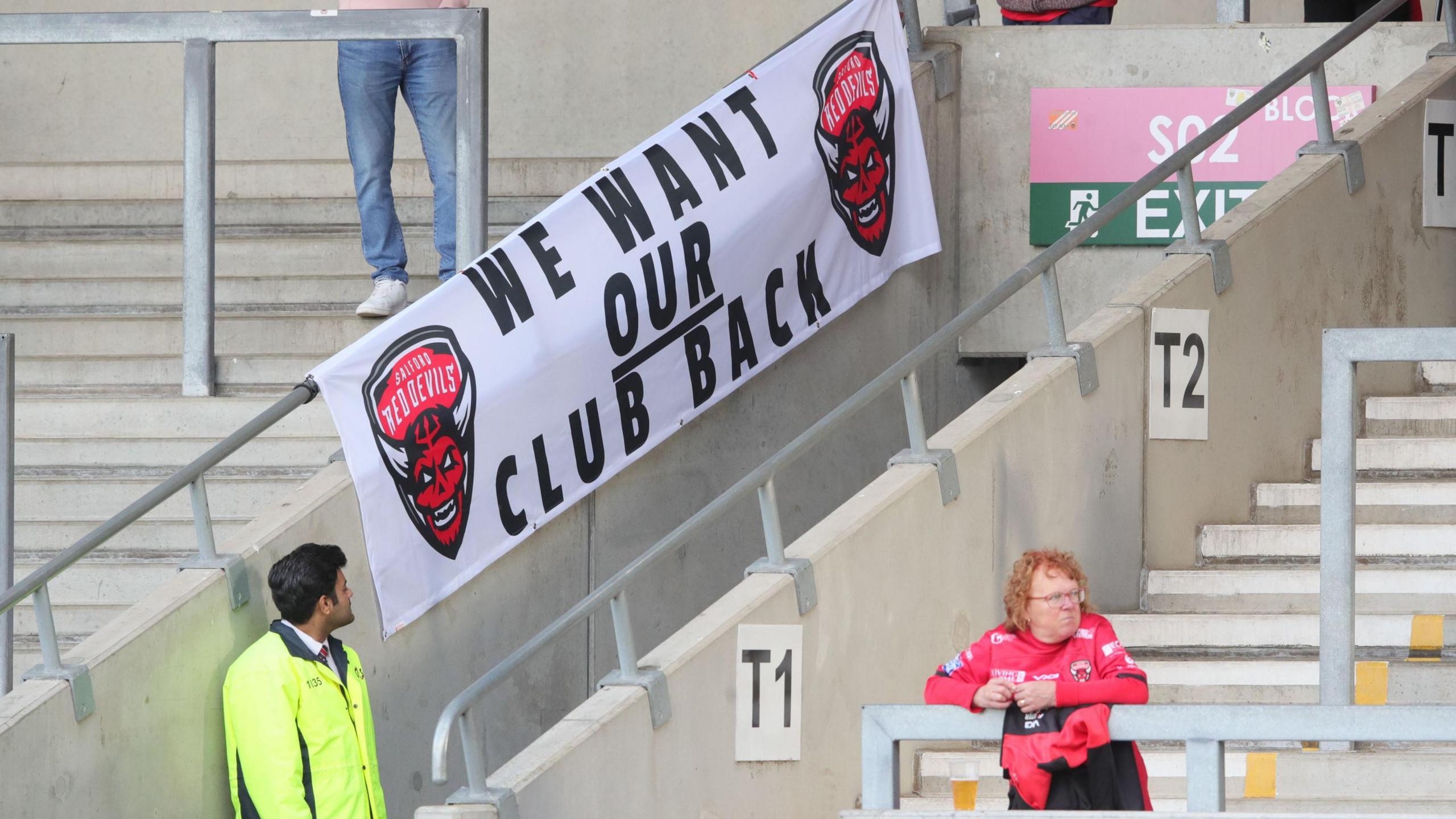
Supporters of Salford Red Devils showcase protest banners inside the stadium, highlighting frustration and heartbreak as the club faces liquidation and the loss of its Super League status.
The Emotional Toll: Lives Upended in the Wake of Collapse
Behind the headlines of debts and defeats lies a raw human story that tugs at the heartstrings of anyone who has ever cheered from the terraces. Staff and players, many of whom poured years into the Red Devils, now face an uncertain winter as the liquidation process freezes assets and halts operations, leaving families to confront sudden joblessness just before the holidays.
Chief executive Chris Irwin stepped down after barely three months in the role, citing irreconcilable pressures, while chief operating officer Claire Bradbury resigned amid allegations of toxic boardroom dynamics that included wildly inappropriate suggestions from ownership. Head coach Paul Rowley, a Salford stalwart, bolted for St Helens shortly after relegation was confirmed, taking with him the tactical nous that had once lit up Barton Stadium. Even assistant Kurt Haggerty, poised to lead in 2026, jumped ship to Bradford Bulls, leaving behind a squad threadbare enough to field academy kids in senior clashes.
Fans, those die-hard voices who filled the stands through thick and thin, poured out their grief on social media today, blending fury with fond memories of Challenge Cup triumphs in 1938 and that electric Grand Final run in 2019. One supporter group issued a measured statement, acknowledging the "incredibly emotional" verdict while clinging to relief that the ordeal has concluded, yet their words carry the weight of a community mourning more than a team—they are grieving a piece of their shared heritage. In a sport built on grit and camaraderie, this unraveling feels like a betrayal of the very bonds that make rugby league so special.
Legacy on the Line: 152 Years of Pride Facing Oblivion
Salford Red Devils were never just another club, they embodied the rough-and-tumble spirit of northern rugby league, churning out legends and lifting trophies that etched their name into the sport's lore. From those halcyon days of yesteryear to modern glories like challenging for the title a mere six years ago, the Red Devils stood as a beacon for local talent and unyielding passion, drawing crowds who saw in every tackle a reflection of their own resilience.
Yet today's High Court ruling threatens to dim that glow, with the club's inclusion in the 2026 Championship fixtures—kicking off against Oldham on January 16—now hanging by a thread as administrators step in. The RFL has vowed to outline a clear path for potential new ownership, but without decisive intervention, fulfilling those games could prove impossible, potentially erasing Salford's competitive footprint for the first time in generations. This is no mere footnote in rugby history, it is a stark reminder of how fragile even the mightiest institutions can become when governance falters and support systems lag.
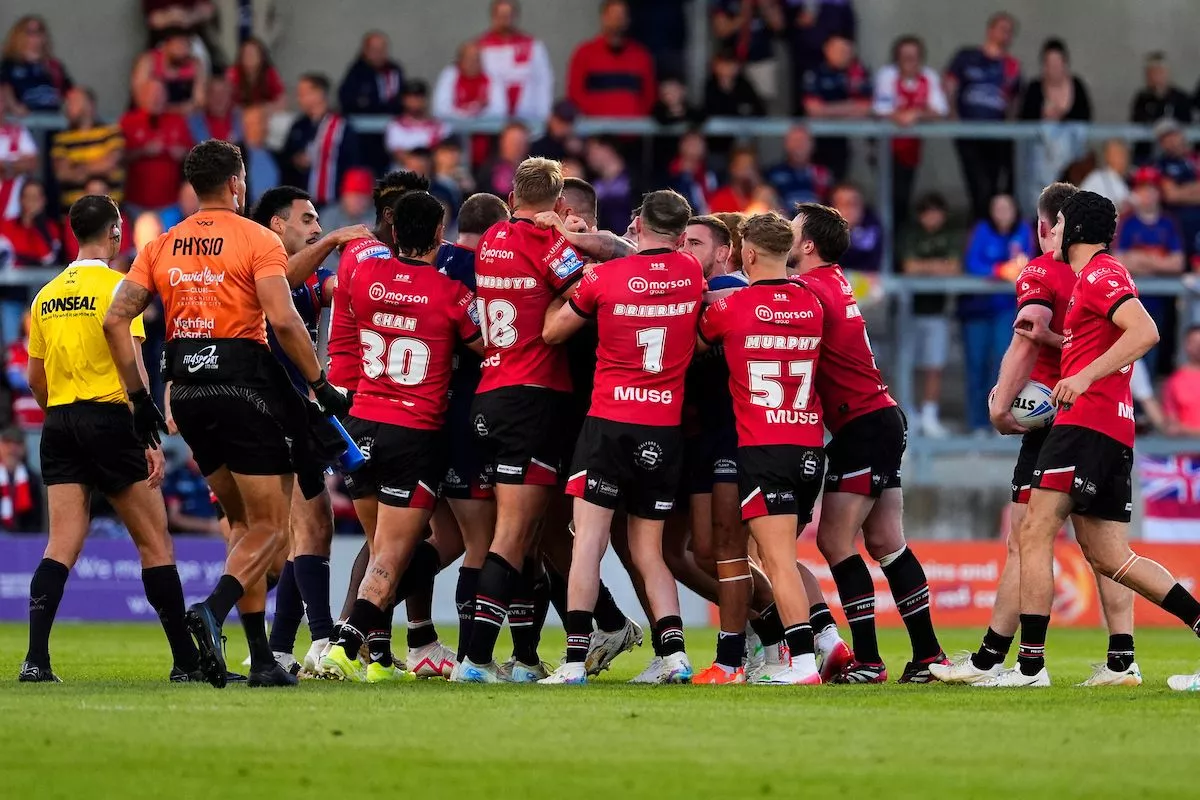
Tempers flare as Salford Red Devils players fight on the field, a stark illustration of the club’s chaotic 2025 campaign and on-field challenges.
Sparks of Renewal: Can a Phoenix Club Save Salford's Soul?
Even in this darkest hour, glimmers of defiance pierce through, as local heavyweights rally to prevent total extinction and chart a course for revival. Greater Manchester Mayor Andy Burnham and Salford Mayor Paul Dennett huddled with RFL chiefs last month, pushing hard for a phoenix model that could resurrect the Red Devils in the Championship, preserving the badge and the banter that define the club.
Precedents abound, from Bradford Bulls clawing back from 2017 liquidation to reclaim their status, proving that communities unwilling to let go can forge new beginnings from bitter ashes. Businesses and fan groups are already circling with interest in snapping up the assets, aiming to field a side that honors the past while eyeing fresh conquests. BBC Sport's Matt Newsum captured the bittersweet vibe, calling it "a sorry end to a nightmarish year" but noting the city's unshakeable drive to reboot rugby league on its home turf. If momentum builds quickly, Salford could yet roar again, turning tragedy into a testament to the sport's enduring pull.
As the dust settles on this seismic shift in rugby league circles, one thing rings true: Salford's story is far from over, it simply pauses here, waiting for the next generation to pick up the thread and weave it forward with the same fierce heart that has always defined the Red Devils.
Voices from the Sidelines: Answering the Buzz Around Salford's Fate
What triggered the final High Court decision for Salford Red Devils' liquidation today?
The winding-up order stemmed directly from an unpaid tax bill exceeding £700,000 to HMRC, part of broader debts totalling around £4 million that the club failed to settle despite multiple adjournments. Petitions began in June, with hearings pushed back four times to allow for funding deals that never panned out, including a stalled Swiss takeover and elusive bridging loans. This morning's one-minute session at the specialist companies court brought the 152-year curtain down, leaving no room for further delays and highlighting how unchecked fiscal woes can topple even historic institutions in professional sports. Fans and analysts alike point to this as a wake-up call for better financial safeguards across rugby league.
How might a phoenix club work for Salford, and what's the timeline for revival?
A phoenix club would involve new ownership acquiring key assets like the playing squad remnants and stadium rights, then applying to the RFL for entry into the Championship, potentially as a reformed entity carrying forward the Red Devils' legacy. Local mayors Andy Burnham and Paul Dennett are spearheading talks, drawing on Bradford's successful 2017 reboot as a blueprint, where community backing rebuilt the Bulls from scratch. With Salford slotted into 2026 fixtures starting January 16 against Oldham, urgency is key—supporters and businesses must mobilise within weeks to secure licensing and funding, ensuring the club avoids a total hiatus and keeps the flame alive for die-hard followers craving continuity. Success hinges on swift RFL approval to maintain momentum.
Which star players have already jumped ship from Salford amid the 2025 chaos?
The financial freefall prompted a torrent of departures, starting with Marc Sneyd's March move to Warrington Wolves for stability and better prospects, followed by Ryan Brierley's August exit after voicing concerns over players' deteriorating mental health under payment uncertainties. Nene Macdonald and Jack Ormondroyd also sought greener pastures, thinning an already stretched roster that forced academy call-ups and even a match cancellation in August. By season's end, only Jack Walker remained on the books, a stark illustration of how off-field instability erodes on-field talent in rugby league, leaving fans to wonder if a phoenix squad can lure back that star quality or build anew with local grit. These exits underscore the personal toll on athletes navigating such turmoil.