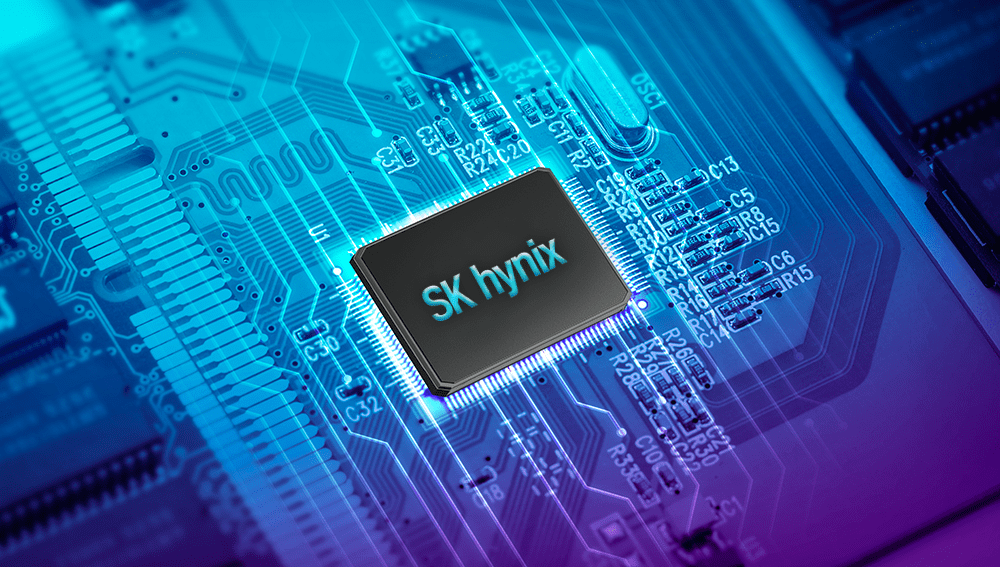
The January 13, 2026, announcement by SK Hynix Inc. of a 19 trillion won ($13 billion) investment in its P&T7 advanced packaging fab marks a structural break in the semiconductor industry. This is not another memory expansion cycle. It is the formal end of “commodity memory” and the rise of memory-logic integration as the primary value driver of the AI economy. By anchoring this massive back-end capacity in Cheongju—adjacent to the M15X DRAM fab—SK Hynix is vertically integrating its HBM supply chain to bypass the global logistics chokepoints that defined the 2024–2025 AI hardware crunch.
At stake is not just margin, but market survival. In an Nvidia-dominated accelerator landscape, the ability to stack, bond, and test high-layer HBM at scale has become the ultimate determinant of who wins the AI infrastructure race.
Why SK Hynix Is Betting $13 Billion on Packaging, Not Wafers
Capital expenditure risk for fiscal 2026 is being radically redefined as SK Hynix commits $13 billion to a single advanced packaging facility. P&T7 is not a conventional fab expansion. It is an existential wager. By prioritizing back-end processing—historically viewed as a low-margin, commoditized phase—SK Hynix is signaling that packaging capability, not wafer starts, is now the decisive source of pricing power in high-bandwidth memory.
In the AI era, packaging has become the product. The ability to stack and test HBM4 and HBM4E dies at acceptable yields is now the primary arbiter of market share in the Nvidia ecosystem. For corporate treasurers, liquidity velocity will be visibly pressured by the 19 trillion won outflow, but this “heavy iron” strategy is a deliberate response to a projected 33% compound annual growth rate in HBM demand through 2030. Cash flow is being sacrificed for capacity; resilience is the objective.
The strategic logic hinges on vertical integration. The integration of P&T7 with the neighboring M15X DRAM fab creates a single-site HBM cluster, effectively eliminating the shipping delays, contamination risk, and yield losses inherent in fragmented, cross-border supply chains that once moved wafers between Korea and Southeast Asia. What was previously a logistical weakness has been redesigned into a structural moat.
From Commodity Memory to Packaging Supremacy
“Commodity memory” refers to a market structure where pricing is dictated by wafer output, scale economics, and cyclical supply gluts. That model collapses once HBM stacks exceed 12 layers. At that point, the limiting factor is no longer lithography, but precision bonding, thermal management, and test yield.
Packaging Supremacy, by contrast, is the ability to stack, bond, and test high-layer HBM at yields competitors cannot economically replicate. As HBM moves toward 16- and 20-layer configurations, packaging precision determines both performance and profitability. This is the inflection point SK Hynix is targeting.
Synergy realization for institutional investors and M&A leads now hinges on packaging capability rather than raw DRAM output. The technology is the moat. The process is the product. As HBM stacks approach 20 layers, the precision required for next-generation bonding creates a barrier to entry that standard DRAM manufacturers cannot finance. The likely consequence is consolidation among tier-two memory players unable to match this $13 billion buy-in.
Hybrid Bonding and the Single-Site Yield Advantage at Cheongju
If P&T7 is the strategic bet, its real test lies in execution—specifically, in hybrid bonding. Advanced packaging is undergoing a fundamental transition from a support function to a core margin driver, and the audit of P&T7 reveals a decisive pivot toward hybrid bonding technology slated for mass production by 2028.
Hybrid bonding eliminates the micro-bumps traditionally used to connect HBM layers, allowing for direct copper-to-copper connections. This reduces total stack height below the JEDEC-mandated 775μm limit while increasing bandwidth by as much as 30%. More importantly for finance decision-makers, it enables acceptable yields at 16- and 20-layer stacks, where traditional bumping methods hit a physical ceiling.
This is where the Cheongju site becomes critical. Front-end DRAM wafers are acutely sensitive to transport-induced oxidation and physical stress. By moving wafers directly from the M15X cleanroom into the P&T7 packaging line, SK Hynix eliminates cross-border logistics entirely. This intra-cluster flow is expected to reduce cycle times by 10–15%, creating a measurable yield advantage over Samsung, whose HBM operations remain geographically fragmented across Cheonan and Pyeongtaek.
For institutional investors, the consequence is a structural expansion of the yield moat. Firms that master hybrid bonding first will capture the 15–20% margin premium associated with 20-layer HBM4E, permanently decoupling valuation from the cyclical memory model.
Packaging Yield as the New Valuation Multiple
The financial success of P&T7 will not be measured by capacity alone, but by the packaging yield gap between SK Hynix and its rivals. If P&T7 can consistently achieve a 10% higher yield on 16-layer stacks through total process integration, the resulting margin expansion will fundamentally re-rate the company’s valuation.
This is why the accelerated start of 1b DRAM production at M15X in February 2026—four months ahead of schedule—matters. It signals urgency in securing “golden samples” of HBM4 for Nvidia’s Vera Rubin Ultra platform. SK Hynix is transitioning from a volume-per-wafer model to a performance-per-stack model, a shift that commands higher premiums but demands flawless execution.
Nvidia Dependency Risk: How the $55B HBM Supercycle Could Break
Asset-liability matching at SK Hynix is entering a phase of concentration volatility. The $13 billion packaging expansion locks the firm into a narrow orbit around Nvidia’s Blackwell and Rubin GPU cycles. In 2026, the HBM market is projected to reach $54.6 billion, with SK Hynix commanding approximately 62% market share. Yet this growth is overwhelmingly dependent on Nvidia’s Vera Rubin platform, which can require up to 288GB of HBM4 per GPU.
This creates a classic monopsony trap. While SK Hynix is the primary beneficiary of Nvidia’s 18-month product cadence, it is also the most exposed if hyperscaler demand cools. Forward-contract analysis suggests a pricing cliff by late 2026, as Samsung’s re-entry with 1c-node HBM4 threatens a 20% price correction in early 2027.
Inventory dynamics amplify this risk. With memory inventories at historic lows in late 2025, any mismatch between P&T7 output and AI server deployments could create a $3 billion incremental demand glut, eroding the 33% ASP gains projected for the supercycle.
The TSMC Dependency and the Rise of Custom HBM
A less visible but equally critical risk lies in custom HBM (cHBM). As SK Hynix moves the memory controller onto the HBM base die—co-developed with TSMC—the company becomes operationally dependent on foundry execution. This creates a trilateral dependency between SK Hynix, TSMC, and Nvidia.
If TSMC’s N3 or advanced CoWoS-L packaging lines experience congestion, P&T7’s capacity could sit idle regardless of internal yield performance. The forensic takeaway is that SK Hynix is no longer just a memory supplier; it is now a subcontractor embedded within the TSMC-Nvidia alliance, inheriting foundry-specific execution risk.
Competitive Reality: Why Samsung and Micron Can’t Replicate P&T7 Quickly
Samsung and Micron are not standing still, but their structural constraints are real. Samsung’s HBM production remains geographically fragmented, increasing logistics friction and yield variability. Micron, while competitive in conventional DRAM, lacks the capital intensity and packaging depth required to scale 20-layer HBM with hybrid bonding in the near term.
Most importantly, neither rival has committed a comparable sum to a single, vertically integrated packaging hub. P&T7’s scale and co-location advantage compress learning curves in ways distributed manufacturing cannot easily match.
Regional Resilience Strategy: Why Cheongju Beats Seoul for AI Memory
The strategic irony of the P&T7 investment is that by aligning with South Korea’s balanced regional development mandate, SK Hynix has engineered a superior logistical moat. Cheongju offers insulation from the power cost inflation, labor shortages, and land constraints increasingly afflicting the Seoul metropolitan area.
By 2028, as AI chipmaking converges on a foundry-memory-accelerator trilateral model, the value of a single, vertically integrated site like Cheongju increases exponentially. SK Hynix is positioning itself to deliver a 20-layer HBM4E stack without moving a wafer more than ten miles.
The West Lafayette Hedge: Geopolitics as Supply-Chain Insurance
Cheongju provides volume; West Lafayette provides geopolitical insurance. The $3.87 billion Indiana facility is designed for high-margin, custom 2.5D packaging tailored to U.S. hyperscalers. In an era of tightening export controls and chip-war escalation, this dual-hub strategy allows SK Hynix to protect its Korean core margins while maintaining preferred supplier status in the United States.
Regional development, once an ESG obligation, has become a defensive weapon.
Investor FAQ: SK Hynix’s $13B P&T7 Packaging Bet Explained
Why invest $13 billion in back-end packaging?
Because in the AI era, packaging precision determines yield, performance, and margin. Packaging is no longer secondary; it is the primary differentiator in HBM.
What is the Cheongju advantage?
Single-site integration eliminates logistics friction, reduces oxidation risk, and improves cycle time by 10–15%.
How does TSMC factor into this strategy?
Custom HBM ties SK Hynix’s fate to TSMC’s advanced logic and packaging nodes, creating a powerful but risky trilateral alliance.
What is the biggest risk in 2026–2027?
Nvidia concentration. Any slowdown in hyperscaler AI spending would expose under-utilization risk at P&T7.
Is Indiana a competitor to Korea?
No. It is a hedge. Cheongju supplies scale; Indiana supplies geopolitical resilience.
Why This Matters for 2026–2028
The $13 billion P&T7 investment is not a cyclical memory bet; it is a structural repositioning of SK Hynix within the global AI supply chain. Between 2026 and 2028, the semiconductor industry will cross a threshold where memory performance is no longer constrained by lithography, but by packaging precision, yield stability, and supply-chain control. In that environment, firms that internalize advanced packaging at scale will decouple from traditional memory cyclicality, while those that do not will remain price takers.
For SK Hynix, P&T7 represents a transition from a volume-driven DRAM producer to a system-critical infrastructure supplier for AI accelerators. As HBM stacks move toward 16- and 20-layer configurations, the economic value shifts decisively toward hybrid bonding mastery, cycle-time compression, and single-site yield optimization. If P&T7 delivers even a sustained 8–10% yield advantage over fragmented competitors, the resulting margin expansion will re-rate SK Hynix not as a memory stock, but as an AI infrastructure asset.
The 2026–2028 window is also when risk concentration becomes unavoidable. Nvidia’s Blackwell Ultra and Vera Rubin platforms will define near-term HBM demand, tying SK Hynix’s utilization rates to hyperscaler AI spending cycles. At the same time, the rise of custom HBM deepens dependence on TSMC’s advanced logic and packaging nodes, shifting execution risk from market demand to foundry coordination. In this phase, operational resilience matters as much as technological leadership.
Finally, P&T7 reframes geopolitical and regional strategy as competitive advantage rather than compliance cost. By internalizing its HBM supply chain in Cheongju while maintaining a U.S. packaging foothold in Indiana, SK Hynix is constructing a dual-hub model that prioritizes yield certainty, logistics insulation, and political optionality. By 2028, the winners in AI memory will not be those with the most wafer starts, but those with the tightest control over how memory is stacked, bonded, tested, and delivered. In that contest, P&T7 is not a factory—it is a statement of intent.
Financial Insight:👉How Grok’s Regulatory Bans Turn AI Safety Into a 10% Revenue Risk👈
High-Intent Strategic Tags: #SKHynixPT7 #HBM4Supercycle #HybridBonding2028 #AIInfrastructureAudit #SemiconductorVerticalization #GeopoliticalHedge #NvidiaSupplyChain #MemoryFoundrySynergy